
Proving AI ROI: How Operators Evaluate Funded AI Projects
Define AI ROI as the judged return from funded AI work against the result the company said it would buy.
Explore practical decision-making frameworks designed for executives, operators, and founders. Learn how to apply proven models like OODA, ICE, RICE, and mental models from top strategists to make faster, smarter, and more confident business decisions. Ideal for leaders scaling teams, systems, and impact.
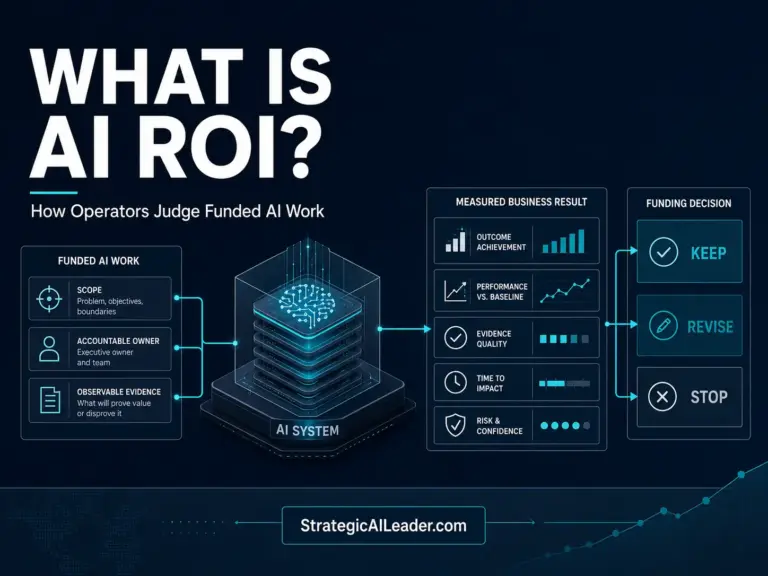
Define AI ROI as the judged return from funded AI work against the result the company said it would buy.
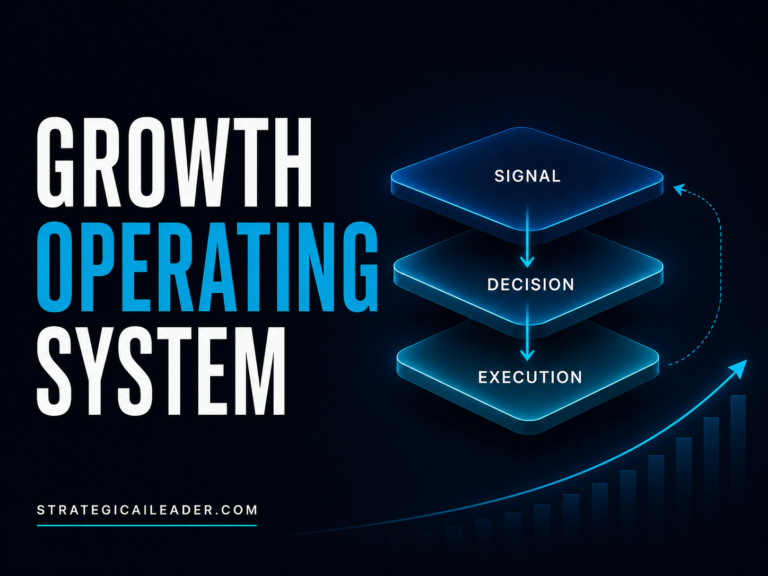
What Is a Growth Operating System? The Framework Behind Scalable Revenue Definition: Growth Operating System A growth operating system is the coordinated set of decision frameworks, experimentation infrastructure, and execution rituals that enables a team to scale revenue without requiring constant senior intervention. It is the layer between growth strategy and compounding results. Most teams…
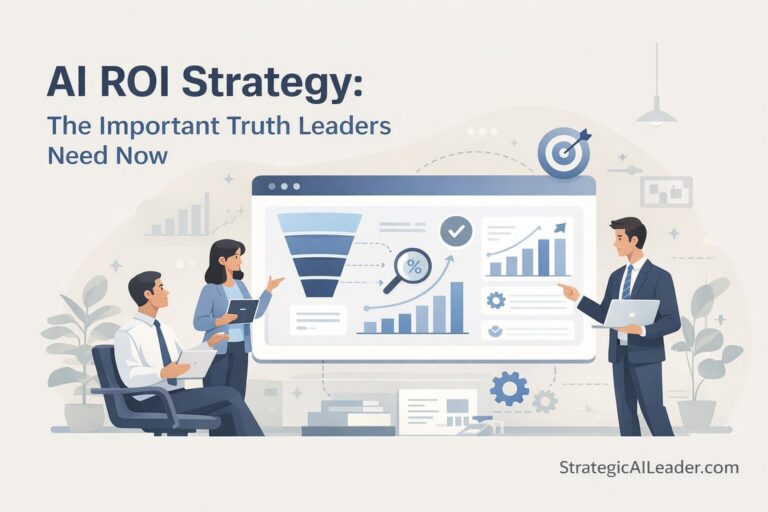
Most organizations treat AI investment returns as a tooling problem. In practice, returns follow decision architecture quality. The AI ROI Strategy Stack explains how specification, authority boundaries, execution integration, monitoring ownership, and learning loops convert automation into stable economic results instead of scaling hidden risk.

AI bias is no longer an academic concern. It shapes hiring, pricing, and sales decisions inside B2B companies today. Executives who ignore it risk reputational damage and lost revenue. This framework shows how to detect bias, evaluate its impact on growth, and design checks that keep AI-driven systems aligned with your strategy.
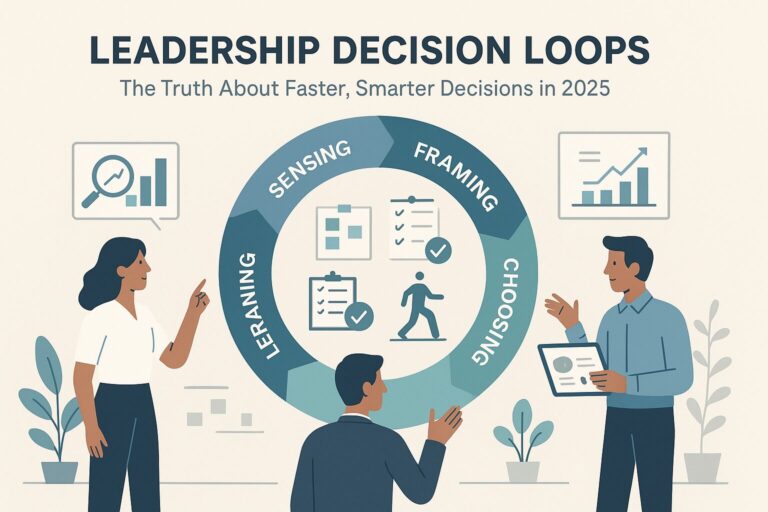
Leadership decision loops give leaders a repeatable system to balance speed and accuracy. In 2025, they are the difference between falling behind and staying ahead. This framework shows how structured loops improve team management, employee engagement, and leadership skills.

In ‘Build a Powerful Personal Operating System and Take Control,’ Richard Naimy reveals how leaders can transform chaos into clarity by developing a personal operating system. The article introduces the ‘CLEAR Framework’ (Capture, Link, Evaluate, Act, Reflect), a systematic approach to managing tasks, aligning decisions with strategic priorities, and acting with intention. Discover how to use a three-bucket system for capturing thoughts, filter tasks through quarterly goals, evaluate impact with an Impact-Influence Assessment, and implement themed days for focused work. Naimy illustrates the framework’s effectiveness with a real-world product launch example and provides ‘quick wins’ for immediate implementation, emphasizing how this systematic leadership approach leads to increased productivity, trust, and confidence.