
What Is Executive Sponsorship? The Name That Stands Behind the Work
Define executive sponsorship as named authority that funds, unblocks, and stands behind the result, then test sponsor, funding, and evidence in one week.
Leadership and Team Building examines how growth leaders shape teams that execute strategy with clarity, speed, and accountability as organizations scale. This category focuses on decision discipline, communication structure, hiring signals, performance expectations, and cultural systems that strengthen alignment between leadership priorities and business outcomes. The emphasis stays on developing teams that adapt quickly, support experimentation, and sustain momentum across changing growth environments while increasing trust, ownership, and execution consistency.

Define executive sponsorship as named authority that funds, unblocks, and stands behind the result, then test sponsor, funding, and evidence in one week.

Learn what operational leadership means and use a four-part framework to turn strategy into owned practice, clear standards, and visible results.
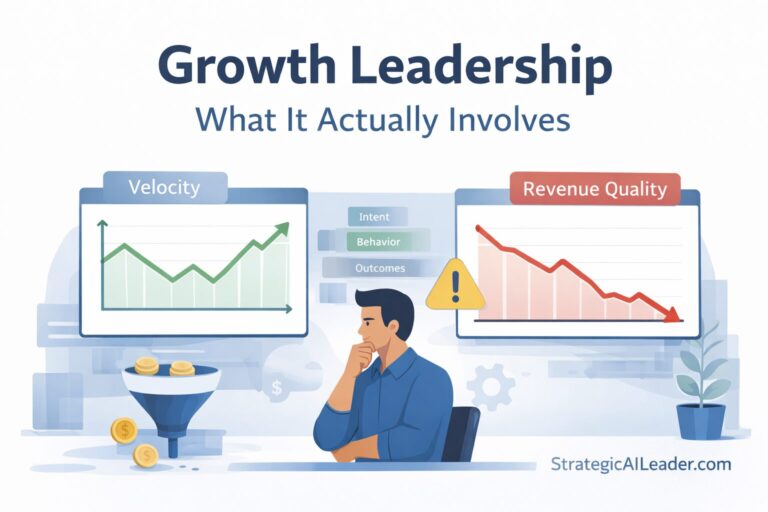
Growth leadership is not about shipping more experiments or celebrating green dashboards. It is about reconciling conflicting signals when velocity rises but revenue quality declines. Real growth leadership means owning decisions under uncertainty, aligning intent, behavior, and outcomes before money and trust are at risk.
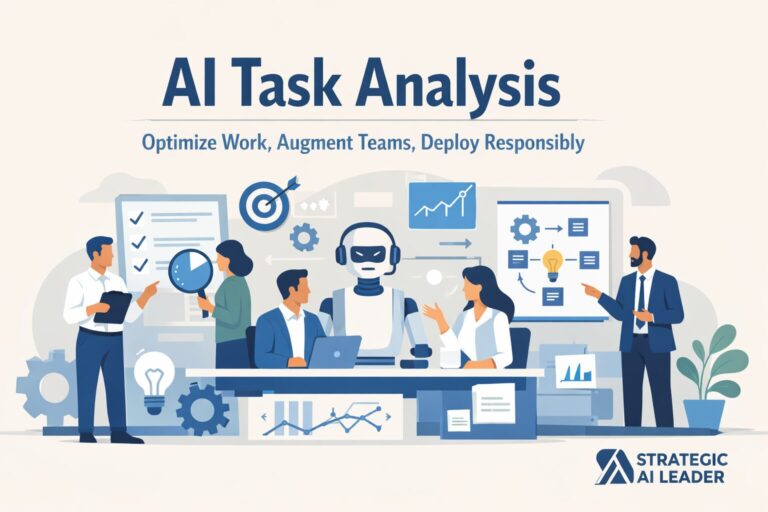
Most AI programs fail before delivering value because leaders focus on transformation rhetoric instead of task-level work. This practical guide introduces AI task analysis, a framework for evaluating AI potential, redesigning workflows, and augmenting teams without replacing people.
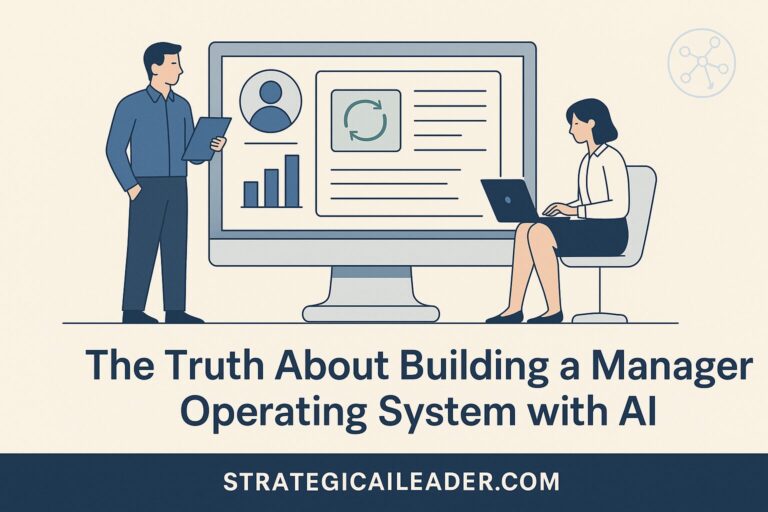
Modern leadership demands more than instincts. The most effective leaders now build a Manager Operating System, a structured way to process information, make decisions, and drive clarity at scale. In this article, Richard Naimy shares how to design your own operating system using AI tools to automate routine work, surface patterns, and create more time for strategic thinking. Learn what worked, what didn’t, and how small systems changes can multiply team impact, reduce friction, and strengthen decision quality.
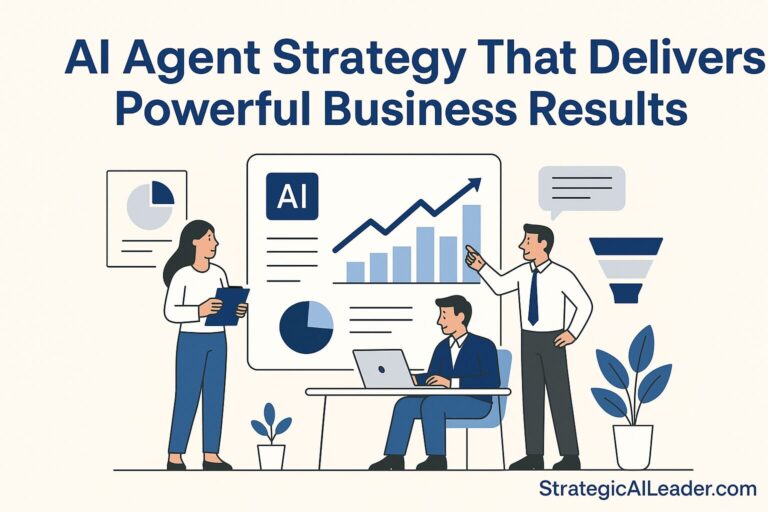
Most companies stall in pilots, treating AI agents as side projects. An effective AI Agent Strategy integrates agents into workflows, aligns them with KPIs, and governs their use. This article outlines five principles leaders need to move beyond experiments and deliver business results that scale with confidence.
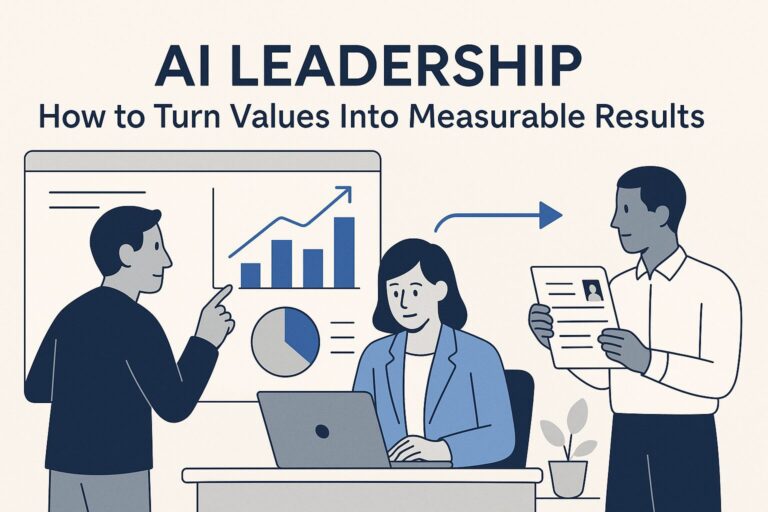
AI leadership requires more than values. Apple and Newsweek argue for “Super Leaders” who combine empathy and adaptability, but values alone do not drive outcomes. Leaders must pair ethics and vision with systems like feedback loops, review boards, and dashboards. The leaders who thrive in the AI era will not choose between philosophy and execution. They will combine both to deliver measurable results.
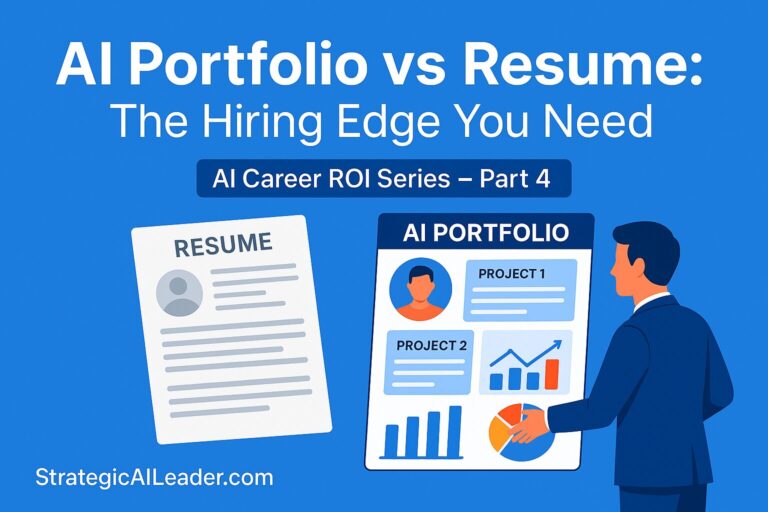
Resumes list titles and certifications, but employers in AI want proof of outcomes. An AI portfolio demonstrates what you built, how it worked, and the results it produced. In this article, I break down why portfolios outperform resumes in today’s hiring market, the four layers every portfolio needs, and quick wins to start building one this week.
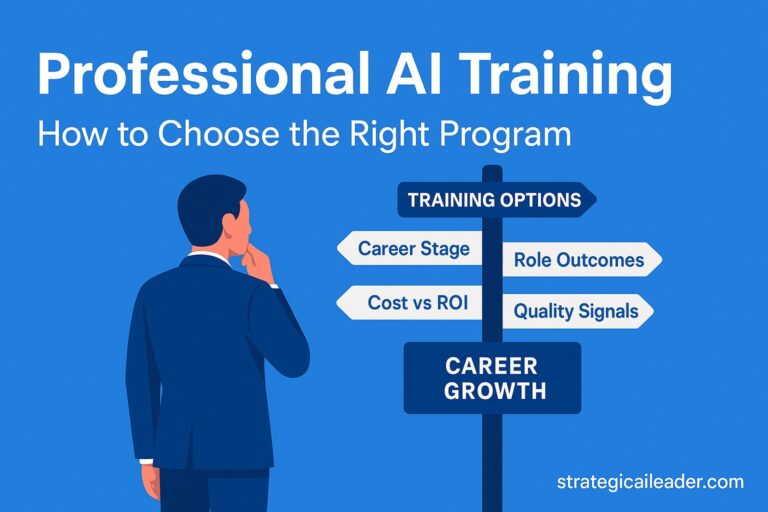
Choosing the right professional AI training is less about prestige and more about progress. This guide shares a 4-step framework to evaluate programs by career stage, role outcomes, cost versus ROI, and quality signals, with real-world examples to help you invest in training that delivers measurable career results.

AI certifications help you start the conversation, but ROI comes from applied skills. Part 2 shows how to document outcomes, prove value, and position yourself for AI-native hiring.

AI is reshaping every career path, and certifications are quickly becoming the new currency of credibility. In 2025, employers want more than degrees. They want proof of AI fluency. This guide breaks down the best AI certifications for every career stage, shows how employers evaluate them, and explains how to turn credentials into real career ROI.

The Hidden Cost of AI at Work Artificial intelligence has become the co-pilot of modern business. From marketing teams using generative models to draft campaigns, to finance leaders automating forecasting, to operators relying on AI assistants to summarize complex data, adoption is accelerating at an unprecedented pace. At the same time, growing research on AI…