
Proving AI ROI: How Operators Evaluate Funded AI Projects
Define AI ROI as the judged return from funded AI work against the result the company said it would buy.
AI Strategy focuses on how growth leaders apply artificial intelligence to expand revenue capacity, improve decision speed, and scale execution across teams. This category explores how founders, operators, and executives translate AI from experimentation into repeatable operating advantage through structured use cases, implementation roadmaps, and measurable performance gains. Topics include workflow redesign, marketing and sales acceleration, automation architecture, and organizational adoption so leaders connect strategy to outcomes such as higher efficiency, stronger pipeline performance, and faster learning cycles. Whether you are launching an initial initiative or scaling AI across functions, these frameworks support disciplined execution and durable growth leadership.
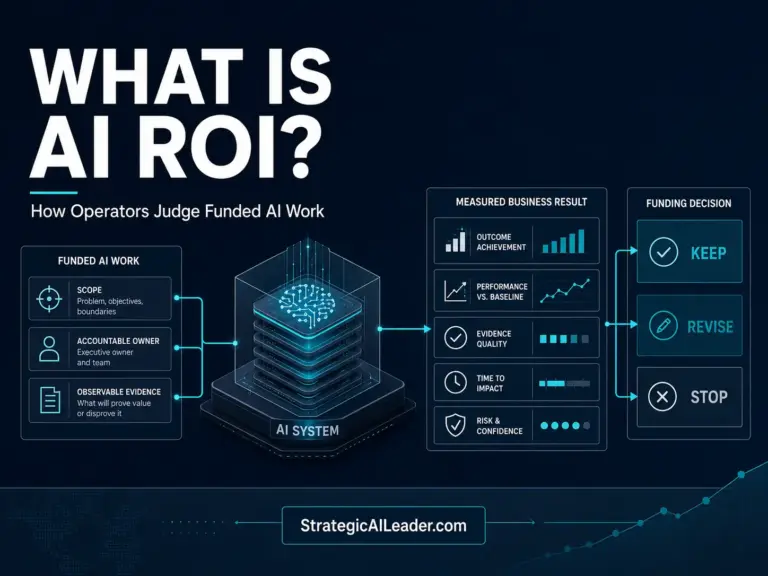
Define AI ROI as the judged return from funded AI work against the result the company said it would buy.
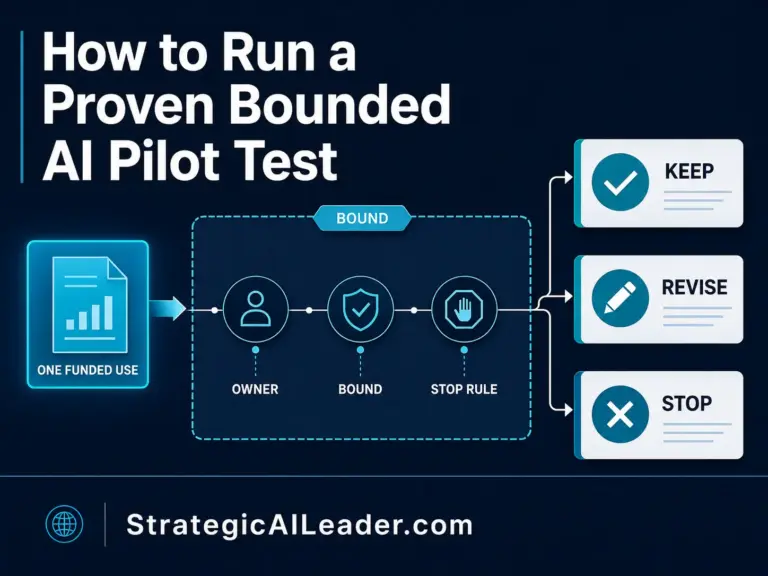
Define an AI pilot as a bounded test of one funded AI use with an owner, a stop rule, and a keep-revise-stop judgment.
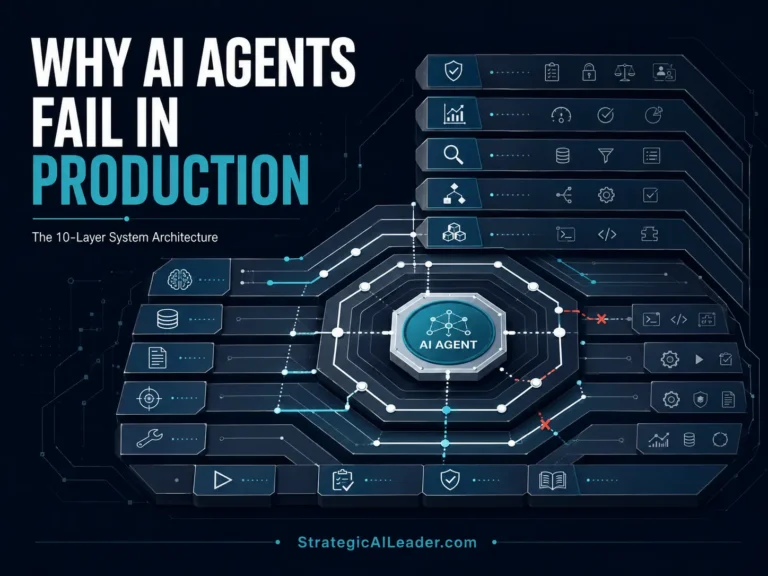
Production AI reliability is a systems problem. Most teams blame the model when the failure sits in one of nine other layers. When AI agents fail in production, teams spend weeks tuning prompts and testing better models. This rarely solves the problem. Production agents operate within ten distinct system layers. Model capability is one component; production reliability depends on all ten layers. This article walks through all ten layers, shows where each typically fails, and provides a diagnostic decision tree to identify which one actually broke. The MyEListing case study demonstrates the approach: a production system improved from 60% to 95% CRM accuracy and 12% to 27% conversion rates by strengthening multiple layers simultaneously. Model selection alone rarely solves production agent failures.
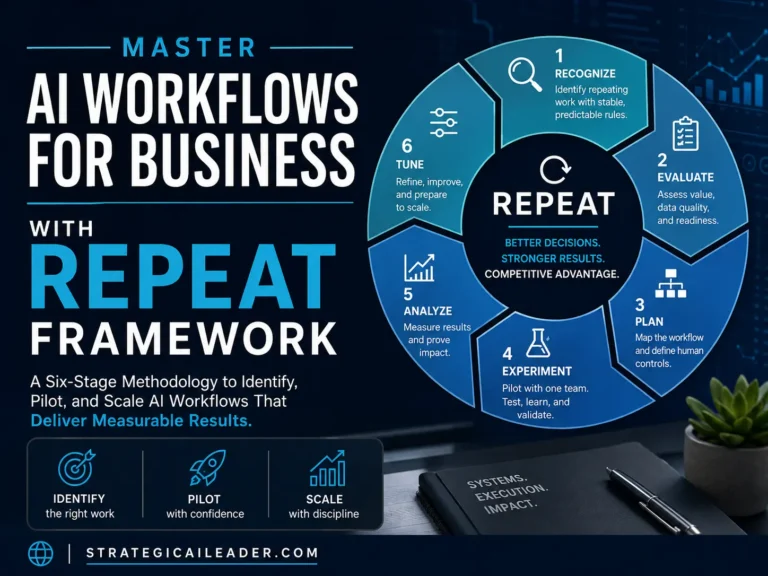
Most AI workflows fail because companies automate the wrong work. Success depends on choosing the right workflow, defining clear processes, and measuring results. The REPEAT Framework provides a six-stage methodology to identify repetitive work, run effective AI pilots, measure business impact, and scale automation while preserving human judgment. Learn practical systems, real examples, and proven strategies for successful AI implementation.
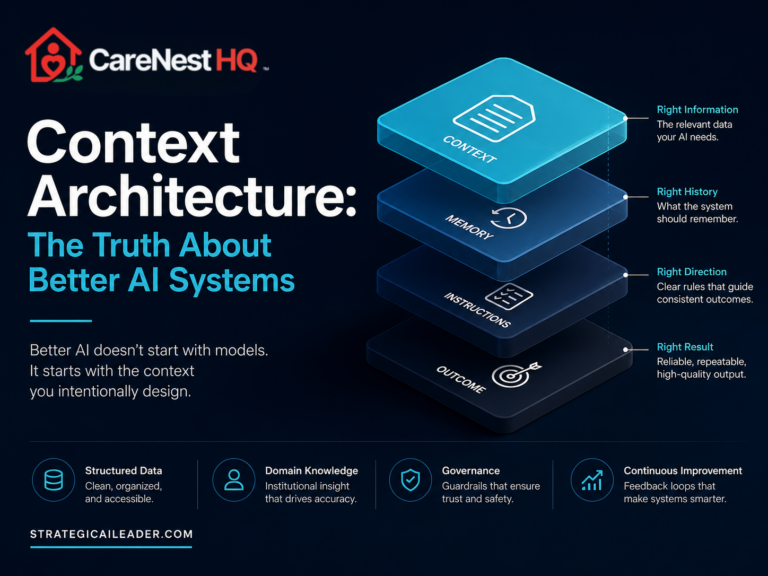
AI cannot reason about information it never received. This single principle shaped every decision we made while building CareNestHQ™. We started somewhere unexpected: not with the model, but with context architecture – the information structure underneath it. The Bridge From Philosophy to Architecture In the previous article, I introduced the Caregiver Authority Framework. It answers…

Discover why CareNestHQ supports caregivers instead of replacing them. Learn the five design principles guiding every product decision.
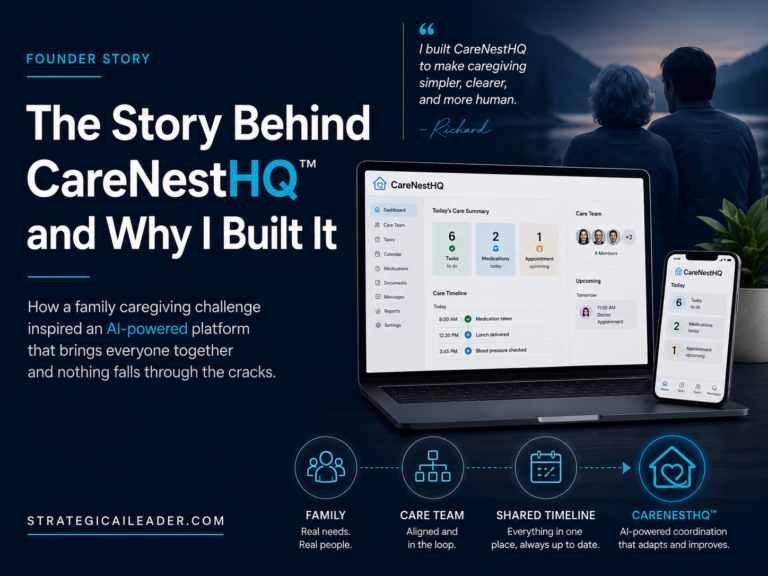
CareNestHQ™ began with a personal family caregiving challenge, but it became much more than a software project. This is the story behind the platform, the product decisions that shaped it, and the AI-powered workflows designed to help families coordinate care with greater clarity and confidence.
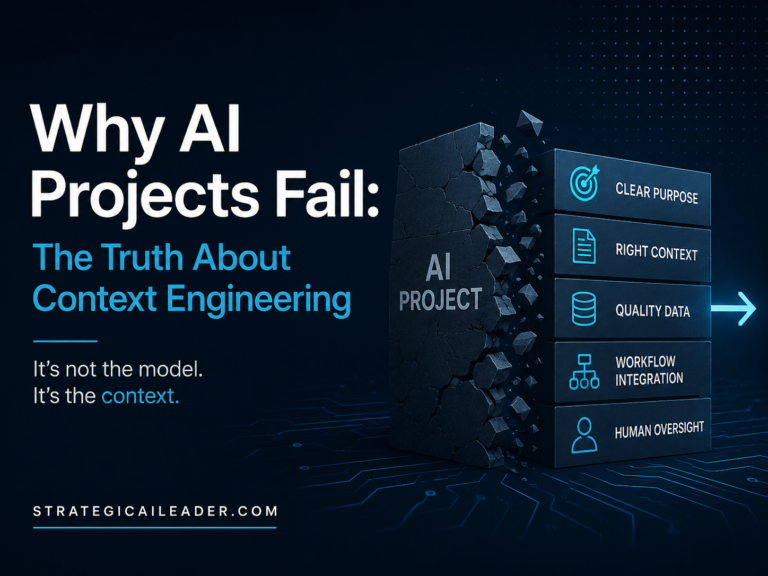
Most AI projects fail for a reason few teams recognize. The problem is rarely the model. It is missing context. Learn why context engineering has become the foundation of successful AI implementation and how hidden context failures derail projects before development even begins.
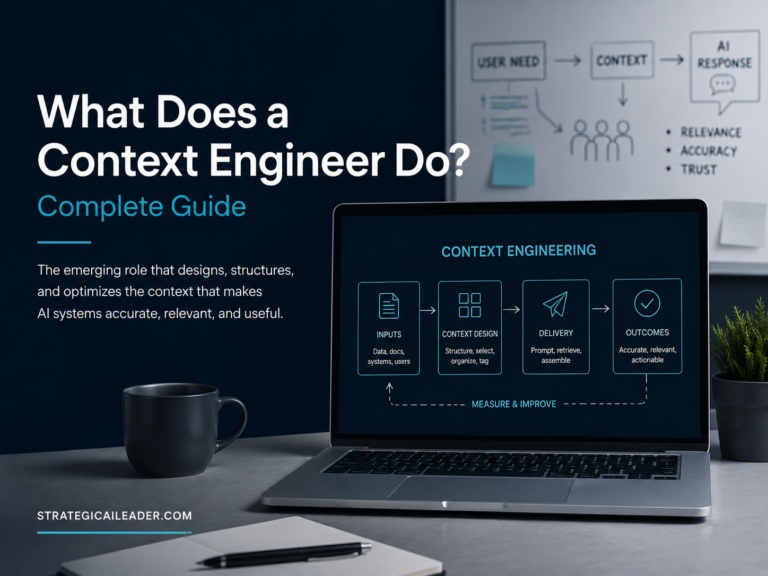
A Context Engineer designs the information environment AI systems operate within. Learn why this emerging role is becoming essential for building reliable, scalable AI solutions.
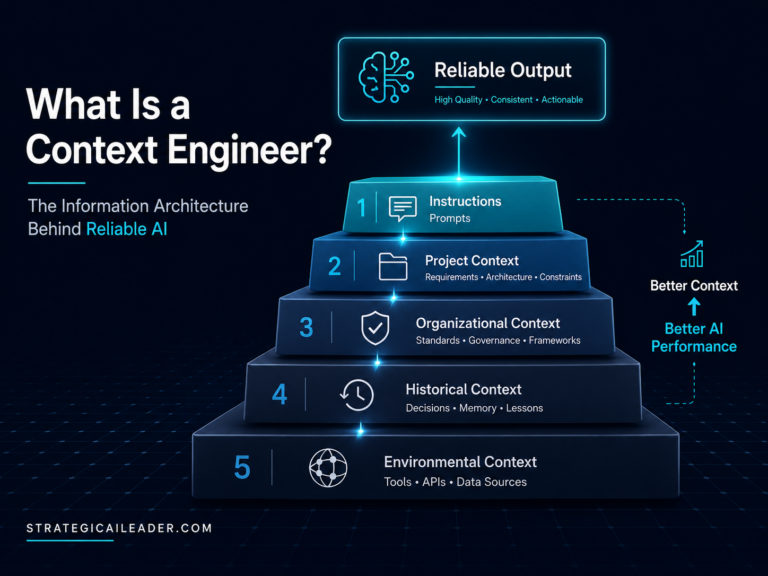
Discover what a context engineer does and why context architecture matters more than prompts for AI success.
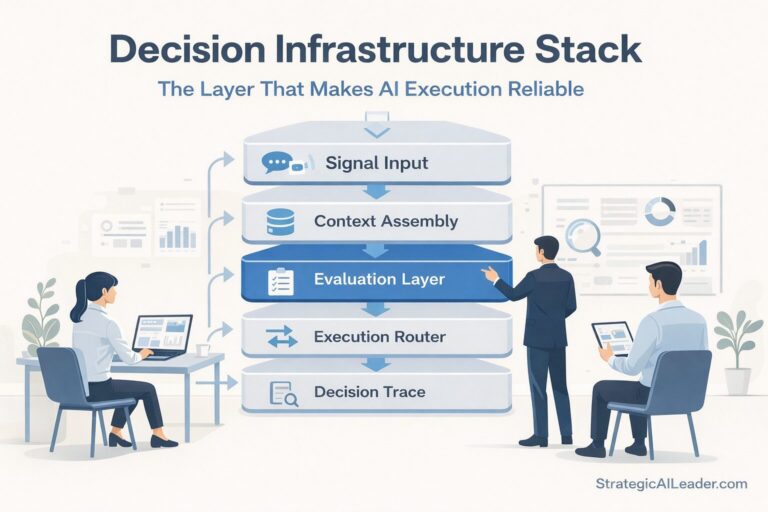
The Layer That Makes AI Execution Reliable Most operators deploying AI hit the same wall. The tools work. The prompts improve. Outputs look reasonable in testing. Then production arrives and everything becomes inconsistent. The same input produces three different outputs. Human review increases. Execution slows down instead of speeding up. The instinct is to fix…

Most agent courses teach prompts. Few teach deployment. The Agent Skill Translation Framework closes this gap through three stages. Extract converts course concepts into reusable prompt blocks and task logic. Translate refactors prompts into workflows, binds tools, and adds memory layers. Deploy runs agents inside dashboards, automation systems, and production environments. Learning becomes structure. Structure becomes agent logic. Agent logic becomes working applications.