
The Ultimate Guide to Customer and Revenue Churn
Churn is the judged loss of a customer or a unit of recurring revenue, with an accountable owner and observable loss evidence.
Unlock the frameworks, metrics, and real-world playbooks that fuel sustainable growth in both B2B and B2C markets. From fine-tuning your customer acquisition cost to mastering lifetime value, this category equips founders, executives, and operational leaders with actionable insights to scale faster and smarter. Discover strategies that go beyond vanity metrics, focusing on data-driven decision-making, profitable revenue expansion, and long-term customer loyalty. Whether you’re building an enterprise SaaS business or a consumer brand, learn how to turn strategic clarity into unstoppable growth.

Churn is the judged loss of a customer or a unit of recurring revenue, with an accountable owner and observable loss evidence.
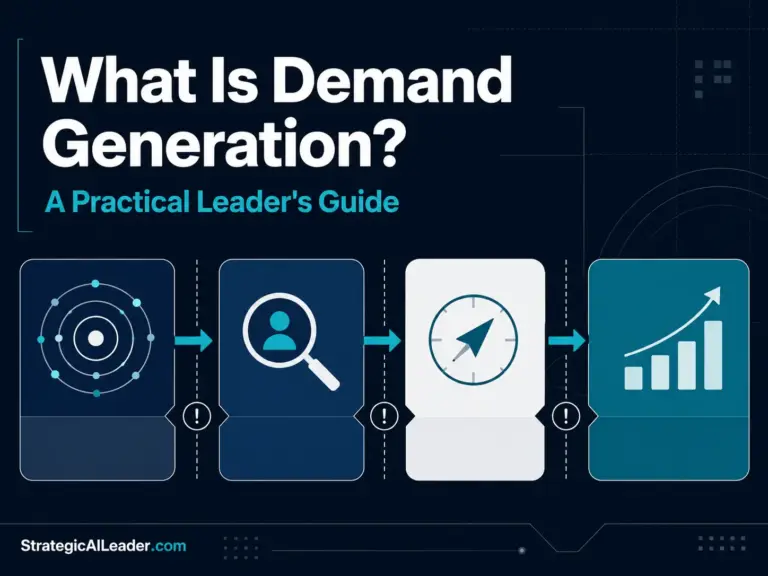
Define demand generation as owned capture of qualified demand, then run a one-week test for owner, path, and evidence.
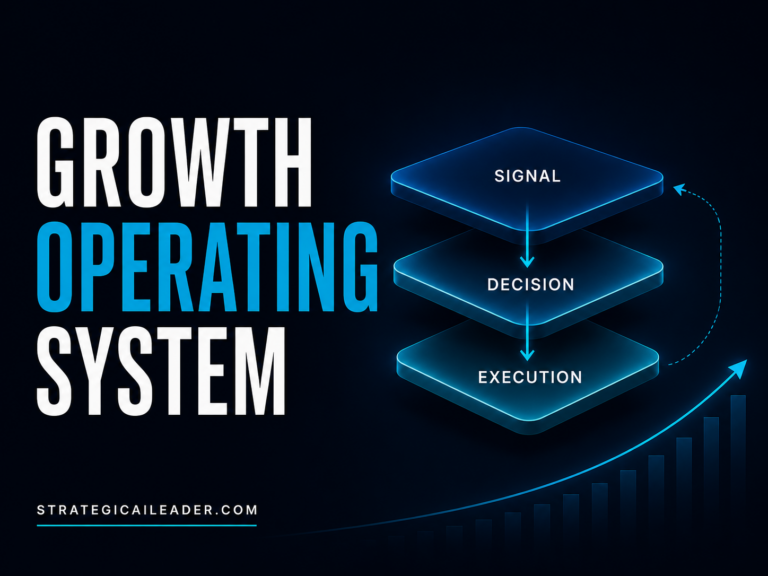
What Is a Growth Operating System? The Framework Behind Scalable Revenue Definition: Growth Operating System A growth operating system is the coordinated set of decision frameworks, experimentation infrastructure, and execution rituals that enables a team to scale revenue without requiring constant senior intervention. It is the layer between growth strategy and compounding results. Most teams…

Most marketplaces track listing volume but ignore marketplace supply coverage across the segments where buyers actually search. The Supply Coverage Map identifies structural gaps before scaling demand by measuring Coverage Ratios across category, geography, and price intersections. The MyEListing case shows how correcting coverage distribution improved Investor Match Rate by 28% without product or targeting changes, demonstrating why supply coverage must be validated before demand acquisition begins.

Marketplace growth does not scale through acquisition alone. It depends on sequencing liquidity, trust, and revenue expansion in the correct order. Platforms that optimize take rate before match reliability and participant confidence stall conversion and suppress yield.
The Marketplace Growth Operating Model helps operators identify which layer is constraining growth and where to invest next. Most marketplace revenue problems are sequencing errors, not pricing errors.

The liquidity threshold is the minimum condition at which a two-sided marketplace reliably matches supply and demand within an acceptable time window for both sides. It is not a single number. It is a state, and most operators never measure whether they have actually reached it. Simpler: the liquidity threshold is the point at which…

Liquidity, Trust, and Revenue Expansion Marketplace growth strategy is the operating discipline of sequencing liquidity, trust, and revenue decisions in the correct order for a two-sided platform. It differs from a standard growth strategy because the constraints are structural. You cannot monetize what hasn’t matched. You cannot build trust on top of a platform that…
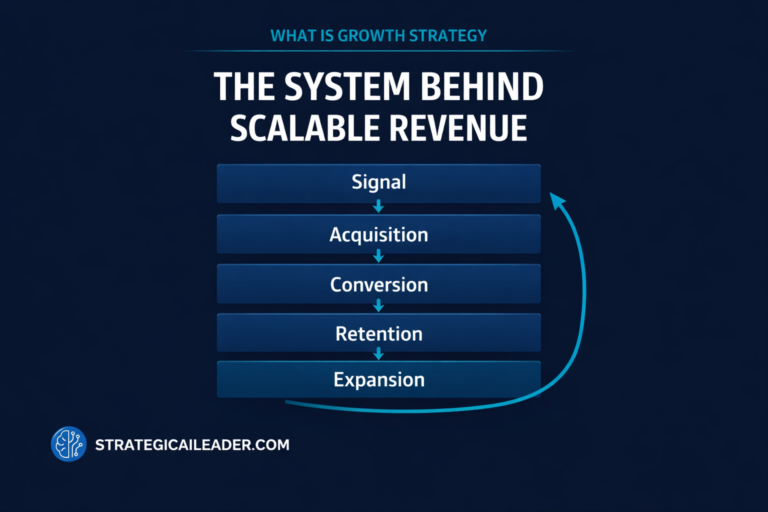
Most teams believe they have a growth strategy. What they actually have is a collection of tactics. A true growth strategy is the operating system that connects acquisition, retention, monetization, and experimentation into a compounding engine. This article explains the Growth Strategy System Stack, a structured framework for diagnosing stalled growth, aligning execution, and building revenue that scales predictably over time.

What happens when growth loops become a game loop. Inside the process of building DailyRank using vibe coding, leaderboard psychology, and daily retention mechanics.
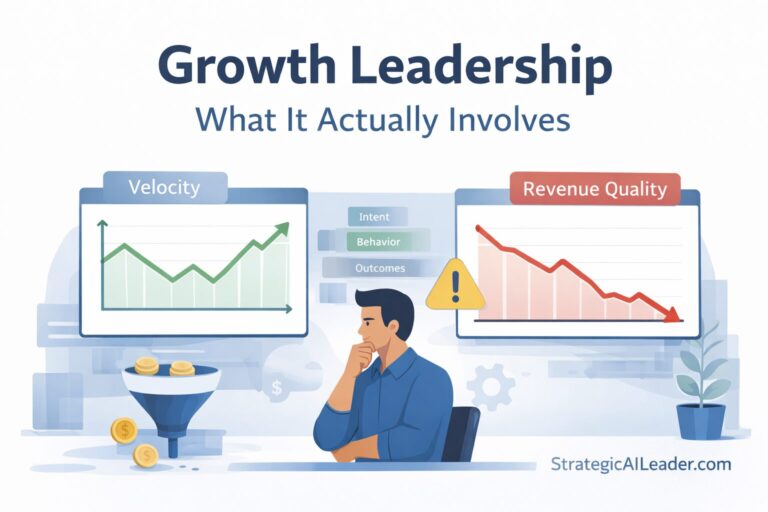
Growth leadership is not about shipping more experiments or celebrating green dashboards. It is about reconciling conflicting signals when velocity rises but revenue quality declines. Real growth leadership means owning decisions under uncertainty, aligning intent, behavior, and outcomes before money and trust are at risk.

AI bias is no longer an academic concern. It shapes hiring, pricing, and sales decisions inside B2B companies today. Executives who ignore it risk reputational damage and lost revenue. This framework shows how to detect bias, evaluate its impact on growth, and design checks that keep AI-driven systems aligned with your strategy.
Leaders often run experiments that fail to impact revenue. The difference between random testing and real growth comes from applying experimentation best practices. In this guide, we share proven frameworks, case studies, and systems that help leaders turn experiments into repeatable engines for sustainable growth.