
How to Identify and Eliminate Your Business Bottlenecks for More Throughput
A bottleneck is the named constraint that limits throughput, with an accountable owner and observable wait evidence.
COO Ops and Systems explores how growth leaders design execution infrastructure that turns strategy into measurable results across teams, workflows, and revenue environments. This category focuses on systems thinking at the operating level, including org structure design, OKR alignment, workflow architecture, automation strategy, and technology stack decisions that improve speed, clarity, and accountability. The emphasis stays on building repeatable operating rhythms that support scale, strengthen cross-functional coordination, and connect leadership priorities directly to performance outcomes.
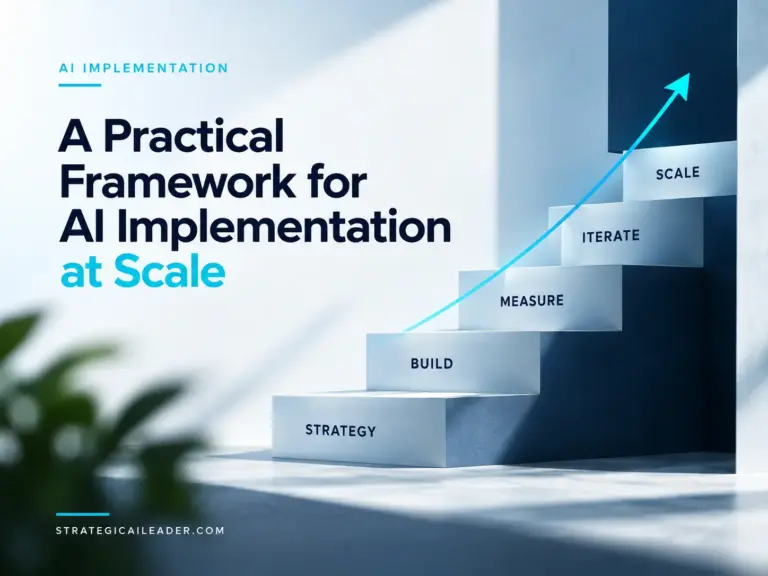
A bottleneck is the named constraint that limits throughput, with an accountable owner and observable wait evidence.
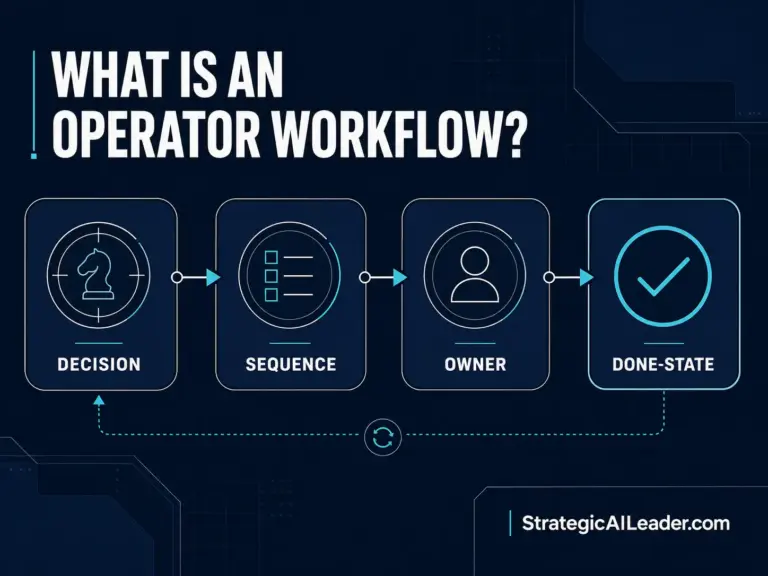
Learn what an operator workflow is, how it differs from a process or playbook, and how leaders move decisions into finished work.
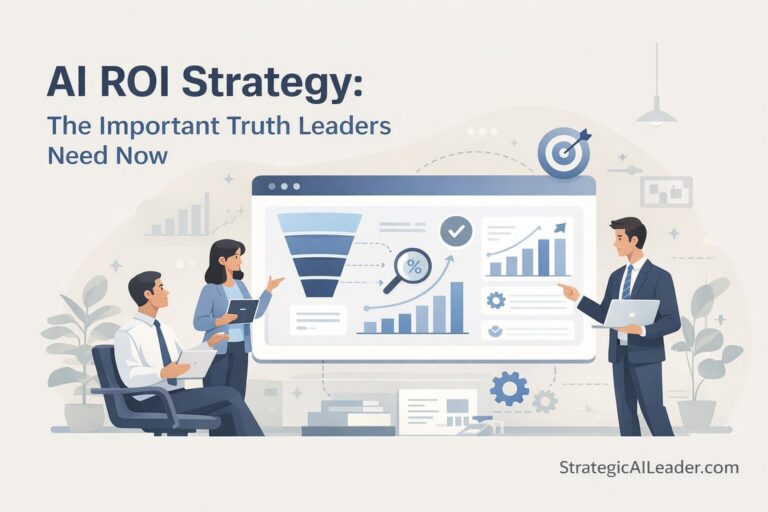
Most organizations treat AI investment returns as a tooling problem. In practice, returns follow decision architecture quality. The AI ROI Strategy Stack explains how specification, authority boundaries, execution integration, monitoring ownership, and learning loops convert automation into stable economic results instead of scaling hidden risk.
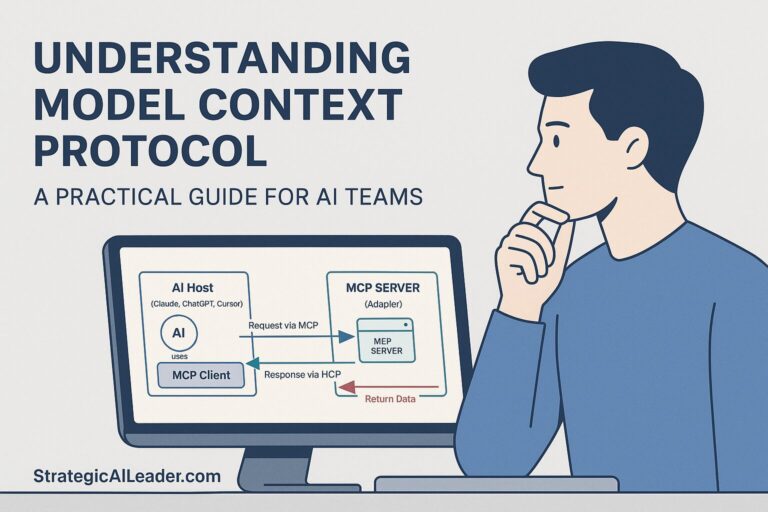
Model Context Protocol (MCP) is the missing link between AI tools and real business data. Instead of building dozens of custom integrations, teams use MCP to connect AI systems to CRMs, databases, and APIs through a single standard. This guide explains how it works, why it matters, and how leaders can use MCP to speed up AI deployment across the enterprise.
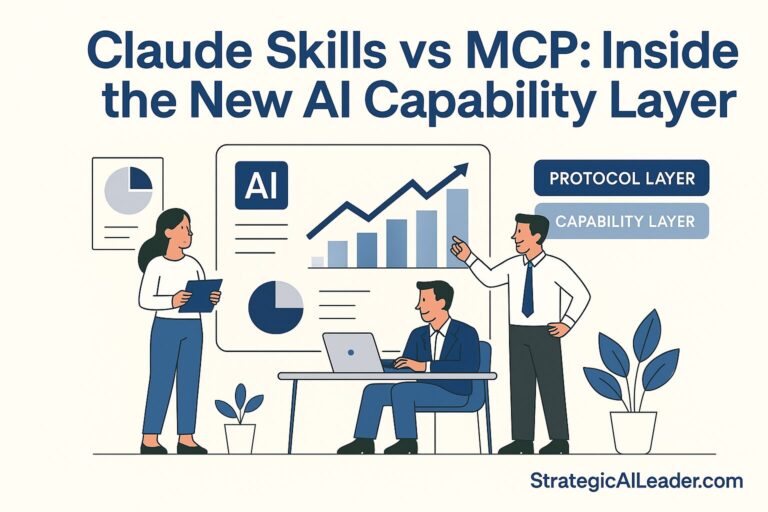
Claude Skills vs MCP explores how Anthropic’s new capability layer transforms AI from connected tools into reusable intelligence. Learn why this shift matters for teams building scalable, governed, and high-performance AI systems.
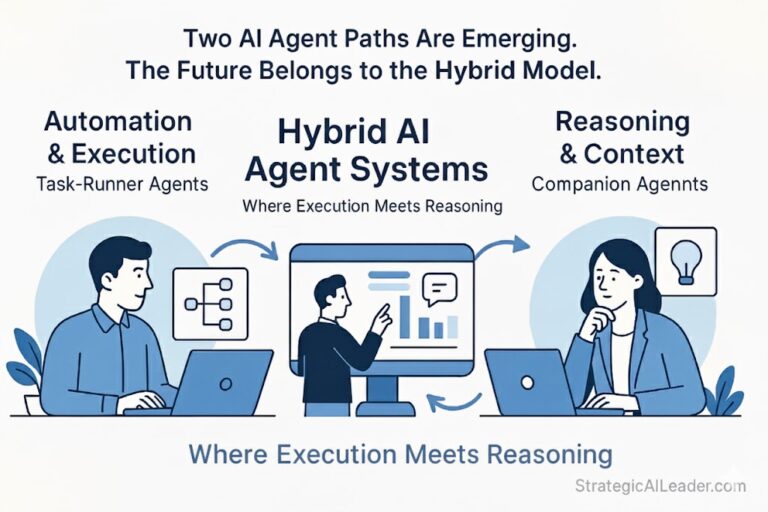
AI agents are splitting into two distinct paths: Task-Runner systems that execute and Companion systems that reason. Hybrid AI Agent Systems combine both, giving leaders a new way to align automation with strategy, improve decision velocity, and turn clarity into a competitive edge.

Rituals & Cadence COO Ops create the rhythm that turns strategy into execution. This guide shows leaders how to use daily, weekly, monthly, and quarterly rituals to drive alignment, accountability, and growth through proven systems that scale without chaos.
Process Standardization COO Ops gives leaders a clear path to scale operations with consistency and efficiency. This guide explains how to map workflows, remove redundancies, design standardized systems, and build training that sticks. Leaders who take ownership of process standardization cut errors, speed execution, and prepare their teams for growth.
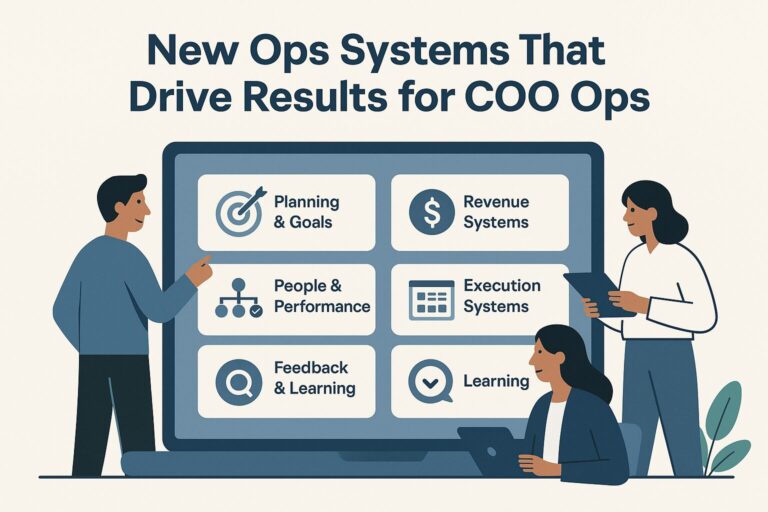
Build Ops Systems that scale without chaos. This guide gives you the five core systems, a simple 30-60-90 rollout, and the exact metrics to prove progress. Learn how to focus goals, tighten ownership, speed decisions, and turn forecasts into facts. Write the playbook once. Improve it every week.

Here’s the thing about cost-cutting: most companies do it the wrong way. They see red ink on the P&L, panic, and start making aggressive budget cuts. Marketing budgets get slashed. Teams get downsized. Strategic initiatives get shelved. And, sure, the numbers look better for a quarter or two, until revenue starts to tank and they…
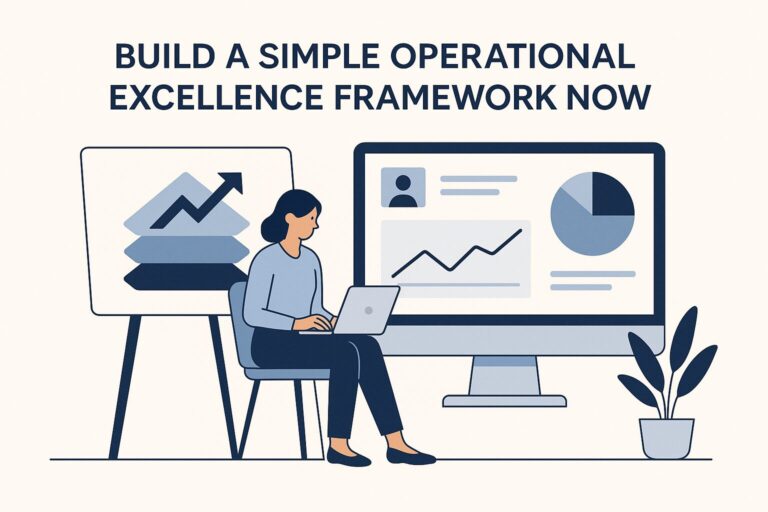
Most operations leaders don’t fail because they lack tools or hustle. They fail because they’re missing a clear, scalable system. In this article, I share the 3-Layer Ops System™, a simple yet powerful framework built on Strategy, Systems, and Rituals. Whether you’re a COO, founder, or head of ops, you will learn how to move from firefighting to focused execution in just 30 days. Packed with real-world examples, tactical templates, and a clear action plan, this guide will help you build operational excellence that actually scales.
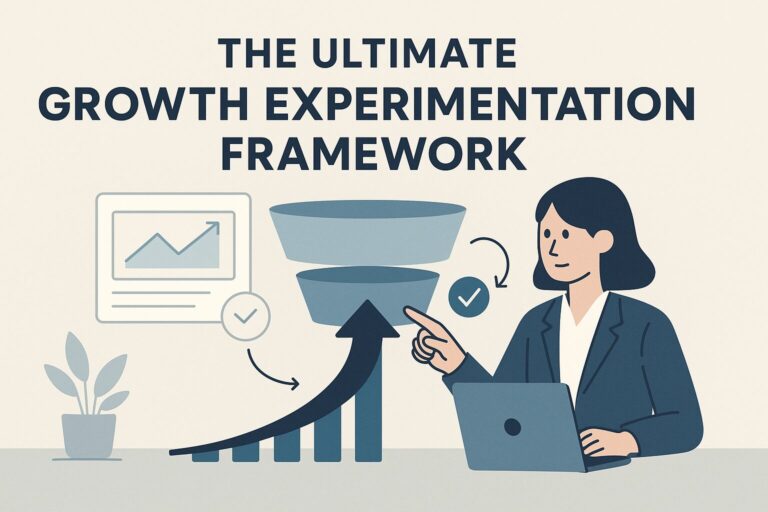
While many teams treat experimentation as a marketing function or a growth tactic, high-performing organizations embed it deeper into their decision-making, team rituals, and operational structure.
This mindset shift is what separates teams that sporadically A/B test from those that systematically learn. In these environments, experiments are not side projects. They are how strategy gets tested, refined, and scaled. From onboarding flows to ad creative to pricing pages, everything is a hypothesis until proven. The goal isn’t just optimization. It is compounding insight velocity.
Experimentation is not a tactic. It is a system. The most successful teams do not just run experiments. They operate inside them.