
What Is GEO? A Practical Guide for Operators
Learn what GEO is, how operators get a live fact cited in AI search, and how GEO differs from SEO and AEO.
SEO and Digital Marketing explores how growth leaders design acquisition systems that turn search visibility, content strategy, and performance channels into measurable revenue outcomes. This category focuses on SEO architecture, analytics frameworks, funnel structure, and cross channel alignment so teams connect traffic growth directly to pipeline quality and customer conversion. The emphasis stays on building scalable demand engines that support experimentation, improve attribution clarity, and strengthen long term acquisition performance.
Learn what GEO is, how operators get a live fact cited in AI search, and how GEO differs from SEO and AEO.
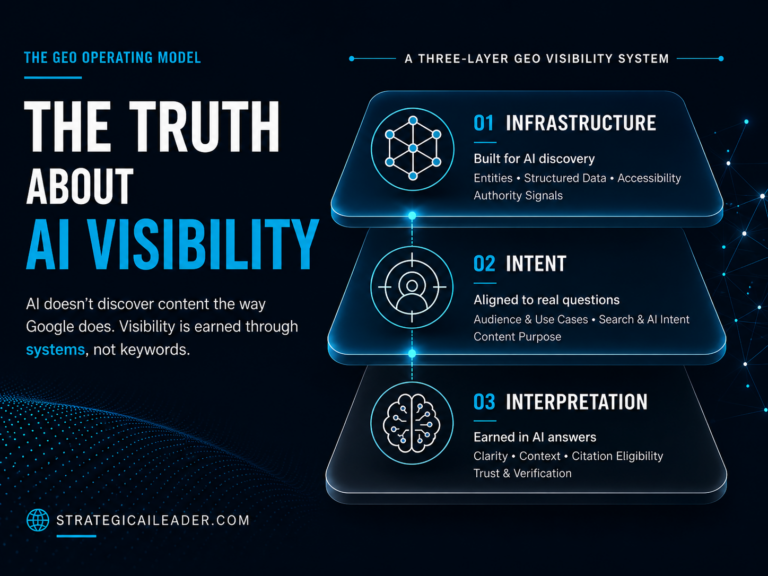
Most organizations still optimize for rankings while AI systems optimize for retrieval, interpretation, and citation trust. The GEO Operating Model explains why traditional SEO frameworks no longer fully control visibility and introduces a three-layer system for building AI citation eligibility through infrastructure, intent alignment, and interpretation architecture.
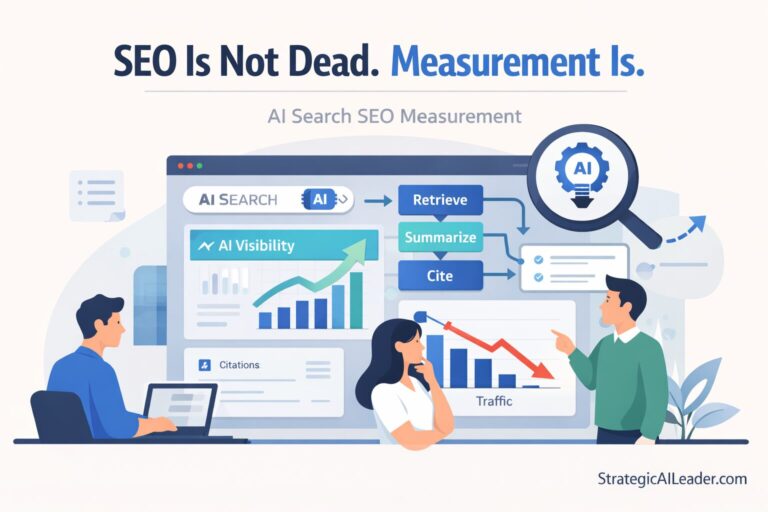
AI search decides visibility before users click. Rankings and traffic now show what’s left after AI systems retrieve, summarize, and cite content. That’s why performance can decline even when rankings hold.
This article explains how AI search changes SEO measurement and which visibility signals matter now.
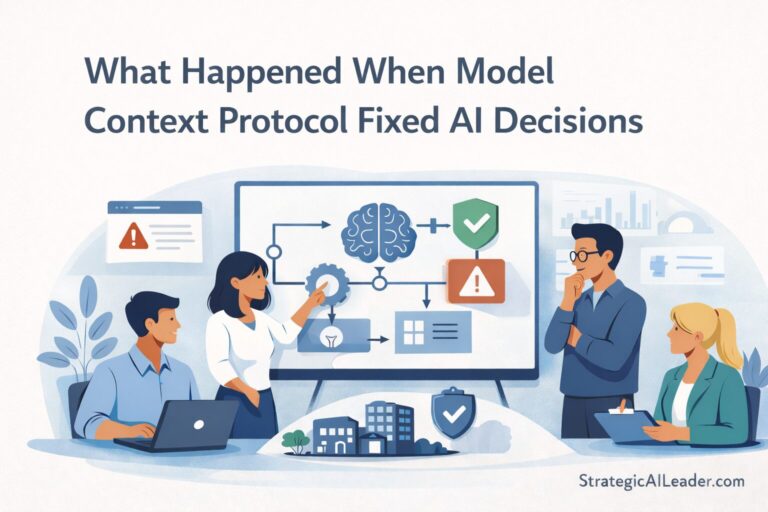
I wired an AI system into a real flower shop to see why so many AI projects collapse under real constraints. This article shows how Model Context Protocol fixed AI decisions by grounding an LLM in intent, behavior, inventory, and revenue instead of prompts and theory.
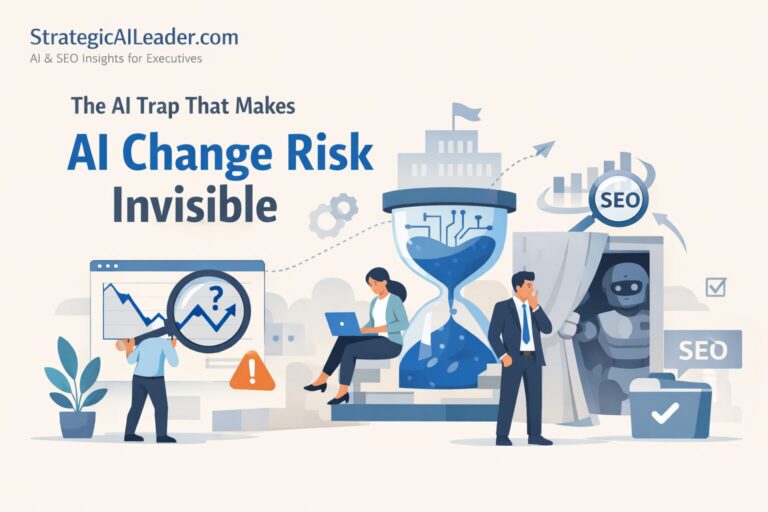
AI change risk rarely announces itself through broken dashboards or sudden traffic loss. It hides inside familiar language, stable metrics, and the comforting belief that nothing fundamental has changed. As AI-driven discovery reshapes how information gets selected, validated, and surfaced, SEO teams face a new risk layer. Visibility decisions now happen before human clicks, often without clear feedback. This piece explains why reassurance appears first in every major transition, how AI systems quietly alter SEO outcomes, and what leaders must recognize before familiar strategies stop compounding advantage.
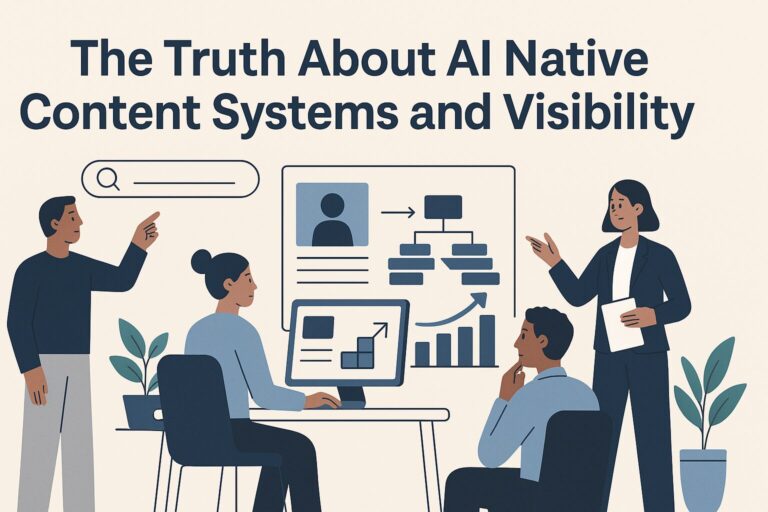
What I Learned Testing Content Systems Against Five AI Models My Contrarian Observation I ran one of my own long form pages through five AI models last month. None of them pulled the headline. None of them focused on the sections I thought were most important. The models rearranged ideas, ignored nuance, and prioritized text…
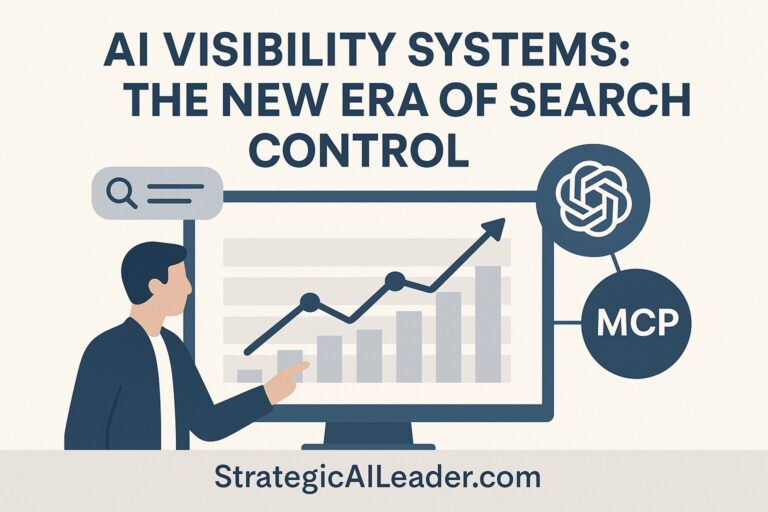
Search visibility has shifted from audits to systems. This article shows how AI Visibility Systems powered by ChatGPT and MCP let teams detect issues, explain ranking changes, and control performance in real time.
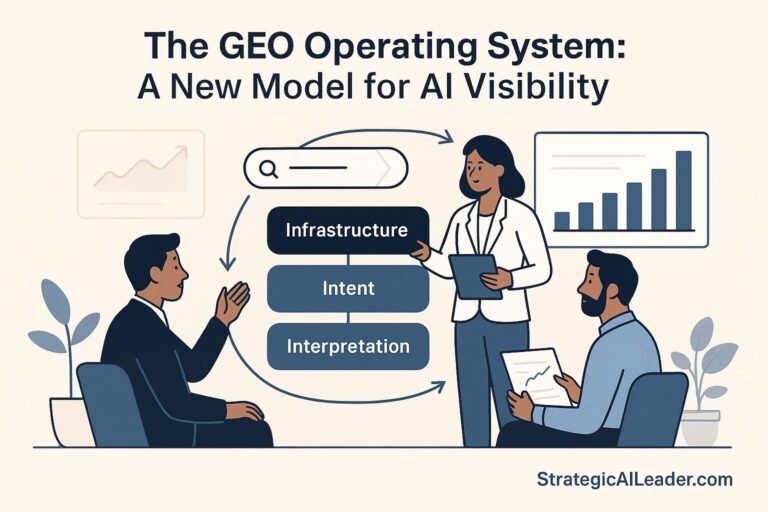
The GEO Operating System is a new model for AI visibility. It aligns marketing, IT, and PR under one framework to make visibility measurable, repeatable, and scalable. This article explains how the GEO-OS connects infrastructure, intent, and interpretation to help leaders turn fragmented efforts into a unified visibility engine.
Enterprise SEO does not fail because of Google. It fails because of the organization behind it. This article breaks down the ten hidden friction points that block SEO growth, from siloed data and IT bottlenecks to KPI misalignment and executive disconnection. Learn how to align systems, incentives, and culture into one operational loop that drives visibility, speed, and revenue.
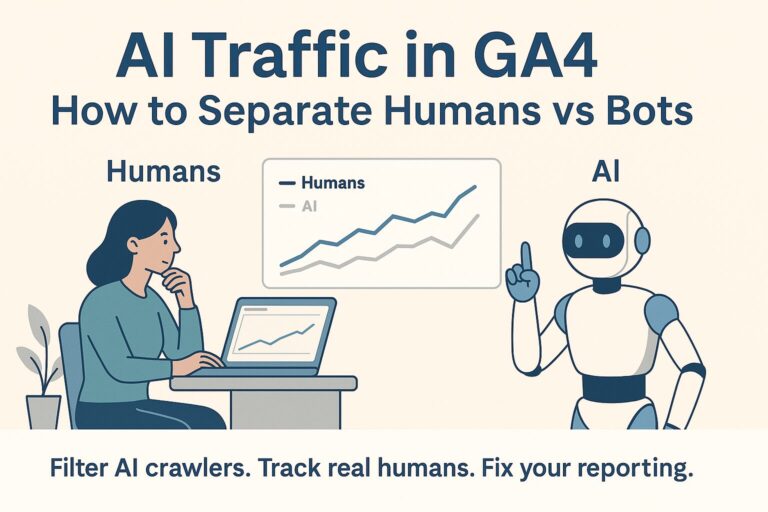
AI bots are inflating your analytics. In GA4, traffic from ChatGPT, Claude, Gemini, and other AI tools gets mixed with human visits, creating false growth signals. Without separating AI traffic from human behavior, executives risk celebrating fake gains while their real audience declines. This guide shows you how to filter AI crawlers, track AI search referrals as a distinct channel, and report human visits with accuracy.
Many growth leaders waste time and budget chasing broad audiences instead of zeroing in on their highest-fit customers. A well-defined B2B Ideal Customer Profile (ICP) drives faster sales cycles, higher conversion rates, and better retention. This guide breaks down the steps to build a precise ICP, avoid common mistakes, and operationalize it across sales, marketing, and product teams for sustainable growth.
In 2025, SEO success requires more than ranking on Google. Search behavior now spans platforms like Reddit, YouTube, TikTok, LinkedIn, and AI assistants, each with unique algorithms and audience habits. This guide breaks down the rise of multi-platform search, shows how to track performance across ecosystems, and explains the tactics that win visibility — no matter where the journey starts.