
Proving AI ROI: How Operators Evaluate Funded AI Projects
Define AI ROI as the judged return from funded AI work against the result the company said it would buy.
AI governance defines how organizations control and scale artificial intelligence responsibly. This tag explores the systems, policies, and leadership structures that keep AI aligned with business strategy and ethics. Each article breaks down real-world governance models used by enterprise teams, showing how they balance innovation, compliance, and transparency. You’ll learn how to build governance boards, establish data oversight, measure AI risk, and integrate accountability into decision systems. Designed for executives, operators, and AI program leads who want clarity and control, this section provides actionable frameworks and examples that move beyond theory into measurable results.
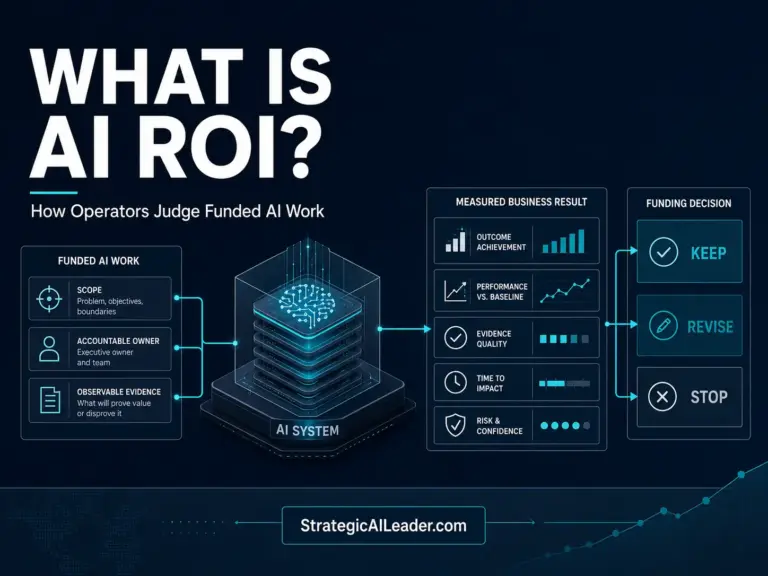
Define AI ROI as the judged return from funded AI work against the result the company said it would buy.
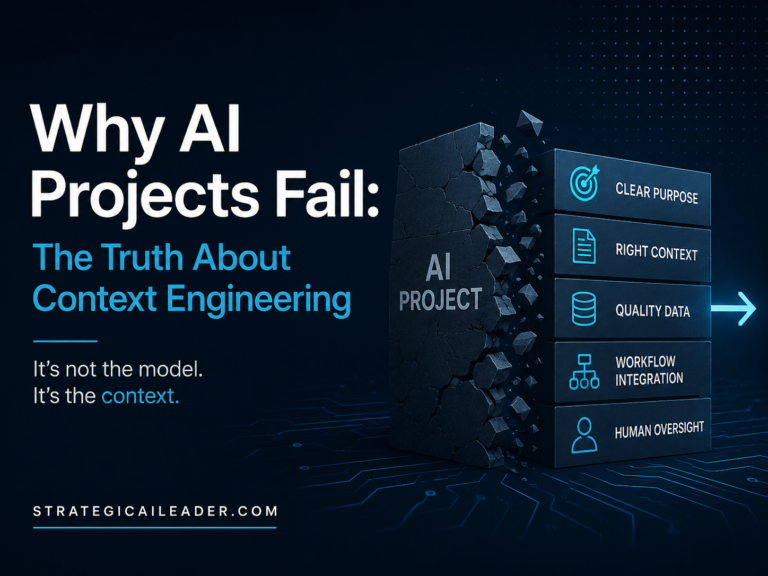
Most AI projects fail for a reason few teams recognize. The problem is rarely the model. It is missing context. Learn why context engineering has become the foundation of successful AI implementation and how hidden context failures derail projects before development even begins.

Most agent courses teach prompts. Few teach deployment. The Agent Skill Translation Framework closes this gap through three stages. Extract converts course concepts into reusable prompt blocks and task logic. Translate refactors prompts into workflows, binds tools, and adds memory layers. Deploy runs agents inside dashboards, automation systems, and production environments. Learning becomes structure. Structure becomes agent logic. Agent logic becomes working applications.
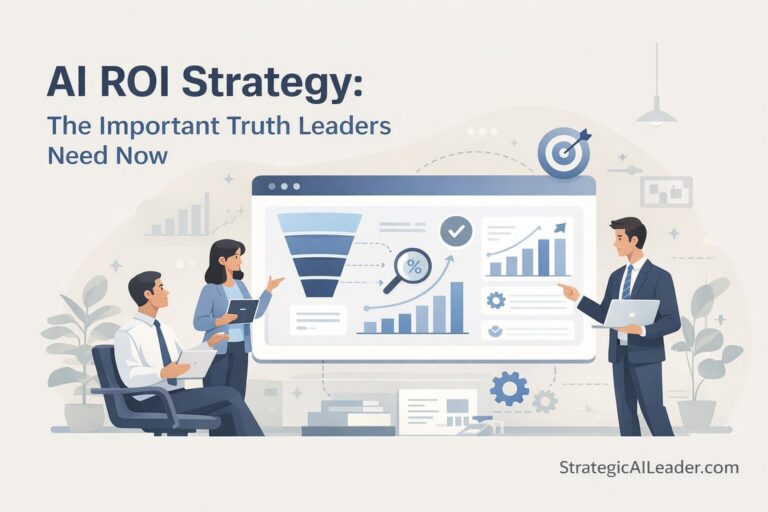
Most organizations treat AI investment returns as a tooling problem. In practice, returns follow decision architecture quality. The AI ROI Strategy Stack explains how specification, authority boundaries, execution integration, monitoring ownership, and learning loops convert automation into stable economic results instead of scaling hidden risk.
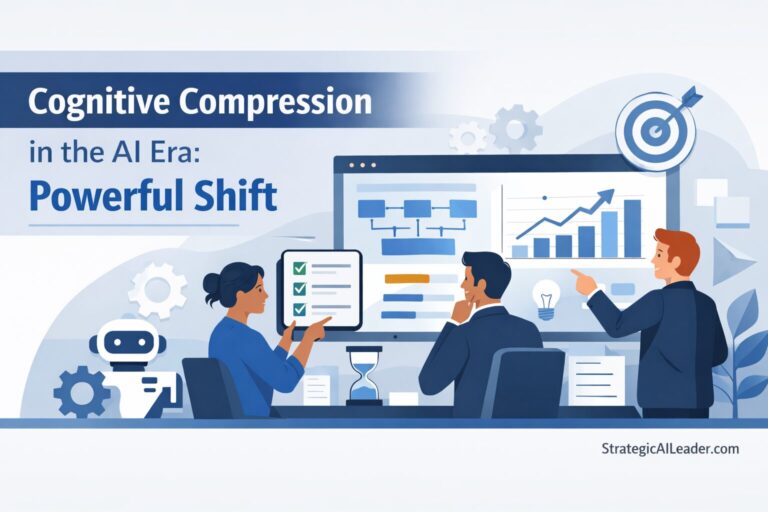
Cognitive Compression in the AI Era is reshaping knowledge work. As AI collapses execution cycles from weeks to minutes, the real bottleneck shifts to requirement quality and judgment. Leaders who redesign for structured thinking, constraint clarity, and economic alignment will outperform teams still optimizing for output volume.
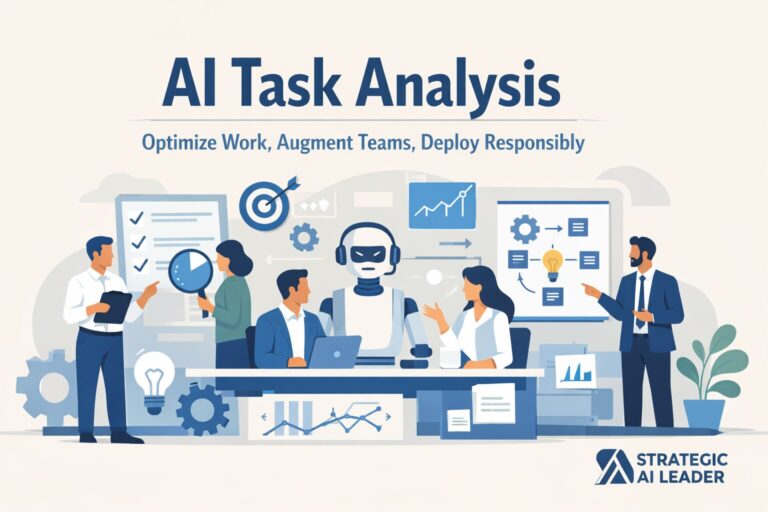
Most AI programs fail before delivering value because leaders focus on transformation rhetoric instead of task-level work. This practical guide introduces AI task analysis, a framework for evaluating AI potential, redesigning workflows, and augmenting teams without replacing people.
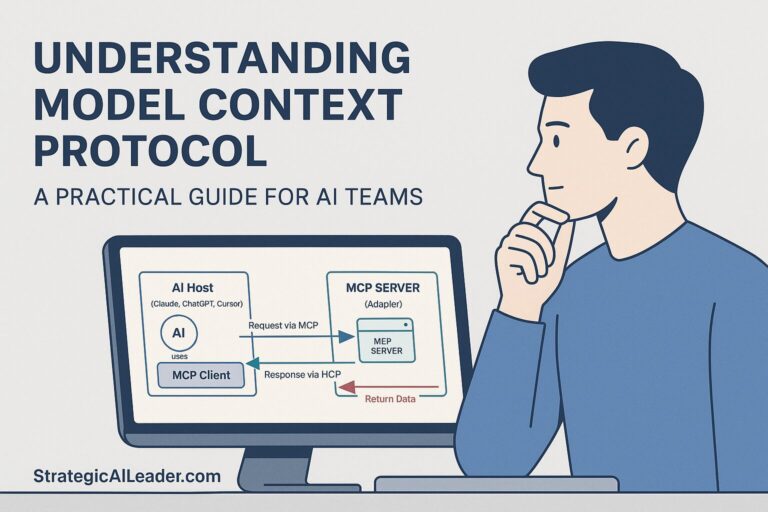
Model Context Protocol (MCP) is the missing link between AI tools and real business data. Instead of building dozens of custom integrations, teams use MCP to connect AI systems to CRMs, databases, and APIs through a single standard. This guide explains how it works, why it matters, and how leaders can use MCP to speed up AI deployment across the enterprise.
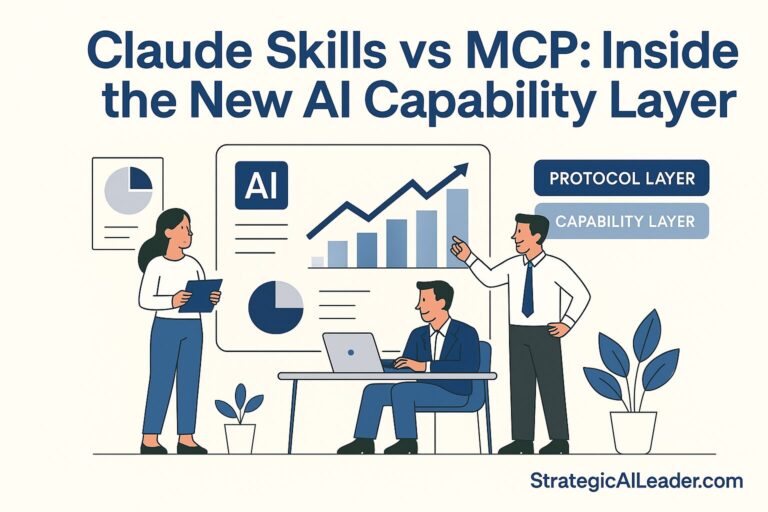
Claude Skills vs MCP explores how Anthropic’s new capability layer transforms AI from connected tools into reusable intelligence. Learn why this shift matters for teams building scalable, governed, and high-performance AI systems.
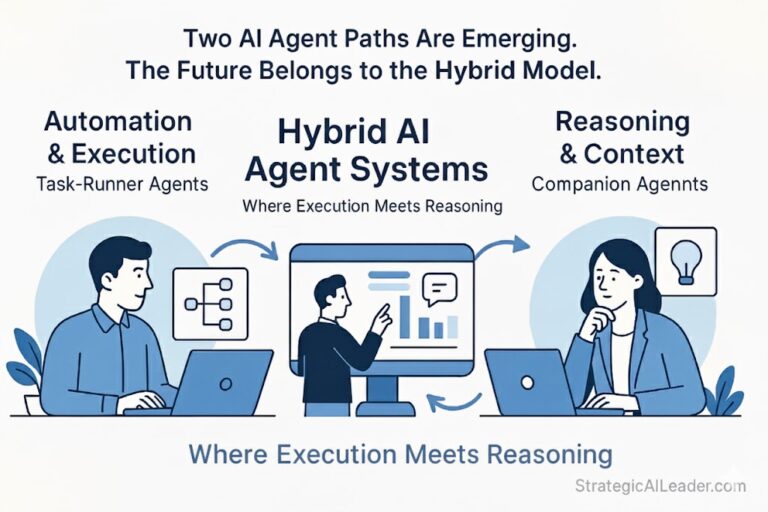
AI agents are splitting into two distinct paths: Task-Runner systems that execute and Companion systems that reason. Hybrid AI Agent Systems combine both, giving leaders a new way to align automation with strategy, improve decision velocity, and turn clarity into a competitive edge.
Most companies stall in pilots, treating AI agents as side projects. An effective AI Agent Strategy integrates agents into workflows, aligns them with KPIs, and governs their use. This article outlines five principles leaders need to move beyond experiments and deliver business results that scale with confidence.