
Proving AI ROI: How Operators Evaluate Funded AI Projects
Define AI ROI as the judged return from funded AI work against the result the company said it would buy.
AI strategy and automation go hand in hand. Leaders need to connect AI investments to business outcomes and design automation that saves time without creating risk. This tag brings together articles, frameworks, and case studies on building AI strategies that scale. It is designed for executives, COOs, and professionals who want practical playbooks to integrate AI into daily operations, improve decision-making, and create sustainable growth.
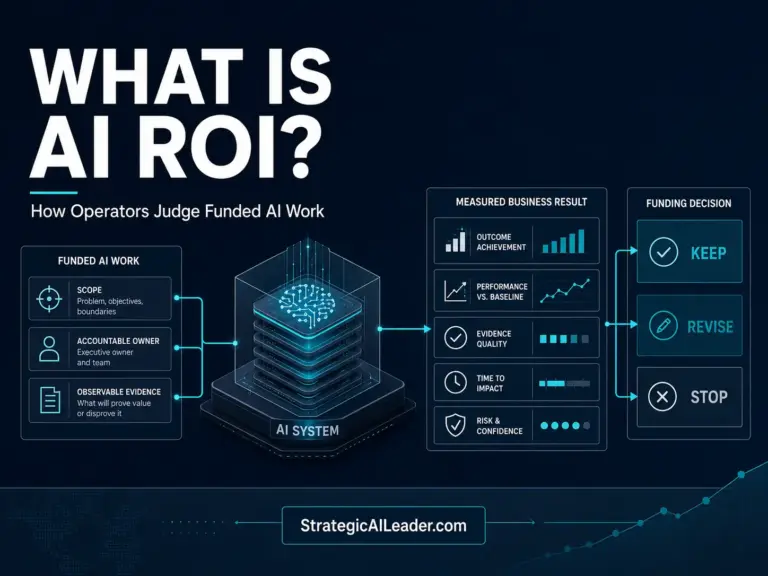
Define AI ROI as the judged return from funded AI work against the result the company said it would buy.
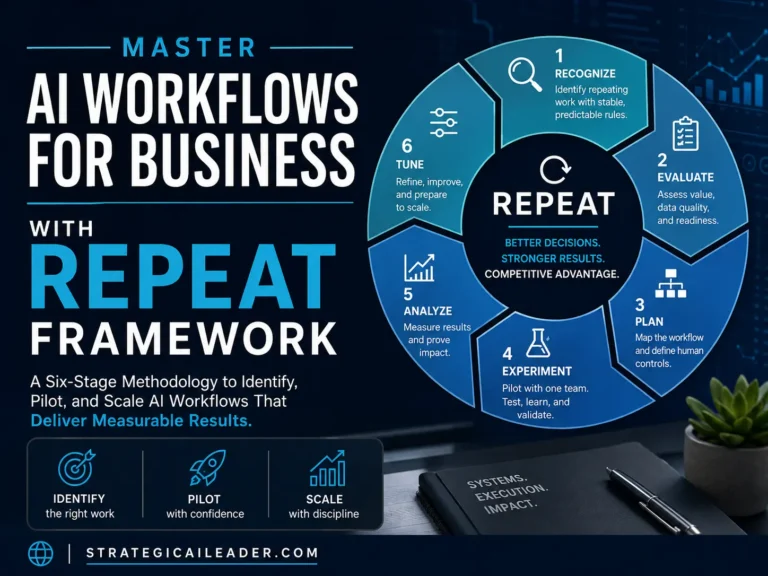
Most AI workflows fail because companies automate the wrong work. Success depends on choosing the right workflow, defining clear processes, and measuring results. The REPEAT Framework provides a six-stage methodology to identify repetitive work, run effective AI pilots, measure business impact, and scale automation while preserving human judgment. Learn practical systems, real examples, and proven strategies for successful AI implementation.

Most agent courses teach prompts. Few teach deployment. The Agent Skill Translation Framework closes this gap through three stages. Extract converts course concepts into reusable prompt blocks and task logic. Translate refactors prompts into workflows, binds tools, and adds memory layers. Deploy runs agents inside dashboards, automation systems, and production environments. Learning becomes structure. Structure becomes agent logic. Agent logic becomes working applications.
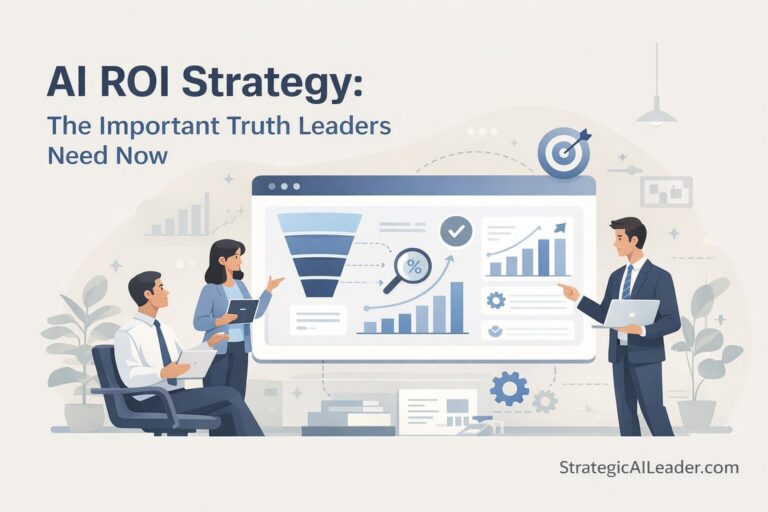
Most organizations treat AI investment returns as a tooling problem. In practice, returns follow decision architecture quality. The AI ROI Strategy Stack explains how specification, authority boundaries, execution integration, monitoring ownership, and learning loops convert automation into stable economic results instead of scaling hidden risk.
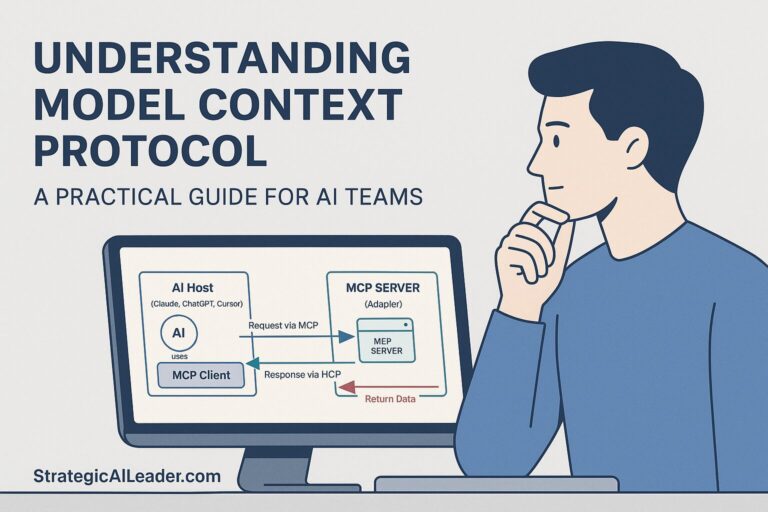
Model Context Protocol (MCP) is the missing link between AI tools and real business data. Instead of building dozens of custom integrations, teams use MCP to connect AI systems to CRMs, databases, and APIs through a single standard. This guide explains how it works, why it matters, and how leaders can use MCP to speed up AI deployment across the enterprise.

Agentic browsers are turning the web into a decision engine for AI. They don’t just display content, they read, reason, and act. Learn how this shift is redefining search, structure, and visibility for brands competing in the agentic era.
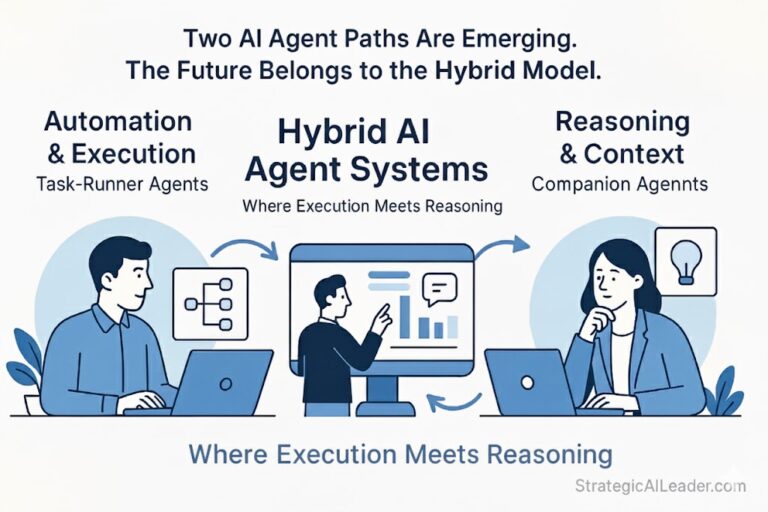
AI agents are splitting into two distinct paths: Task-Runner systems that execute and Companion systems that reason. Hybrid AI Agent Systems combine both, giving leaders a new way to align automation with strategy, improve decision velocity, and turn clarity into a competitive edge.
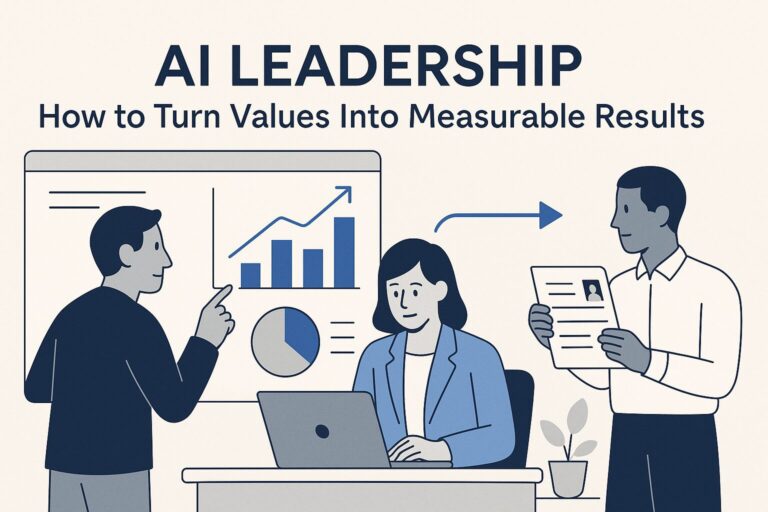
AI leadership requires more than values. Apple and Newsweek argue for “Super Leaders” who combine empathy and adaptability, but values alone do not drive outcomes. Leaders must pair ethics and vision with systems like feedback loops, review boards, and dashboards. The leaders who thrive in the AI era will not choose between philosophy and execution. They will combine both to deliver measurable results.
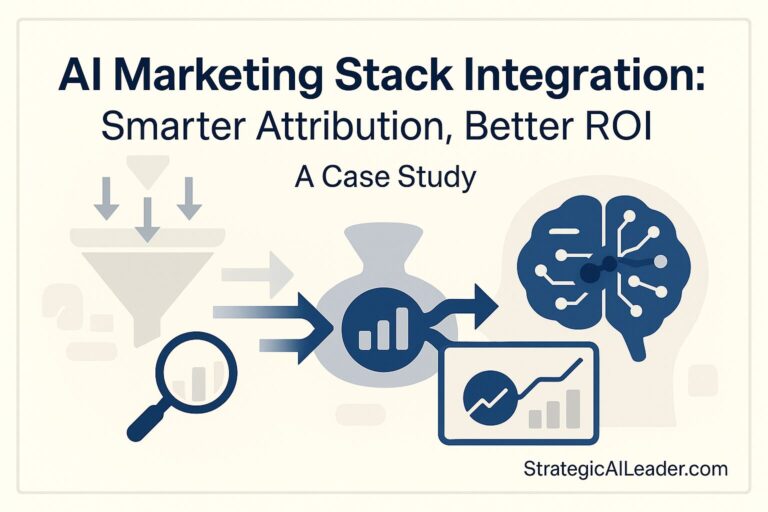
In this case study, I detail how MyEListing reduced wasted ad spend by 20% and lifted conversions 47% by integrating CRM, GA4, SEO, and paid media into a unified, AI-powered marketing stack. I led the design and execution of this system, moving the team from fragmented, siloed reporting to a single source of truth with real-time dashboards and AI-driven lead scoring. The result was tighter attribution, smarter budget allocation, and investor-ready LTV/CAC clarity. This project underscores my ability to diagnose operational inefficiencies, architect scalable systems, and deliver measurable growth outcomes.

In this case study, I detail how I designed and executed an AI digital marketing strategy for MyEListing that cut cost per lead by 65% and lifted conversions to 3.8%. By combining predictive lead scoring, NLP keyword clustering, marketing automation, and AI-driven budget allocation, I built a scalable framework that turned fragmented ad spend into a repeatable growth system. This project demonstrates my ability to diagnose inefficiencies, apply AI in practical ways, and deliver measurable business outcomes at scale.

I led the transformation of MyEListing’s growth strategy from scattered testing to a systematic experimentation discipline. By embedding ICE-R scoring, 70-20-10 portfolio balance, and a culture of safe-to-fail learning, I built the systems, trained the team, and created leadership alignment that delivered measurable results: 83% traffic growth, 47% higher conversion, 22% stronger retention, and 133% marketing ROI.