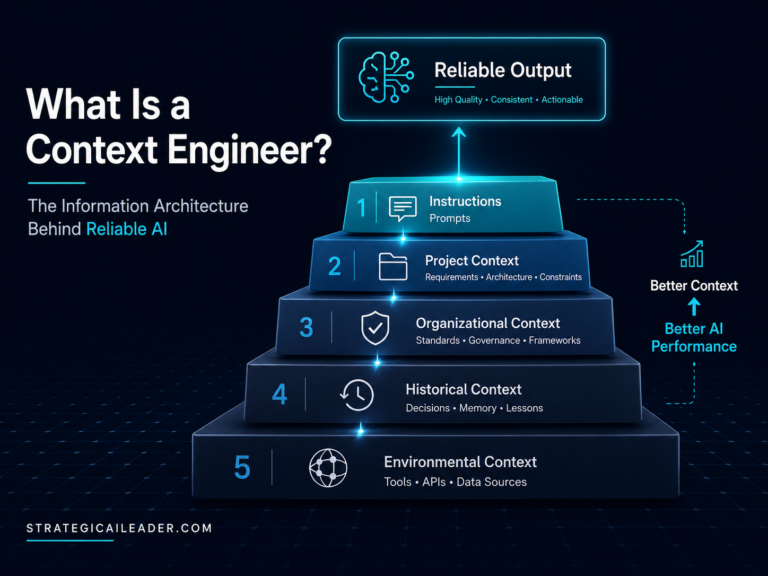
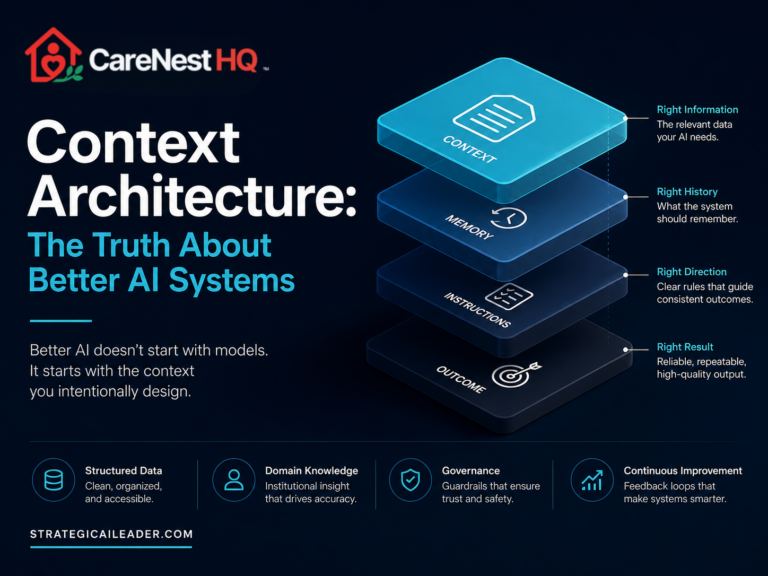
What is Context Engineering? The Truth About AI Success
Discover what a context engineer does and why context architecture matters more than prompts for AI success.
Discover how early-stage and growth-stage startups are leveraging AI to disrupt markets, reduce costs, and accelerate growth. From no-code tools to custom models, we cover practical tactics, real-world applications, and decision frameworks to help founders and teams implement AI with confidence.
Discover what a context engineer does and why context architecture matters more than prompts for AI success.
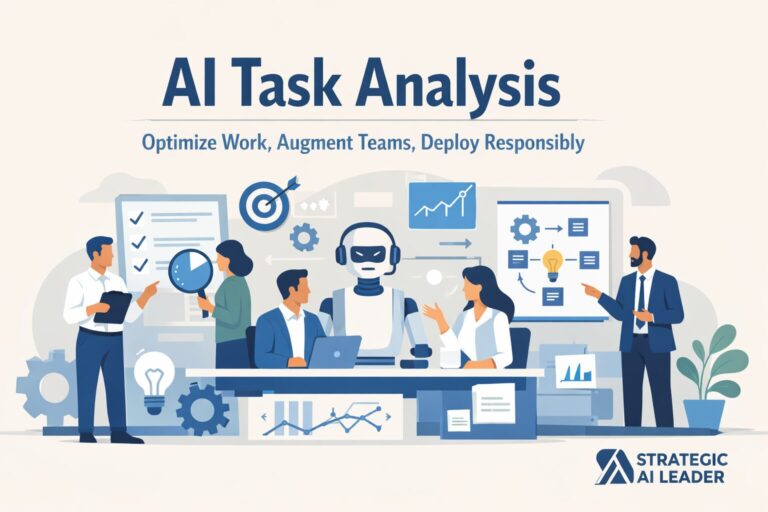
Most AI programs fail before delivering value because leaders focus on transformation rhetoric instead of task-level work. This practical guide introduces AI task analysis, a framework for evaluating AI potential, redesigning workflows, and augmenting teams without replacing people.
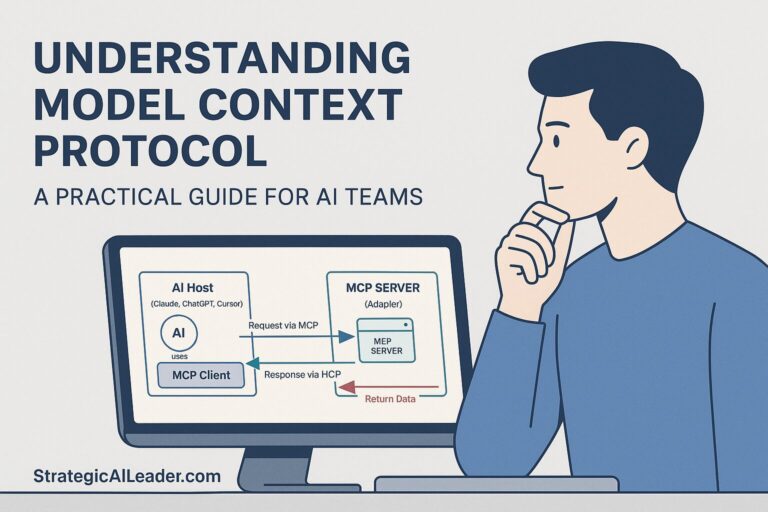
Model Context Protocol (MCP) is the missing link between AI tools and real business data. Instead of building dozens of custom integrations, teams use MCP to connect AI systems to CRMs, databases, and APIs through a single standard. This guide explains how it works, why it matters, and how leaders can use MCP to speed up AI deployment across the enterprise.
Agentic browsers are turning the web into a decision engine for AI. They don’t just display content, they read, reason, and act. Learn how this shift is redefining search, structure, and visibility for brands competing in the agentic era.
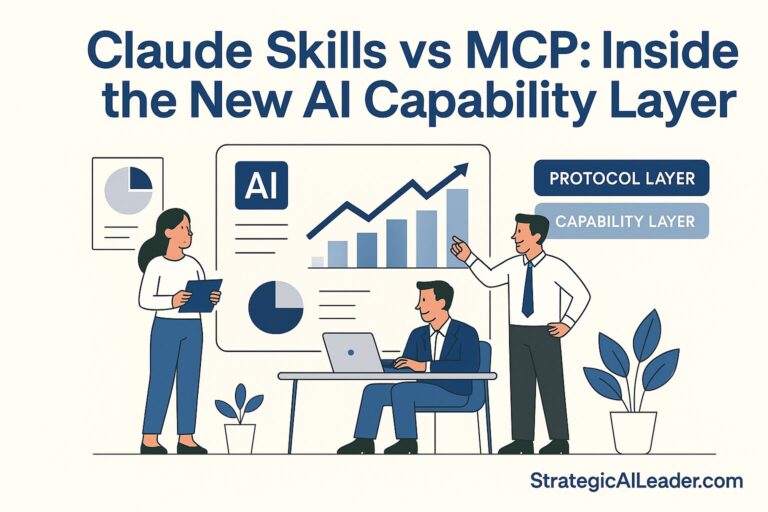
Claude Skills vs MCP explores how Anthropic’s new capability layer transforms AI from connected tools into reusable intelligence. Learn why this shift matters for teams building scalable, governed, and high-performance AI systems.
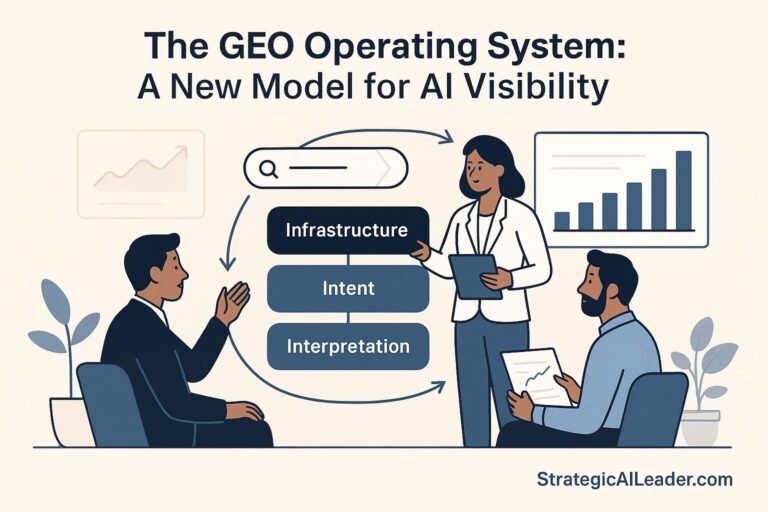
The GEO Operating System is a new model for AI visibility. It aligns marketing, IT, and PR under one framework to make visibility measurable, repeatable, and scalable. This article explains how the GEO-OS connects infrastructure, intent, and interpretation to help leaders turn fragmented efforts into a unified visibility engine.
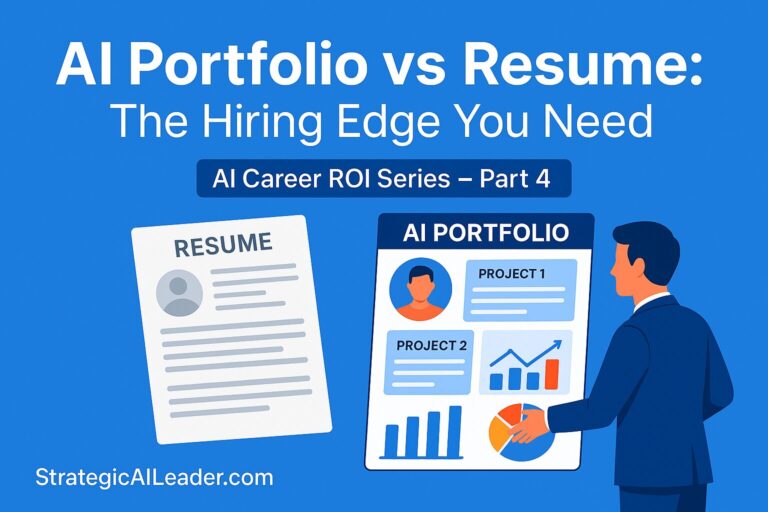
Resumes list titles and certifications, but employers in AI want proof of outcomes. An AI portfolio demonstrates what you built, how it worked, and the results it produced. In this article, I break down why portfolios outperform resumes in today’s hiring market, the four layers every portfolio needs, and quick wins to start building one this week.
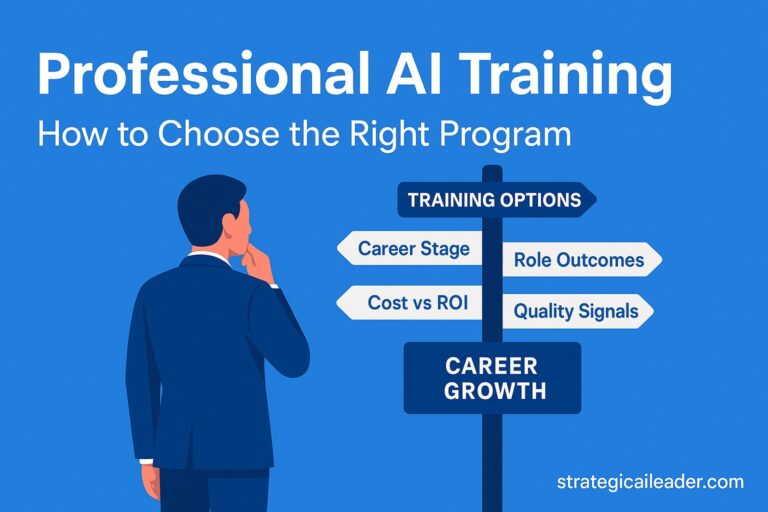
Choosing the right professional AI training is less about prestige and more about progress. This guide shares a 4-step framework to evaluate programs by career stage, role outcomes, cost versus ROI, and quality signals, with real-world examples to help you invest in training that delivers measurable career results.
AI certifications help you start the conversation, but ROI comes from applied skills. Part 2 shows how to document outcomes, prove value, and position yourself for AI-native hiring.
AI is reshaping every career path, and certifications are quickly becoming the new currency of credibility. In 2025, employers want more than degrees. They want proof of AI fluency. This guide breaks down the best AI certifications for every career stage, shows how employers evaluate them, and explains how to turn credentials into real career ROI.
The Hidden Cost of AI at Work Artificial intelligence has become the co-pilot of modern business. From marketing teams using generative models to draft campaigns, to finance leaders automating forecasting, to operators relying on AI assistants to summarize complex data, adoption is accelerating at an unprecedented pace. At the same time, growing research on AI…
AI is no longer optional, but adoption often fails when workflows break down, budgets scatter across too many tools, and trust erodes. This article outlines a six-step AI workflow process that helps leaders integrate systems, target the right tasks, measure trust, and assign accountability. Learn how to turn AI from a bolt-on feature into a core operating layer that drives measurable results.