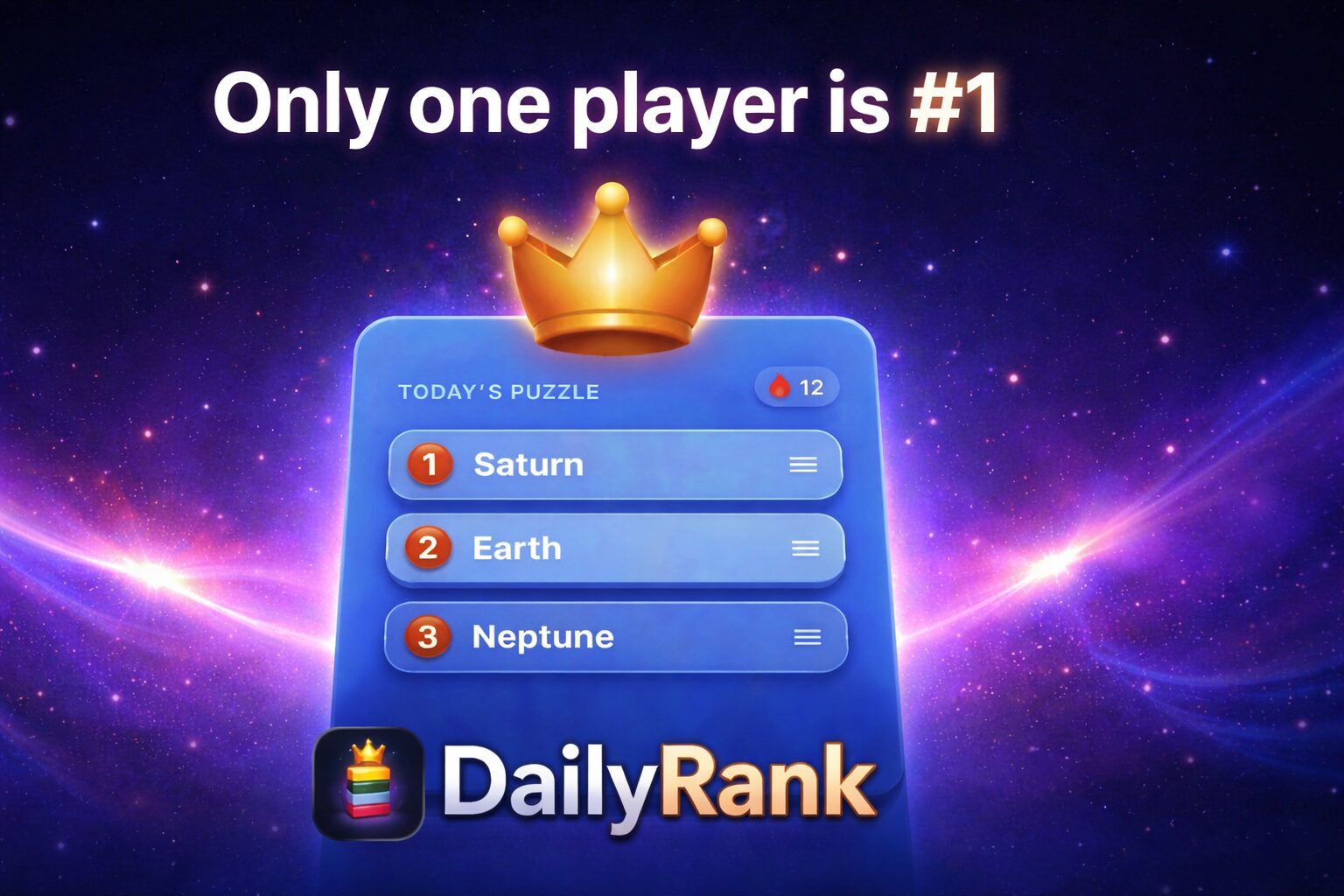

Vibe Coding a Game Loop: How I Turned Growth Loops Into DailyRank
For most of my career, I built growth systems inside large platforms.
Funnels. Lifecycle messaging. SEO distribution engines. Experimentation programs. Attribution layers.
DailyRank was different.
This time I took everything I knew about growth loops and translated it directly into a game loop. That process felt less like traditional product development and more like what people now call vibe coding a game loop — building from behavioral intuition rather than rigid specs.
It worked. Here is exactly how I did it.
What Vibe Coding Means for Product Builders
Vibe coding is not random experimentation.
It is structured intuition built on pattern recognition.
When you have spent years designing retention systems, you stop thinking in features and start thinking in behaviors:
- What brings someone back tomorrow
- What makes someone share
- What creates identity
- What creates urgency
- What creates competition
Instead of starting with architecture diagrams, I started with a single emotional outcome:
A player should finish a puzzle and immediately want to know where they rank globally.
That feeling shaped the entire product. That is what vibe coding in product development actually looks like in practice, emotional precision driving technical decisions, not the other way around.
How Growth Loops Translate Into Game Loops
Growth loops typically follow this structure:
acquire → activate → engage → retain → share → acquire again
Games compress that same loop into minutes instead of weeks.
Understanding how growth loops translate into game loops was the foundational insight behind DailyRank.
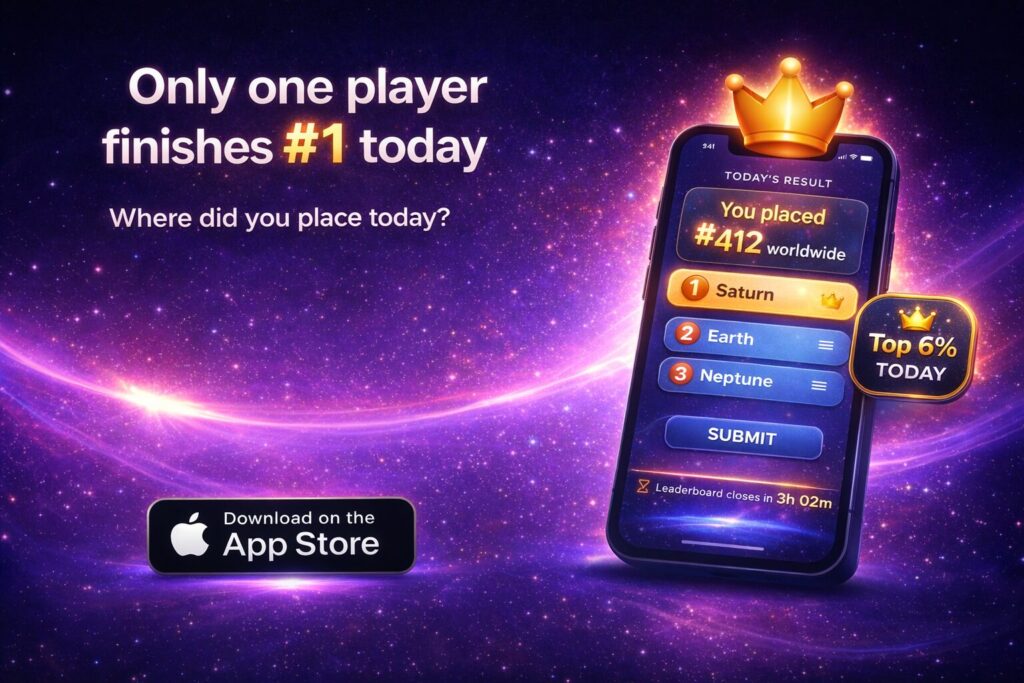
The loop I designed looks like this:
- See today’s puzzle
- Rank the items
- Submit
- Receive global placement
- Compare performance
- Share results
- Return tomorrow to improve placement
Same behavioral architecture. Different surface area. This is not accidental — it is applied growth strategy embedded inside gameplay design.
| Growth System | Game Equivalent |
|---|---|
| Lifecycle email | Streak mechanics |
| Retention cohorts | Daily puzzle structure |
| Social proof | Leaderboard rank |
| Conversion optimization | Puzzle clarity |
| Virality mechanics | Score sharing |
Once you see this mapping, game design becomes a growth laboratory.
Why Leaderboard Mechanics Increase Retention
Most puzzle apps focus on completion. DailyRank was designed around a different question.
Instead of asking Did you solve the puzzle, it asks Where did you place today.
This shift from completion to ranking changes the entire motivational structure:
- Completion feels private. Ranking feels public.
- Completion signals correctness. Ranking signals performance.
- Completion ends the loop. Ranking reopens it.
This is the psychology of leaderboard mechanics in games: rank creates identity, identity creates return behavior, return behavior creates habit.
🏆 Rank creates identity
🏆 Identity drives return behavior
🏆 Return behavior becomes habit
That loop compounds. Each day a player checks their placement, they leave wanting to improve it tomorrow. That is behavioral engagement architecture working exactly as designed.
How Daily Puzzle Mechanics Create Habit Formation
The biggest strategic mistake most puzzle apps make is offering unlimited play.
Unlimited play destroys urgency.
DailyRank uses one shared puzzle per day. Everyone sees the same challenge. Everyone competes simultaneously. That creates:
- Synchronization — the experience is a live event, not an archive
- Conversation — players can compare notes because the puzzle is shared
- Anticipation — tomorrow’s puzzle is always coming
- Urgency — a single attempt means every decision matters
This is how daily puzzle mechanics create habit formation. The daily reset loop is not a design constraint. It is the core retention mechanism.
The daily reset loop trains users to expect a reward at a specific time. That expectation is the habit. The puzzle is just the trigger.
Designing Status-Driven Engagement Systems
Status motivation is more powerful than completion motivation in behavioral engagement design.
When a player ranks in the top 10% globally, that result is worth sharing. It signals something about them. It creates social currency.
This is the difference between building for completion and building for status-driven engagement:
- Completion rewards the player privately
- Status rewards the player publicly and relatably
Sharing a rank score is a social act. It invites comparison. It generates conversation. And it brings new users into the loop.
🎯 A leaderboard creates identity
🎯 A daily puzzle creates habit
🎯 A single attempt creates urgency
🎯 A timer creates pressure
🎯 Global ranking creates status
Together these mechanics form a self-reinforcing behavioral loop — a mobile game retention architecture that does not require external ad spend to sustain engagement.
Building a Mobile Game Using Growth Strategy Principles
Vibe coding helped me move faster than traditional product planning would have allowed.
If I had approached DailyRank like a typical SaaS launch, I would still be writing specs.
Instead I followed one rule: ship the smallest version of the loop that feels complete.
That meant prioritizing:
- Daily reset logic
- Global leaderboard timing
- Single attempt structure
- Puzzle clarity
- Share output formatting
Everything else came later. Speed mattered early because loops only reveal themselves after real users touch them. No spec survives contact with player behavior.
What Growth Leaders Learn From Building Games
Games surface behavior faster than almost any SaaS workflow. The feedback loop is immediate:
- How fast do people decide
- Where do they hesitate
- When do they abandon
- What do they share
- What do they compare
This is why building a mobile game as a growth leader is such a valuable exercise. You are not just shipping a product. You are running a live behavioral experiment every single day.
DailyRank became a fast-cycle learning engine for habit-forming game mechanics — not just a puzzle app.
From Growth Strategy to Product: The Shift That Changes Everything
I have spent years designing growth systems inside large organizations.
DailyRank let me translate that experience into something tangible and mine.
Instead of optimizing someone else’s funnel, I built my own loop. Instead of analyzing retention dashboards, I designed retention behavior. Instead of advising product teams, I shipped a product myself.
That shift changes how you think about strategy permanently.
Growth is not something you add later. Growth is something you design from the first interaction.
DailyRank is the clearest example of that principle I have built so far.
And there is one more thing I get to add to my career now.
App developer.
Not as a title I was given. As something I built. The same way I built the loop, from instinct, from pattern recognition, from years of watching how people behave and deciding to design for it myself. DailyRank is live in the App Store, played by real people, every single day. That changes how the rest of the career reads.
Try DailyRank: App Store
DailyRankPuzzle.com
Key takeaways from this article:
- Vibe coding a game loop means designing from behavioral outcomes, not feature lists
- Growth loops and game loops share the same architecture — games just compress the timeline
- Daily puzzle mechanics, leaderboard psychology, and single-attempt urgency combine to create durable habit formation
- Status-driven engagement outperforms completion-driven engagement for shareability and return behavior
- Building a game is one of the fastest ways to stress-test growth strategy in real conditions
About the Author
I’m Richard Naimy, an operator and product leader with over 20 years of experience growing platforms like Realtor.com and MyEListing.com. I work with founders and operating teams to solve complex problems at the intersection of product, marketing, AI, systems, and scale. I write to share real-world lessons from inside fast-moving organizations, offering practical strategies that help ambitious leaders build smarter and lead with confidence.
I write about:
- AI + MarTech Automation
- AI Strategy
- COO Ops & Systems
- Growth Strategy (B2B & B2C)
- Infographic
- Leadership & Team Building
- My Case Studies
- Personal Journey
- Revenue Operations (RevOps)
- Sales Strategy
- SEO & Digital Marketing
- Strategic Thinking
Want 1:1 strategic support?
Connect with me on LinkedIn
Read my playbooks on Substack
Leave a Reply