
AI Pilot: How to Run a Proven Bounded Test
Define an AI pilot as a bounded test of one funded AI use with an owner, a stop rule, and a keep-revise-stop judgment.
Actionable insights and strategic models for building and applying AI frameworks in real business contexts. Learn how top leaders structure AI adoption, governance, and execution to drive measurable growth.
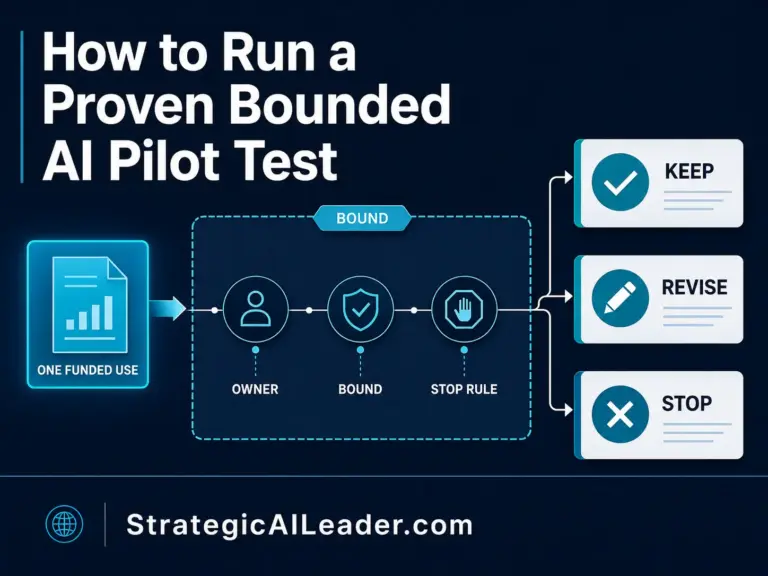
Define an AI pilot as a bounded test of one funded AI use with an owner, a stop rule, and a keep-revise-stop judgment.
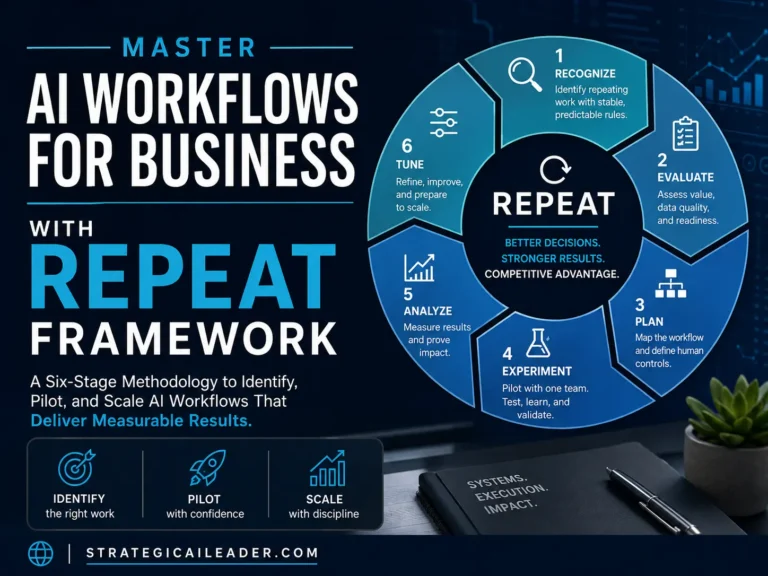
Most AI workflows fail because companies automate the wrong work. Success depends on choosing the right workflow, defining clear processes, and measuring results. The REPEAT Framework provides a six-stage methodology to identify repetitive work, run effective AI pilots, measure business impact, and scale automation while preserving human judgment. Learn practical systems, real examples, and proven strategies for successful AI implementation.

Most agent courses teach prompts. Few teach deployment. The Agent Skill Translation Framework closes this gap through three stages. Extract converts course concepts into reusable prompt blocks and task logic. Translate refactors prompts into workflows, binds tools, and adds memory layers. Deploy runs agents inside dashboards, automation systems, and production environments. Learning becomes structure. Structure becomes agent logic. Agent logic becomes working applications.
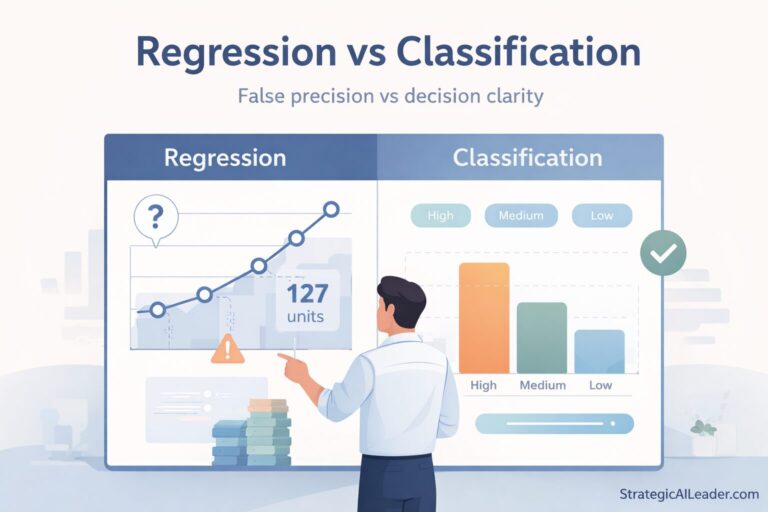
I wasted $8K applying regression when a real business needed classification. This article breaks down the failure, the lesson, and how better problem framing leads to better machine learning decisions.
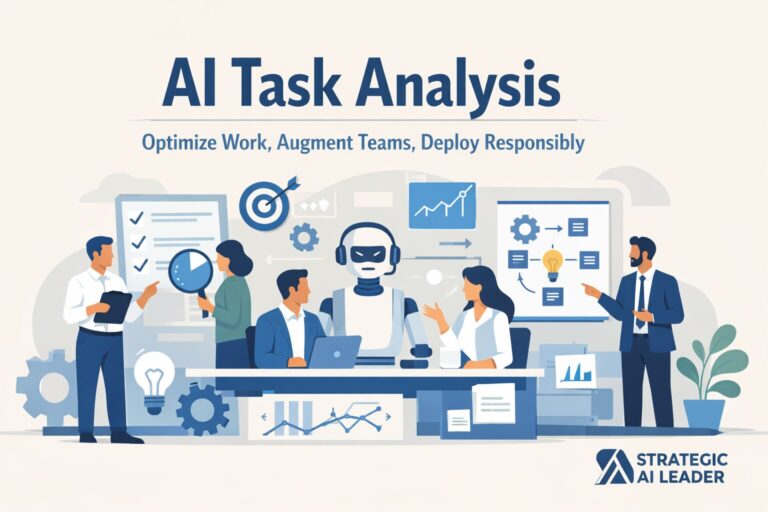
Most AI programs fail before delivering value because leaders focus on transformation rhetoric instead of task-level work. This practical guide introduces AI task analysis, a framework for evaluating AI potential, redesigning workflows, and augmenting teams without replacing people.
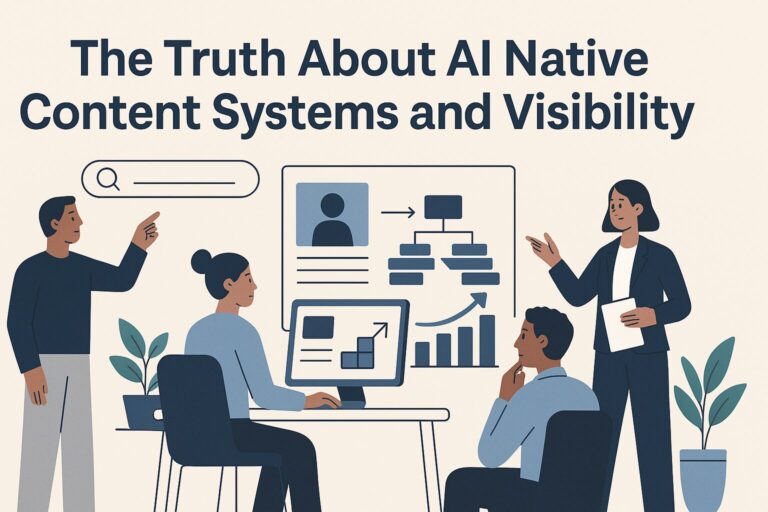
What I Learned Testing Content Systems Against Five AI Models My Contrarian Observation I ran one of my own long form pages through five AI models last month. None of them pulled the headline. None of them focused on the sections I thought were most important. The models rearranged ideas, ignored nuance, and prioritized text…
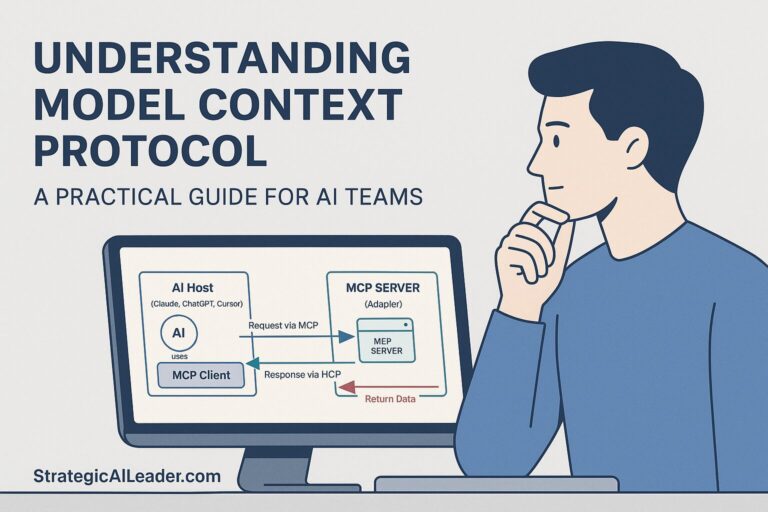
Model Context Protocol (MCP) is the missing link between AI tools and real business data. Instead of building dozens of custom integrations, teams use MCP to connect AI systems to CRMs, databases, and APIs through a single standard. This guide explains how it works, why it matters, and how leaders can use MCP to speed up AI deployment across the enterprise.
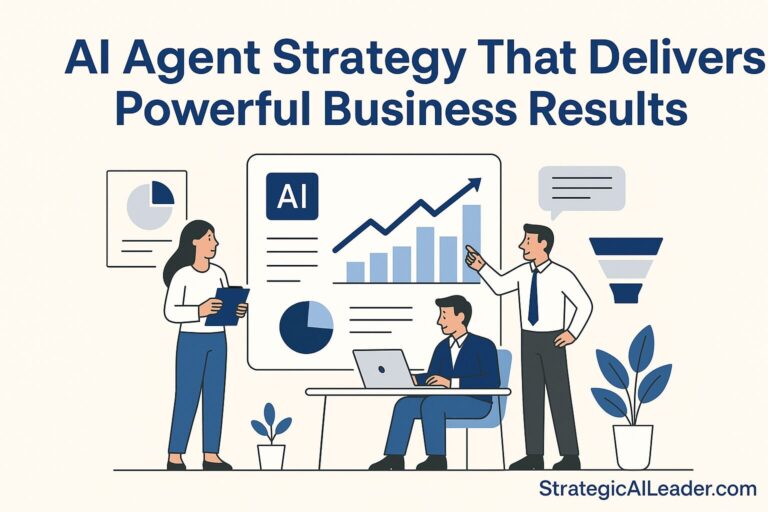
Most companies stall in pilots, treating AI agents as side projects. An effective AI Agent Strategy integrates agents into workflows, aligns them with KPIs, and governs their use. This article outlines five principles leaders need to move beyond experiments and deliver business results that scale with confidence.

In this AI case study, I show how I applied automation at Lia’s Flowers to move from gut-based planning to a structured system built on forecasting, delivery optimization, and dashboards. My approach reduced waste by 20%, improved on-time deliveries by 15%, and freed staff to focus on design and service. The result demonstrates my ability to translate AI into measurable business outcomes while keeping the personal touch that customers value.

AI is no longer optional, but adoption often fails when workflows break down, budgets scatter across too many tools, and trust erodes. This article outlines a six-step AI workflow process that helps leaders integrate systems, target the right tasks, measure trust, and assign accountability. Learn how to turn AI from a bolt-on feature into a core operating layer that drives measurable results.
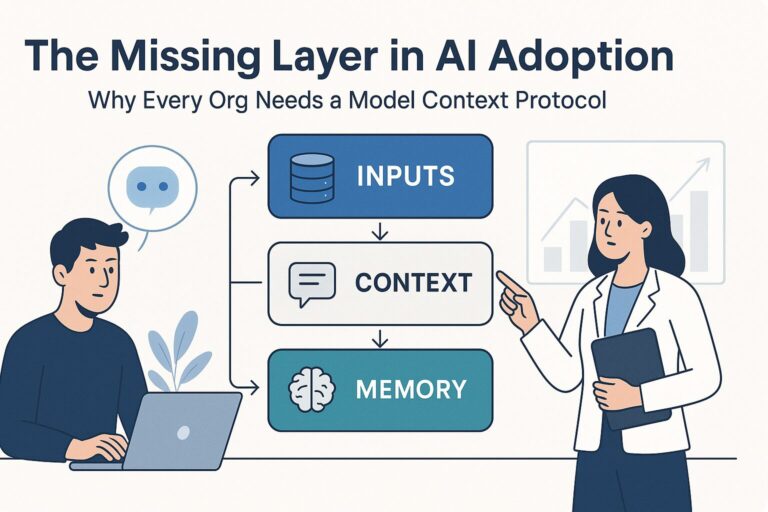
The problem wasn’t the AI model – it was the lack of continuity. Each interaction started from scratch, with no structured way to carry forward knowledge, context, or organizational intelligence. Without memory or role awareness, the system failed to evolve with your business. The result? Fragmented answers, hallucinated logic, and user frustration.