AI to Help Caregivers: Building Technology That Supports Families
Discover why CareNestHQ supports caregivers instead of replacing them. Learn the five design principles guiding every product decision.
This tag focuses on the nuts and bolts of successful AI implementation — from aligning stakeholders and integrating with legacy systems to deploying models at scale. Explore field-tested strategies, operational frameworks, and tools that help leaders move beyond experimentation and into enterprise-grade execution. Ideal for COOs, digital transformation leaders, and teams building durable AI capabilities.
Discover why CareNestHQ supports caregivers instead of replacing them. Learn the five design principles guiding every product decision.
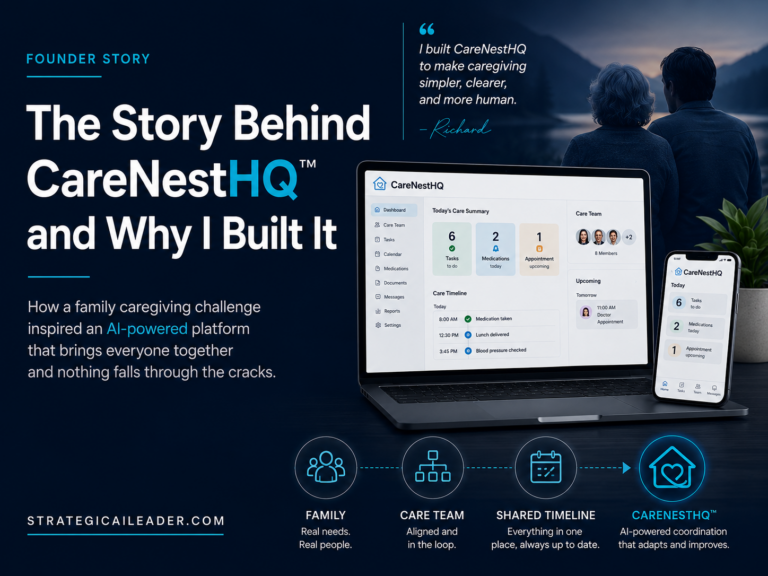
CareNestHQ™ began with a personal family caregiving challenge, but it became much more than a software project. This is the story behind the platform, the product decisions that shaped it, and the AI-powered workflows designed to help families coordinate care with greater clarity and confidence.
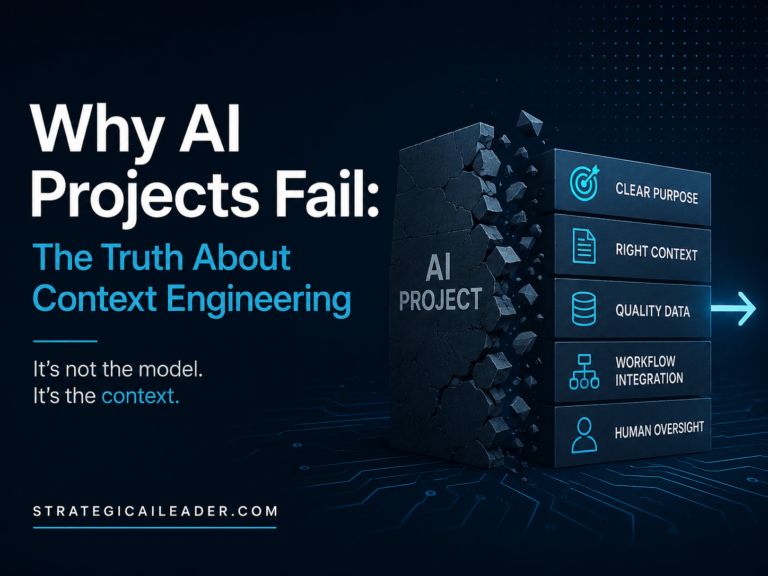
Most AI projects fail for a reason few teams recognize. The problem is rarely the model. It is missing context. Learn why context engineering has become the foundation of successful AI implementation and how hidden context failures derail projects before development even begins.
Most agent courses teach prompts. Few teach deployment. The Agent Skill Translation Framework closes this gap through three stages. Extract converts course concepts into reusable prompt blocks and task logic. Translate refactors prompts into workflows, binds tools, and adds memory layers. Deploy runs agents inside dashboards, automation systems, and production environments. Learning becomes structure. Structure becomes agent logic. Agent logic becomes working applications.
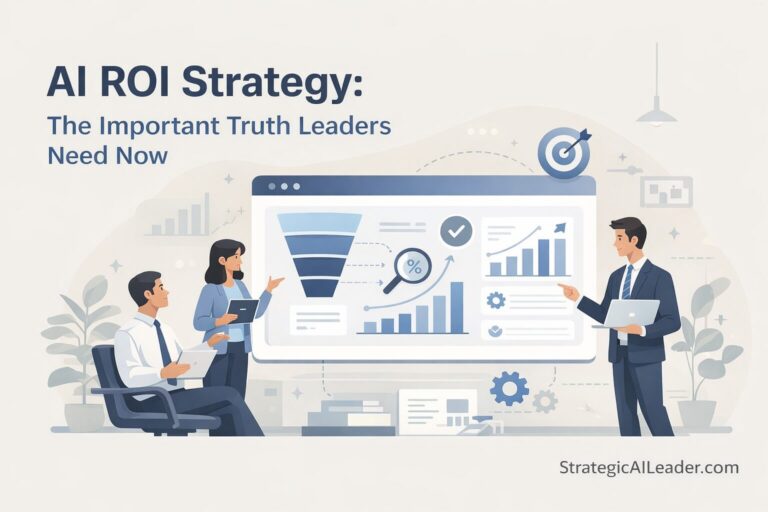
Most organizations treat AI investment returns as a tooling problem. In practice, returns follow decision architecture quality. The AI ROI Strategy Stack explains how specification, authority boundaries, execution integration, monitoring ownership, and learning loops convert automation into stable economic results instead of scaling hidden risk.
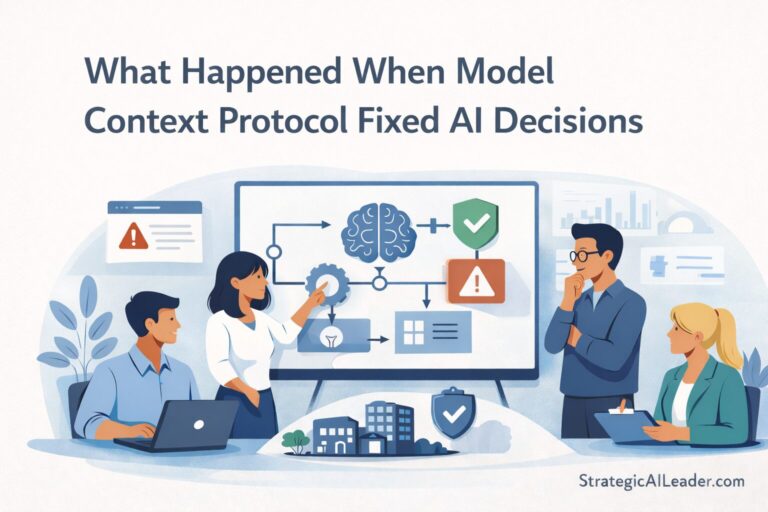
I wired an AI system into a real flower shop to see why so many AI projects collapse under real constraints. This article shows how Model Context Protocol fixed AI decisions by grounding an LLM in intent, behavior, inventory, and revenue instead of prompts and theory.
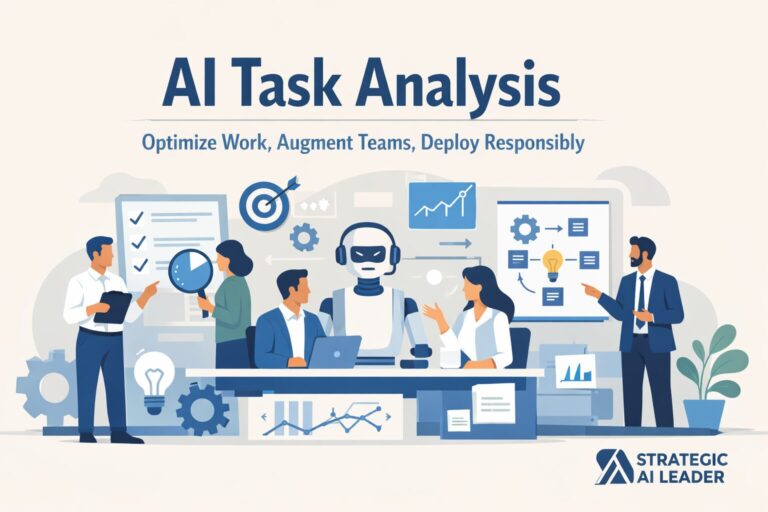
Most AI programs fail before delivering value because leaders focus on transformation rhetoric instead of task-level work. This practical guide introduces AI task analysis, a framework for evaluating AI potential, redesigning workflows, and augmenting teams without replacing people.
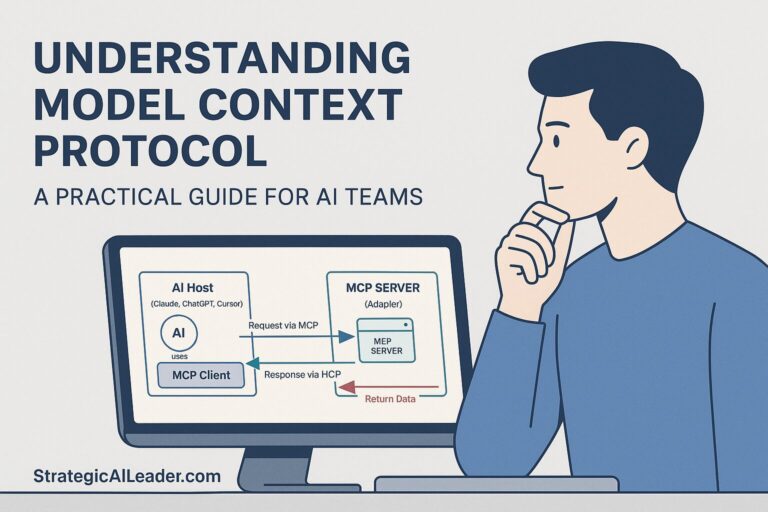
Model Context Protocol (MCP) is the missing link between AI tools and real business data. Instead of building dozens of custom integrations, teams use MCP to connect AI systems to CRMs, databases, and APIs through a single standard. This guide explains how it works, why it matters, and how leaders can use MCP to speed up AI deployment across the enterprise.
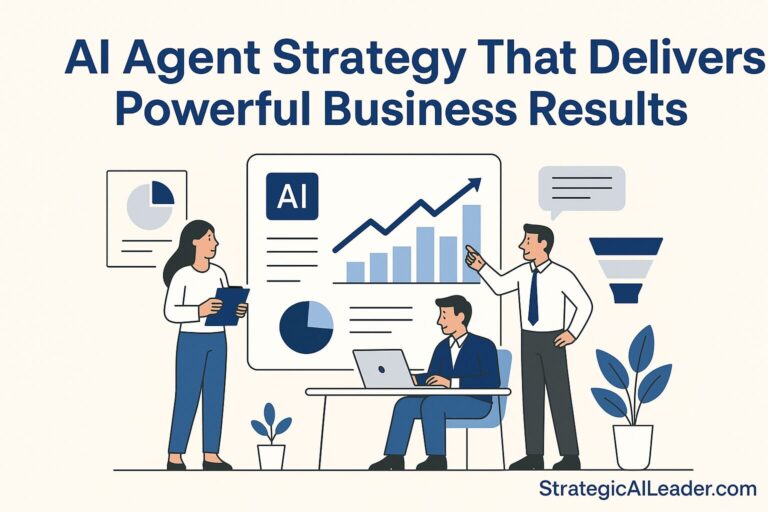
Most companies stall in pilots, treating AI agents as side projects. An effective AI Agent Strategy integrates agents into workflows, aligns them with KPIs, and governs their use. This article outlines five principles leaders need to move beyond experiments and deliver business results that scale with confidence.
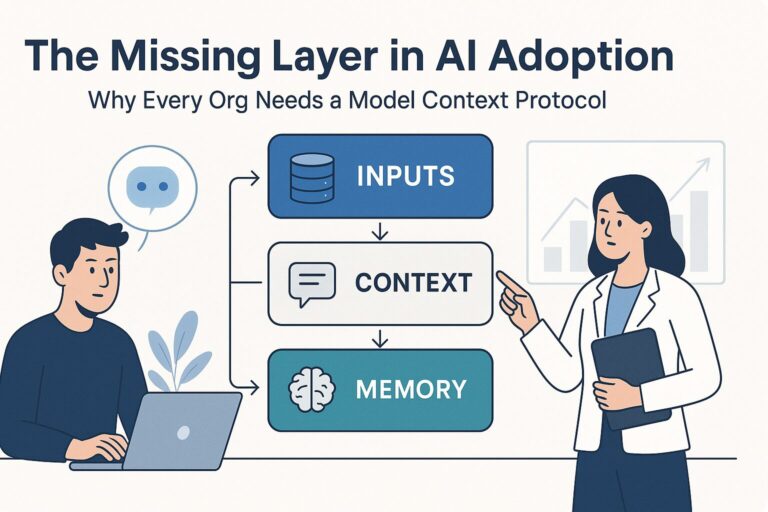
The problem wasn’t the AI model – it was the lack of continuity. Each interaction started from scratch, with no structured way to carry forward knowledge, context, or organizational intelligence. Without memory or role awareness, the system failed to evolve with your business. The result? Fragmented answers, hallucinated logic, and user frustration.
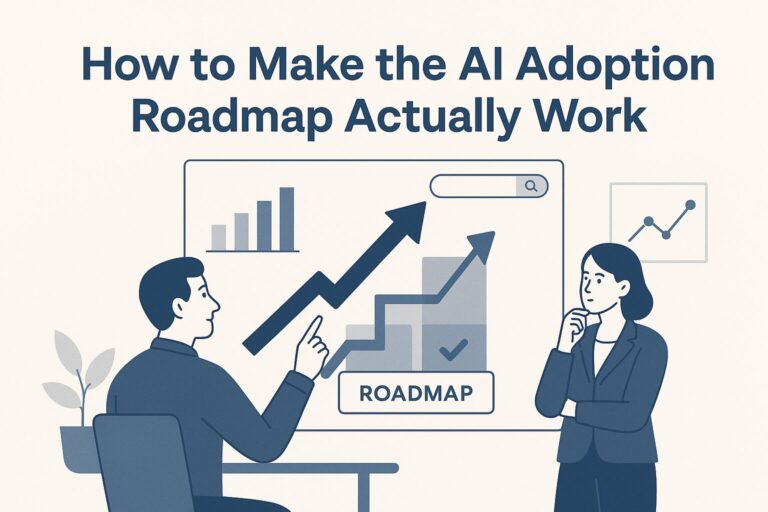
Here’s the thing about AI adoption roadmaps that nobody talks about at those fancy conferences: most of them are complete BS. You know the drill. A consultant shows up with a 47-slide deck filled with buzzwords like ‘digital transformation journey‘ (a strategic approach to integrating digital technologies across all aspects of a business) and ‘AI-first…
In this case study, I detail how I designed and executed an AI digital marketing strategy for MyEListing that cut cost per lead by 65% and lifted conversions to 3.8%. By combining predictive lead scoring, NLP keyword clustering, marketing automation, and AI-driven budget allocation, I built a scalable framework that turned fragmented ad spend into a repeatable growth system. This project demonstrates my ability to diagnose inefficiencies, apply AI in practical ways, and deliver measurable business outcomes at scale.