
How to Master Operational Leadership After Strategy
Learn what operational leadership means and use a four-part framework to turn strategy into owned practice, clear standards, and visible results.
Leadership Frameworks provide the structure leaders need to scale teams, set vision, and operationalize culture. This tag curates high-leverage models, decision-making tools, and real-world playbooks used by founders, COOs, and strategic operators to lead with clarity, consistency, and impact during high-growth phases.

Learn what operational leadership means and use a four-part framework to turn strategy into owned practice, clear standards, and visible results.
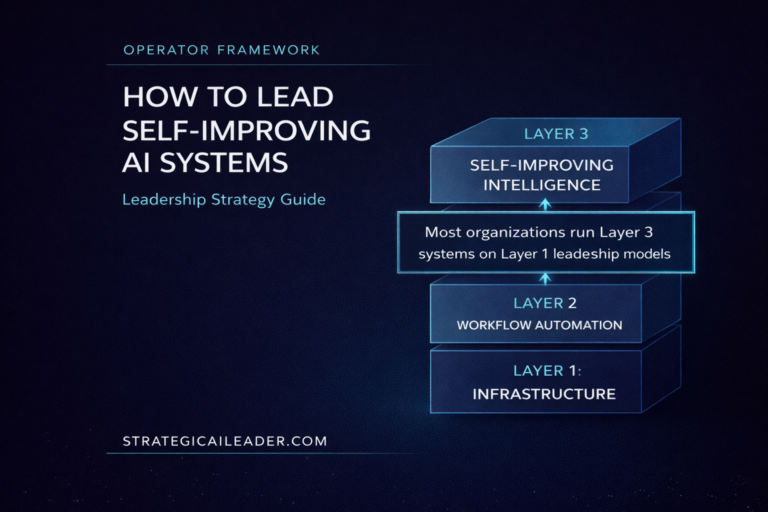
Most leaders are preparing teams to use AI tools faster. Few are preparing to supervise systems that improve themselves. This article introduces the Three Layers of AI Work framework and explains why oversight architecture, not tool adoption, determines who benefits as self-improving AI systems scale.
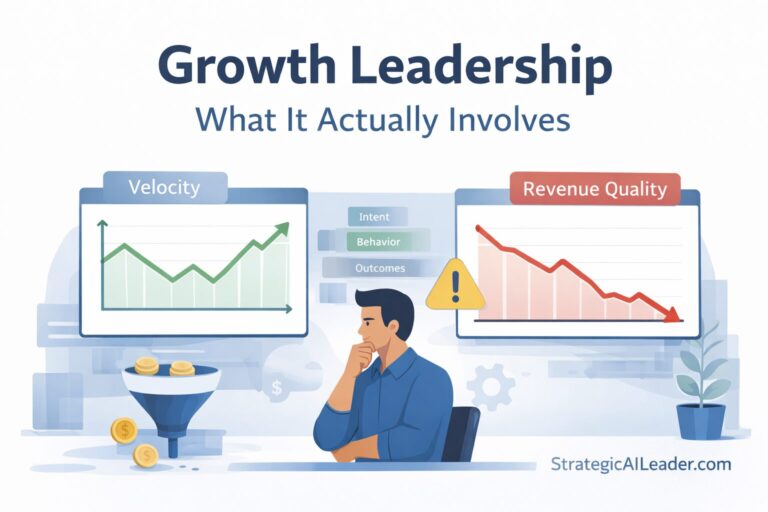
Growth leadership is not about shipping more experiments or celebrating green dashboards. It is about reconciling conflicting signals when velocity rises but revenue quality declines. Real growth leadership means owning decisions under uncertainty, aligning intent, behavior, and outcomes before money and trust are at risk.
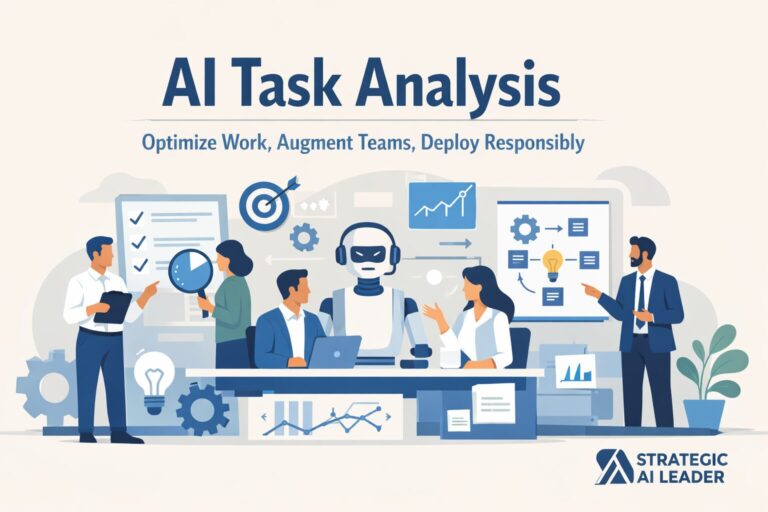
Most AI programs fail before delivering value because leaders focus on transformation rhetoric instead of task-level work. This practical guide introduces AI task analysis, a framework for evaluating AI potential, redesigning workflows, and augmenting teams without replacing people.
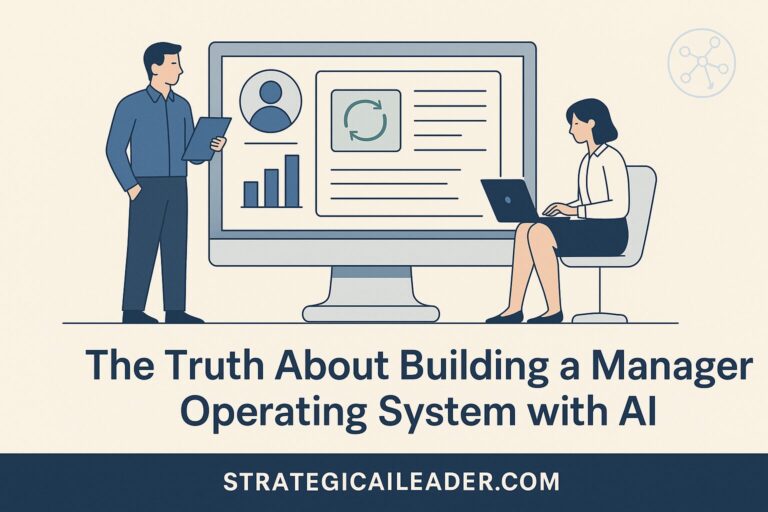
Modern leadership demands more than instincts. The most effective leaders now build a Manager Operating System, a structured way to process information, make decisions, and drive clarity at scale. In this article, Richard Naimy shares how to design your own operating system using AI tools to automate routine work, surface patterns, and create more time for strategic thinking. Learn what worked, what didn’t, and how small systems changes can multiply team impact, reduce friction, and strengthen decision quality.
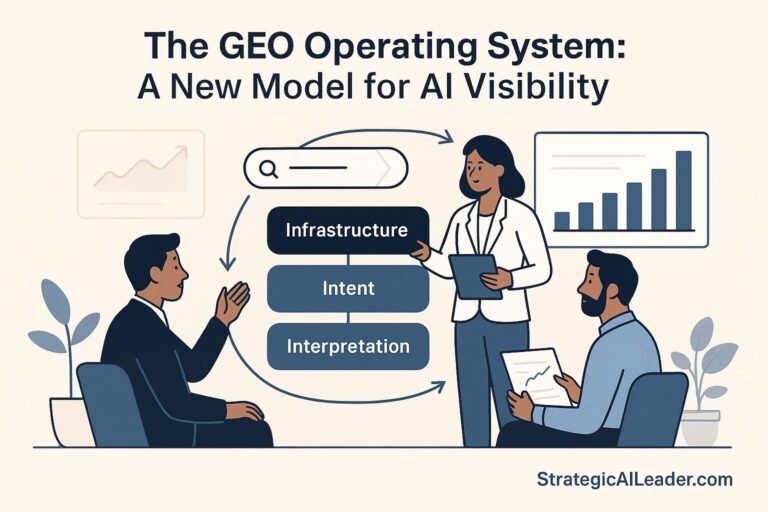
The GEO Operating System is a new model for AI visibility. It aligns marketing, IT, and PR under one framework to make visibility measurable, repeatable, and scalable. This article explains how the GEO-OS connects infrastructure, intent, and interpretation to help leaders turn fragmented efforts into a unified visibility engine.

The Hidden Cost of AI at Work Artificial intelligence has become the co-pilot of modern business. From marketing teams using generative models to draft campaigns, to finance leaders automating forecasting, to operators relying on AI assistants to summarize complex data, adoption is accelerating at an unprecedented pace. At the same time, growing research on AI…

AI is no longer optional, but adoption often fails when workflows break down, budgets scatter across too many tools, and trust erodes. This article outlines a six-step AI workflow process that helps leaders integrate systems, target the right tasks, measure trust, and assign accountability. Learn how to turn AI from a bolt-on feature into a core operating layer that drives measurable results.
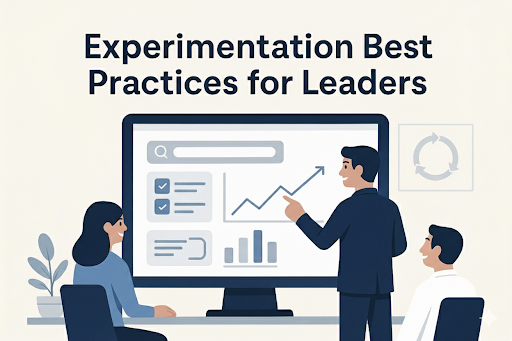
Leaders often run experiments that fail to impact revenue. The difference between random testing and real growth comes from applying experimentation best practices. In this guide, we share proven frameworks, case studies, and systems that help leaders turn experiments into repeatable engines for sustainable growth.
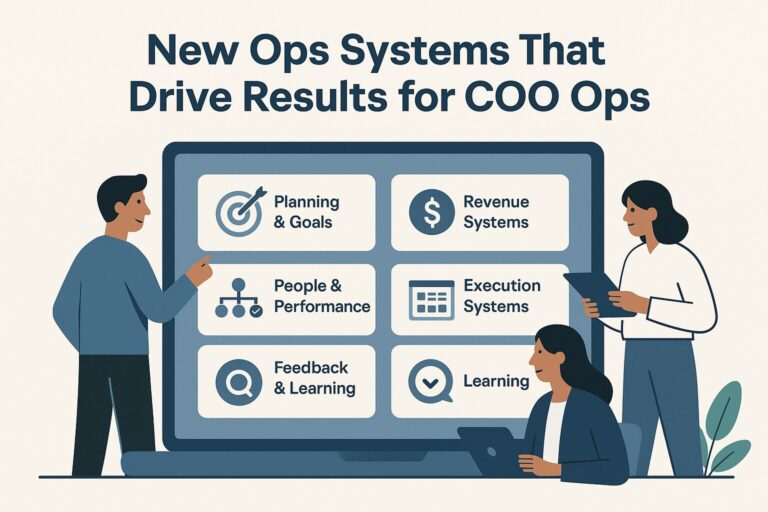
Build Ops Systems that scale without chaos. This guide gives you the five core systems, a simple 30-60-90 rollout, and the exact metrics to prove progress. Learn how to focus goals, tighten ownership, speed decisions, and turn forecasts into facts. Write the playbook once. Improve it every week.
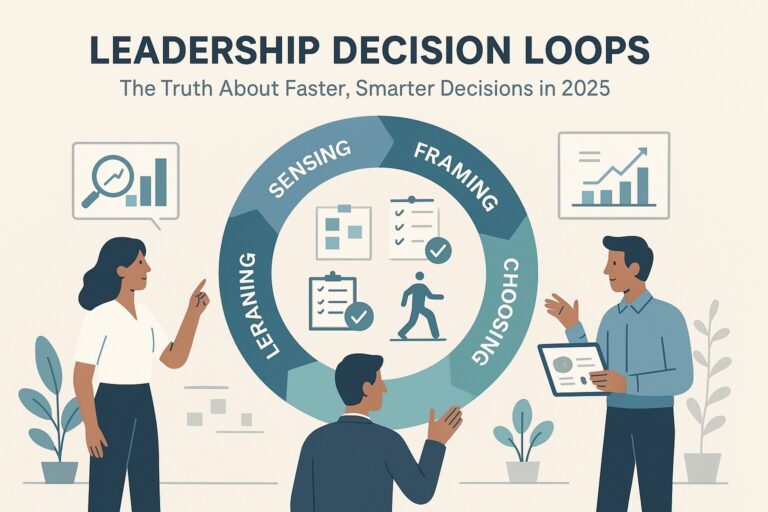
Leadership decision loops give leaders a repeatable system to balance speed and accuracy. In 2025, they are the difference between falling behind and staying ahead. This framework shows how structured loops improve team management, employee engagement, and leadership skills.

As Acting VP and COO at MyEListing, I built high-trust teams that turned fragmented ownership into clear accountability, raised listing accuracy to 96%, cut release cycle time by 35%, and improved investor match rates by 28%. This case study shows how trust, when designed as a system, became a competitive advantage.