
What Is Executive Sponsorship? The Name That Stands Behind the Work
Define executive sponsorship as named authority that funds, unblocks, and stands behind the result, then test sponsor, funding, and evidence in one week.
Startup leadership requires navigating chaos, setting vision, and building trust—all at once. This tag explores how founders and early executives lead small, scrappy teams through fast growth. Topics include hiring, delegation, culture, and learning to lead as the company evolves.

Define executive sponsorship as named authority that funds, unblocks, and stands behind the result, then test sponsor, funding, and evidence in one week.
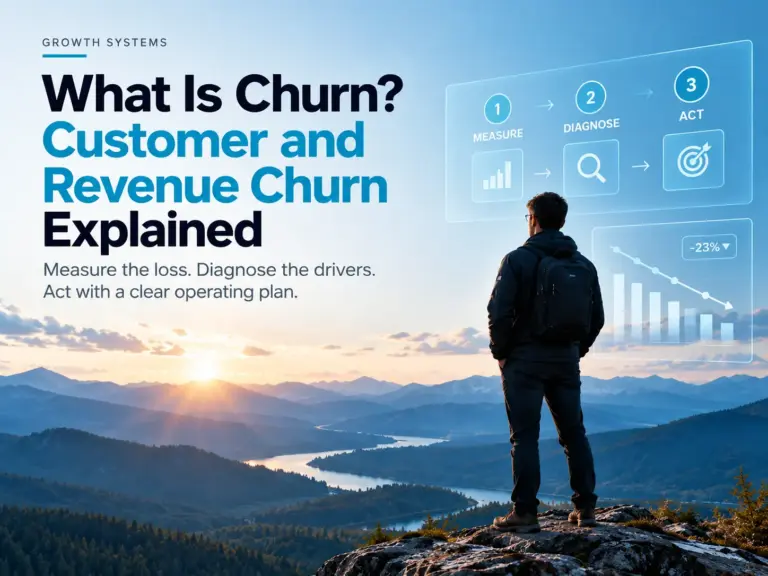
Churn is the judged loss of a customer or a unit of recurring revenue, with an accountable owner and observable loss evidence.
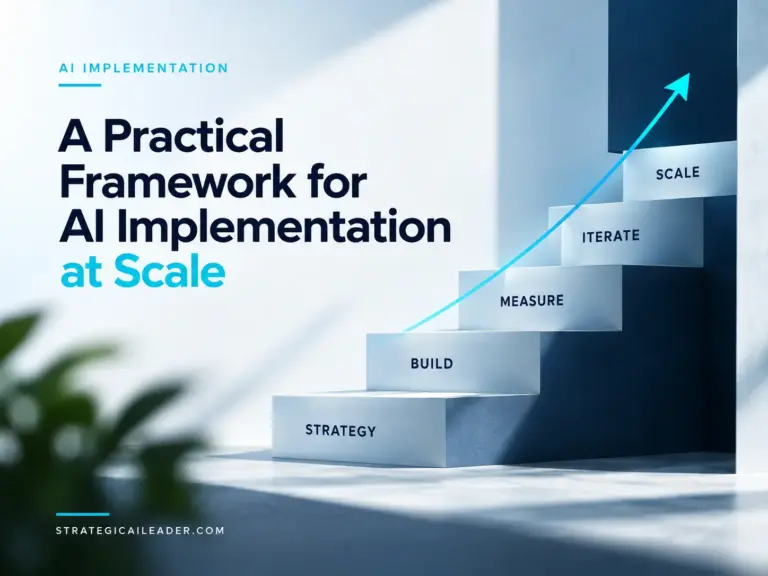
A bottleneck is the named constraint that limits throughput, with an accountable owner and observable wait evidence.

Learn what operational leadership means and use a four-part framework to turn strategy into owned practice, clear standards, and visible results.

Discover why CareNestHQ supports caregivers instead of replacing them. Learn the five design principles guiding every product decision.
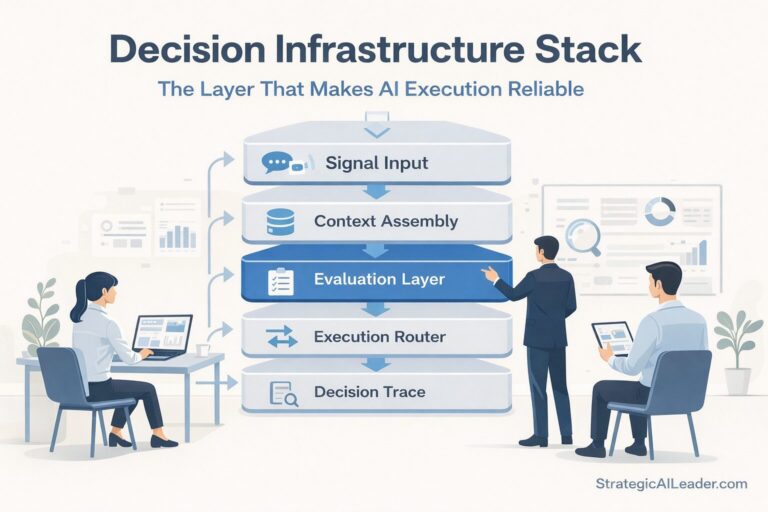
The Layer That Makes AI Execution Reliable Most operators deploying AI hit the same wall. The tools work. The prompts improve. Outputs look reasonable in testing. Then production arrives and everything becomes inconsistent. The same input produces three different outputs. Human review increases. Execution slows down instead of speeding up. The instinct is to fix…

The Hidden Cost of AI at Work Artificial intelligence has become the co-pilot of modern business. From marketing teams using generative models to draft campaigns, to finance leaders automating forecasting, to operators relying on AI assistants to summarize complex data, adoption is accelerating at an unprecedented pace. At the same time, growing research on AI…

AI disruption risk assessment is no longer optional for product managers. Netflix needed nearly a decade to beat Blockbuster. Uber took years to reshape the taxi industry. Artificial intelligence is moving much faster. What once took ten years now takes ten months or less.
Product managers forecast demand, map user journeys, and plan for market shifts. Yet most still underestimate how quickly AI can undermine even established products. A tool that looks stable today may face a generative AI competitor tomorrow delivering 70 percent of its value at a fraction of the cost. Roadmaps that once felt strong can suddenly look irrelevant.

Most leaders get performance management wrong by treating it like an annual event instead of a daily system. This guide introduces the CARE framework: Clarity, Alignment, Recognition, and Responsiveness, so leaders can set clear goals, deliver real-time feedback, and build engaged, high-performing teams.

AI is no longer optional, but adoption often fails when workflows break down, budgets scatter across too many tools, and trust erodes. This article outlines a six-step AI workflow process that helps leaders integrate systems, target the right tasks, measure trust, and assign accountability. Learn how to turn AI from a bolt-on feature into a core operating layer that drives measurable results.

Hiring and onboarding are more than HR tasks. They are leadership systems that shape retention, engagement, and performance. This guide gives leaders a practical five-step framework, supported by real case studies and proven strategies, to turn onboarding into a competitive advantage.
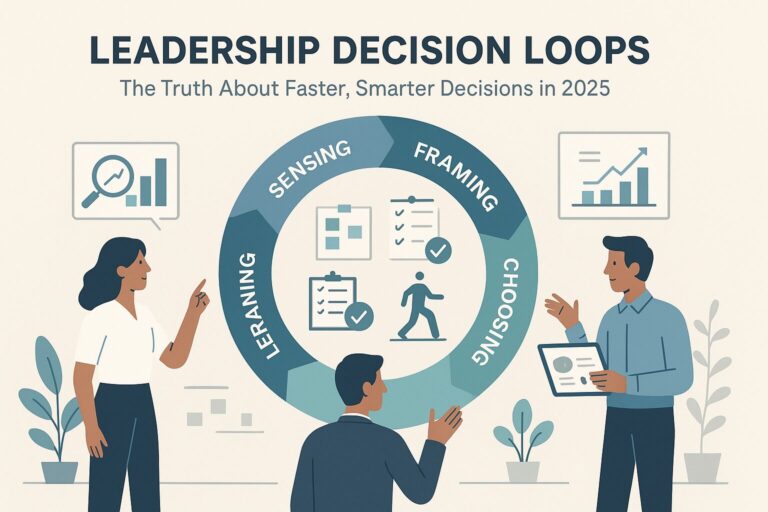
Leadership decision loops give leaders a repeatable system to balance speed and accuracy. In 2025, they are the difference between falling behind and staying ahead. This framework shows how structured loops improve team management, employee engagement, and leadership skills.