
AI Pilot: How to Run a Proven Bounded Test
Define an AI pilot as a bounded test of one funded AI use with an owner, a stop rule, and a keep-revise-stop judgment.
Explore how AI is reshaping leadership — from decision-making and team dynamics to strategy execution and organizational design. This tag dives into the real-world challenges and opportunities facing forward-thinking leaders navigating AI transformation.
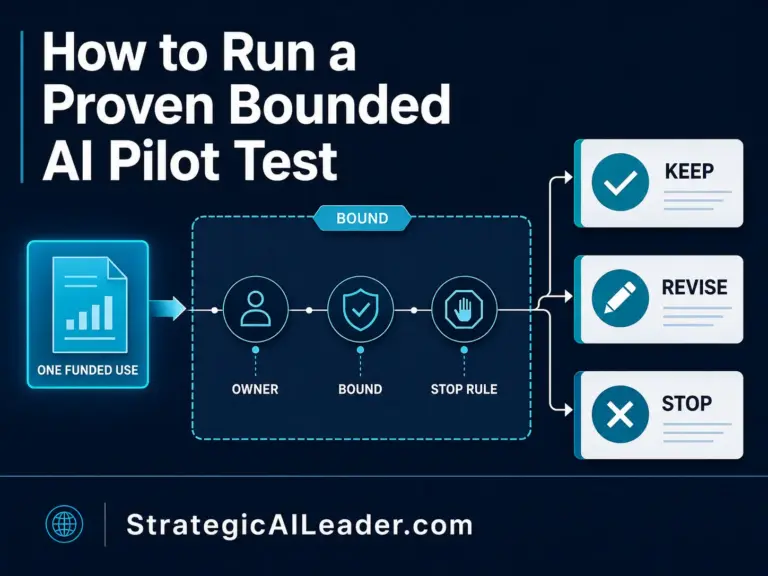
Define an AI pilot as a bounded test of one funded AI use with an owner, a stop rule, and a keep-revise-stop judgment.
What Is GEO? A Practical Guide for Operators Generative engine optimization (GEO) is the practice of improving how content appears in responses from AI search and answer systems. For your business, the practical question is whether those responses represent your products, prices, and policies accurately, with identifiable supporting sources. An assistant might repeat an old…

Discover why CareNestHQ supports caregivers instead of replacing them. Learn the five design principles guiding every product decision.
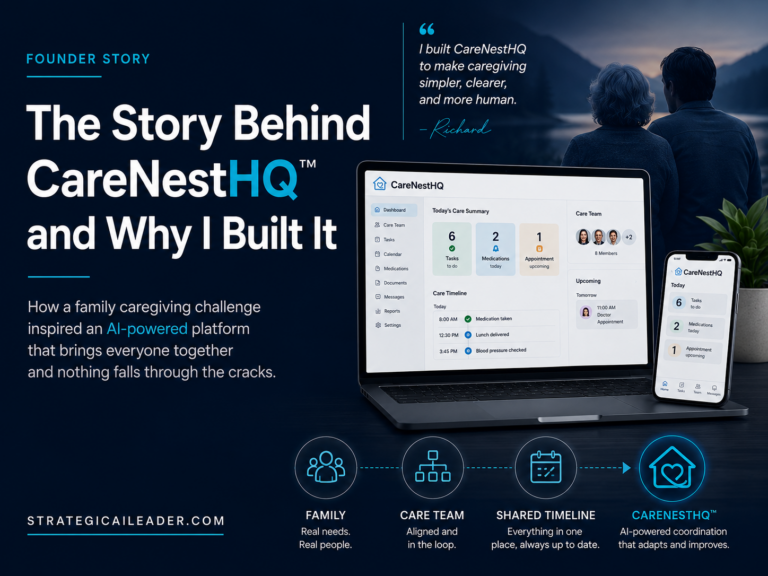
CareNestHQ™ began with a personal family caregiving challenge, but it became much more than a software project. This is the story behind the platform, the product decisions that shaped it, and the AI-powered workflows designed to help families coordinate care with greater clarity and confidence.
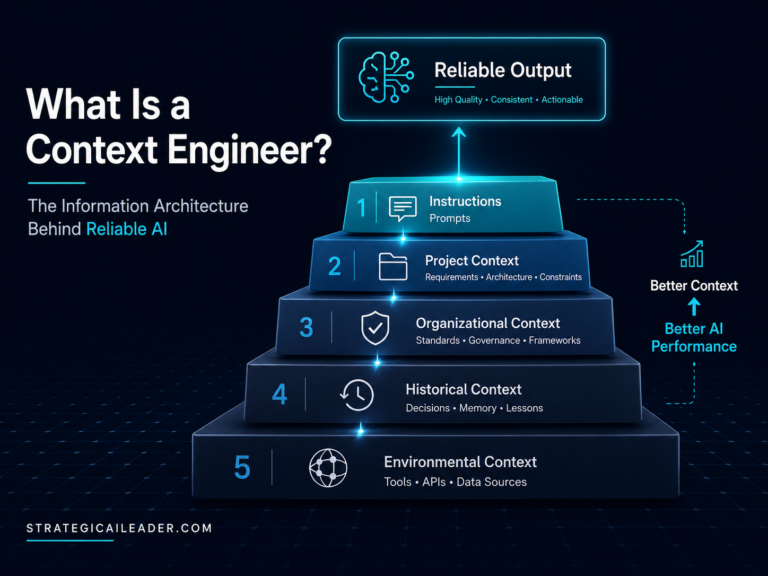
Discover what a context engineer does and why context architecture matters more than prompts for AI success.
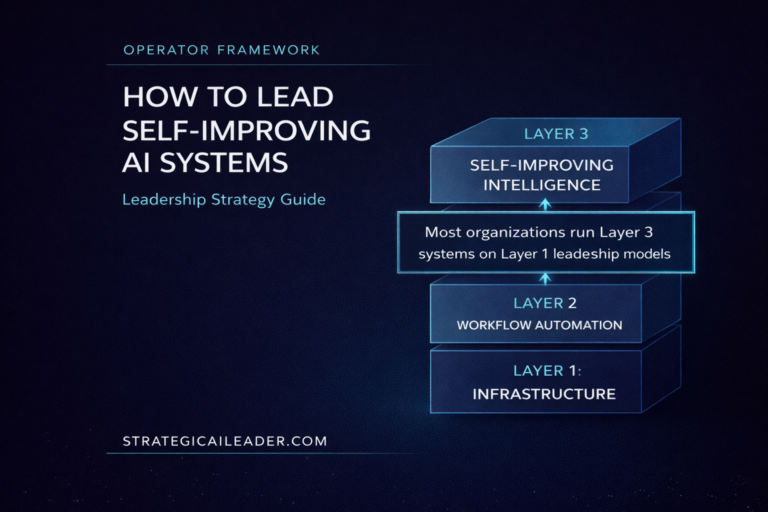
Most leaders are preparing teams to use AI tools faster. Few are preparing to supervise systems that improve themselves. This article introduces the Three Layers of AI Work framework and explains why oversight architecture, not tool adoption, determines who benefits as self-improving AI systems scale.
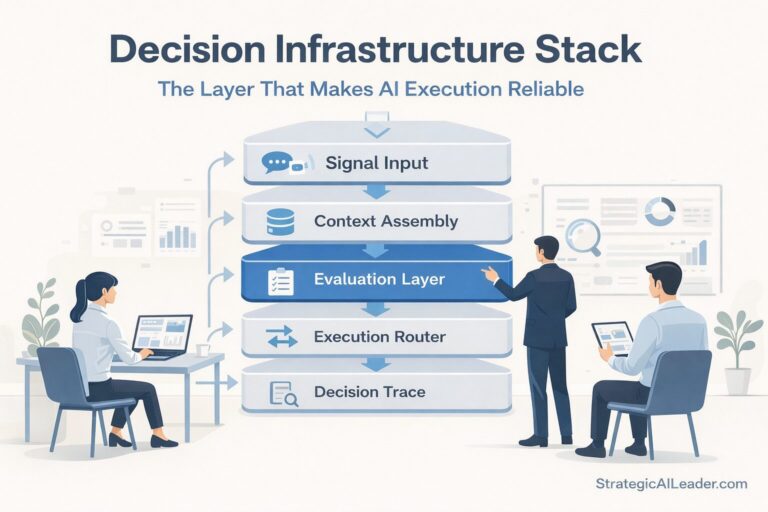
The Layer That Makes AI Execution Reliable Most operators deploying AI hit the same wall. The tools work. The prompts improve. Outputs look reasonable in testing. Then production arrives and everything becomes inconsistent. The same input produces three different outputs. Human review increases. Execution slows down instead of speeding up. The instinct is to fix…

Most agent courses teach prompts. Few teach deployment. The Agent Skill Translation Framework closes this gap through three stages. Extract converts course concepts into reusable prompt blocks and task logic. Translate refactors prompts into workflows, binds tools, and adds memory layers. Deploy runs agents inside dashboards, automation systems, and production environments. Learning becomes structure. Structure becomes agent logic. Agent logic becomes working applications.
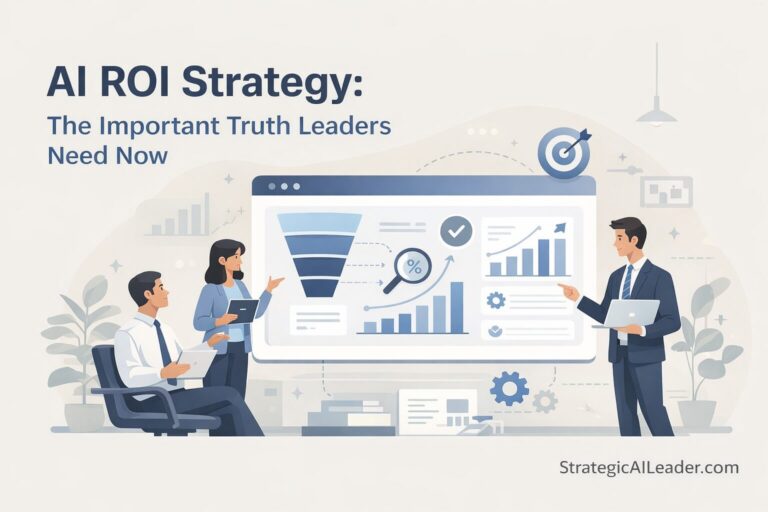
Most organizations treat AI investment returns as a tooling problem. In practice, returns follow decision architecture quality. The AI ROI Strategy Stack explains how specification, authority boundaries, execution integration, monitoring ownership, and learning loops convert automation into stable economic results instead of scaling hidden risk.
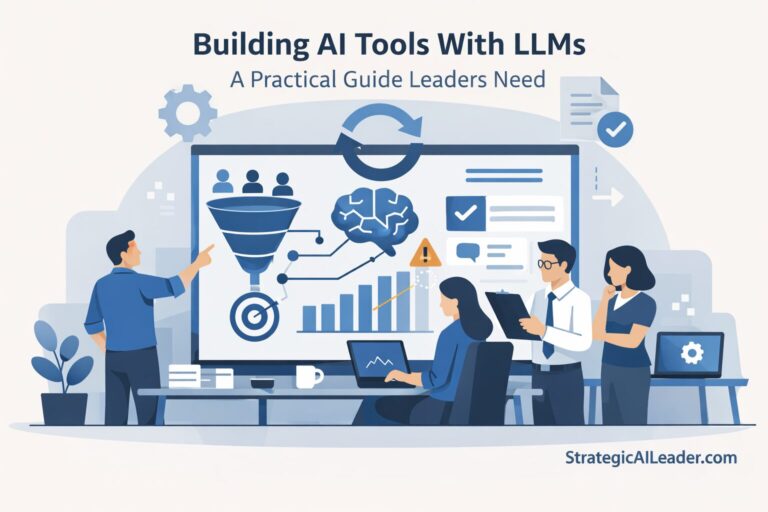
Building AI tools with LLMs fails when leaders treat AI like traditional software. This guide shows how to design, test, and deploy AI systems that work in real workflows.
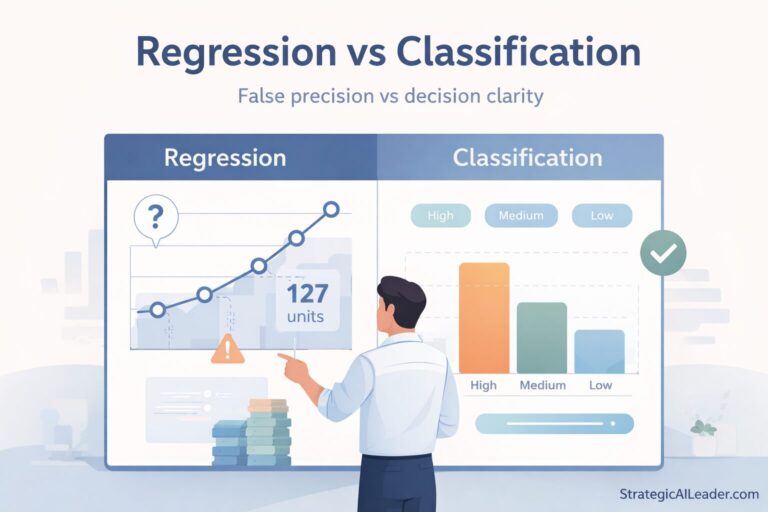
I wasted $8K applying regression when a real business needed classification. This article breaks down the failure, the lesson, and how better problem framing leads to better machine learning decisions.
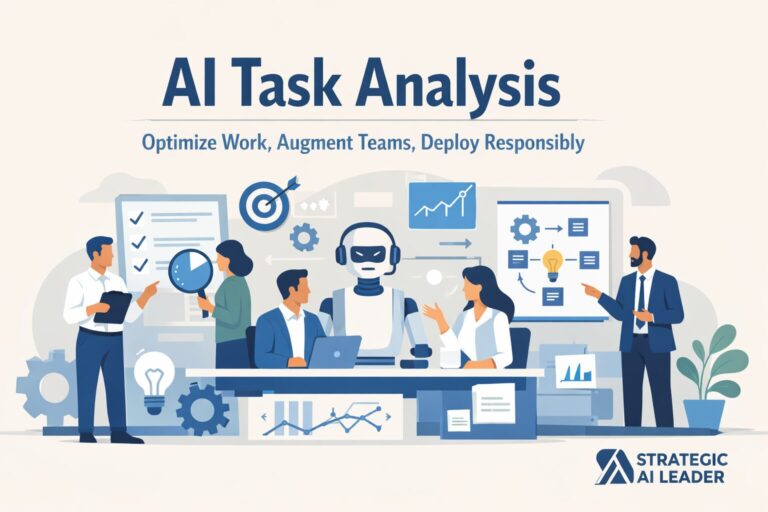
Most AI programs fail before delivering value because leaders focus on transformation rhetoric instead of task-level work. This practical guide introduces AI task analysis, a framework for evaluating AI potential, redesigning workflows, and augmenting teams without replacing people.