Growth Leadership: The Truth About What It Involves
The Hidden Responsibilities of Growth Leadership

Executive Summary: Growth leadership isn’t about managing channels or optimizing conversion rates. Real growth leaders make decisions in the face of uncertainty when money, time, and trust hang in the balance. Most companies confuse growth execution with growth leadership, promoting their best marketer and wondering why decisions get slower and more expensive. Growth leadership means owning outcomes before you know if they’ll work, building decision systems that prevent confident wrong calls, and making context explicit so both humans and AI can make better bets. Model Context Protocol (MCP) emerged as a leadership response to a recurring failure mode: making critical decisions based on partial truths. The framework, stories, and diagnostic tools in this article help you understand whether your company actually has growth leadership or just growth activity.
Key Takeaways
- Growth leadership is judgment under pressure, not analysis under ideal conditions. You’re accountable for decisions before results arrive, not just for reporting metrics after the fact.
- Most companies lack a single point of accountability for growth outcomes. When marketing owns traffic, product owns activation, sales owns close rates, and ops owns retention, nobody owns the decision that connects them.
- Dashboards create visibility, not understanding. More data without context leads to faster, not better, decisions.
- The 5-Question Growth Decision Framework prevents confident wrong calls: What outcome am I accountable for? What decision creates it? What context am I missing? What’s the cost of being wrong? Who else must own this?
- Model Context Protocol (MCP) makes the relationships between intent, behavior, and outcomes explicit before decisions are made, protecting businesses from bets based on incomplete truth.
- Decision latency is a leadership burden. The gap between making the call and knowing if you’re right creates political exposure and tests judgment.
- Trust compounds through transparent decision-making. Teams execute faster when they believe you’re making calls with full context and documented tradeoffs.
I helped drive +83% in traffic and +47% in conversions at MyEListing. Dashboards were green. ROI showed 133%.
And we were still making bad decisions.
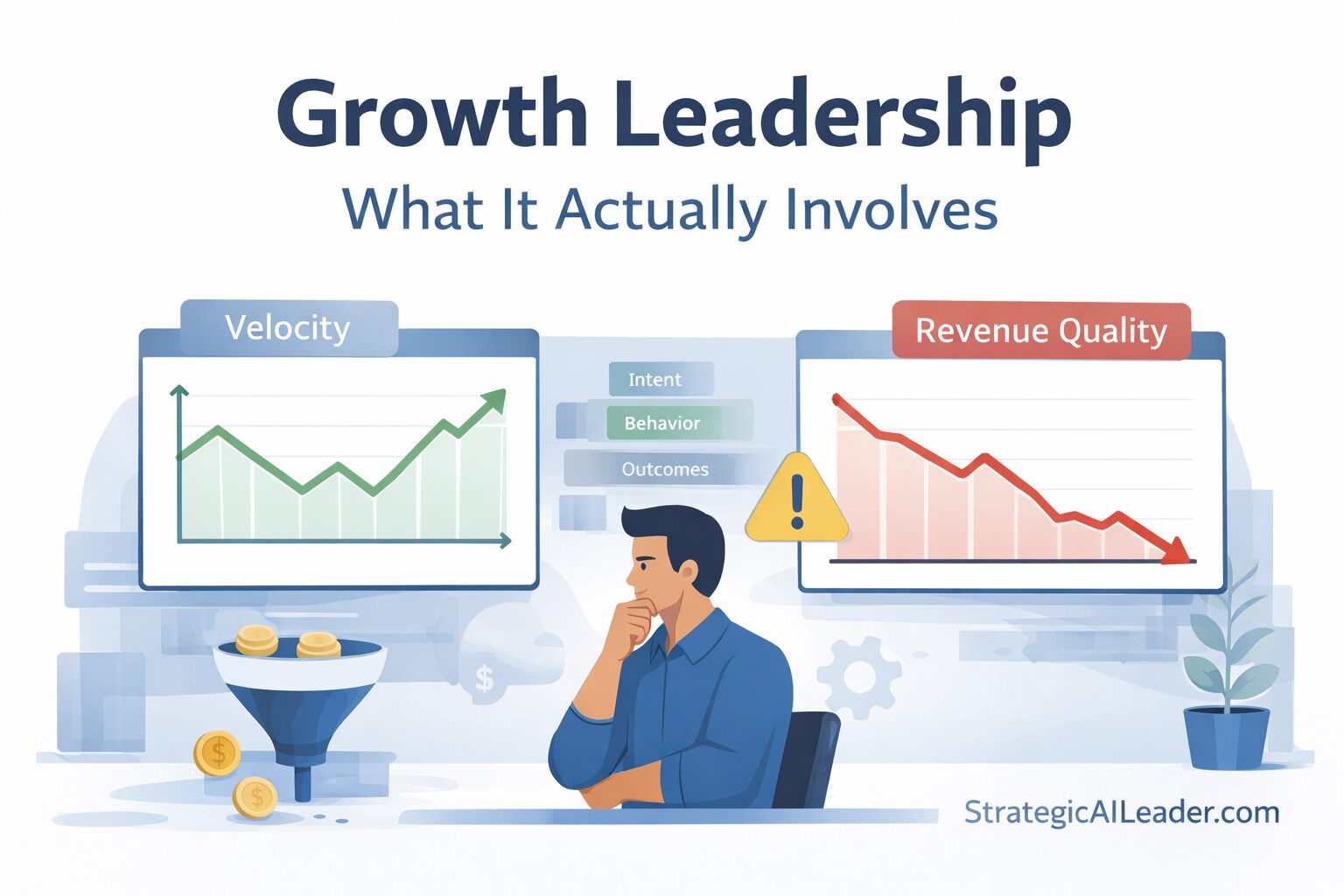
By month four, customer acquisition was up while customer lifetime value dropped 10%. We were winning on metrics but bleeding margins. The board wanted answers. I had data, not explanations.
The problem wasn’t effort. The team shipped 40+ experiments that quarter. Wasn’t execution either. Every test followed the process. The problem was system design.
We were optimizing signals in isolation instead of connecting them.
Search intent looked strong, so we scaled spend. Analytics showed efficient behavior, so we doubled down on activation tactics. Revenue outcomes arrived too late to stop the bleeding.
Three different truths. Zero integration. Expensive decisions built on partial context.
I’ve seen this exact pattern kill growth at multiple companies across different industries. At Lia’s Flowers, a floral marketplace, and at two others I’ve advised. Same failure mode everywhere. Marketing owns intent data. Product owns behavior signals. Finance owns outcome metrics. Nobody owns the decision that connects them.
Businesses bleed cash while dashboards stay green in that gap.
Here’s what I learned: growth leadership is not channel mastery. Not experimentation volume. Not dashboard literacy.
Growth leadership means owning decisions when signals conflict and money is at risk.
Most companies promote their best growth marketer into leadership. Few promote someone trained to reconcile intent, behavior, and outcomes into one operating model. Reconciling those three signals is the actual job.
Judgment under incomplete information creates the gap between execution and leadership.
I spent two years building systems to close that gap. Systems that force alignment between intent, behavior, and outcomes before decisions move budget. Not as a technical hobby. As a risk management framework for growth decisions.
The pattern stayed consistent across companies:
- Search and surveys showed intent without constraints
- Product analytics showed behavior without profit context
- Financial reports showed outcomes too late to influence action
More dashboards didn’t solve the problem. Better meetings didn’t solve it. Clearer KPIs didn’t solve it.
The relationships between systems were undefined. Context lived in people’s heads, Slack threads, and forgotten strategy decks.
I built decision systems that make context explicit before humans or AI make calls that cost real money.
Let me show you what most companies still get wrong about growth leadership, then I’ll walk you through exactly how context engineering changes decision quality.ineering changes decision quality.
What Most Companies Get Wrong About Growth Leadership (And What Growth Leader Responsibilities Actually Look Like)
Most companies think growth leadership means you own:
- Paid acquisition channels.
- Experiment with velocity across teams.
- Traffic and conversion dashboards.
- Weekly performance reports that executives skim.
They hire for it. Structure compensation around it. Build entire teams to support it.
Then growth stalls, and nobody can explain why. Everyone’s rowing, nobody’s steering. The boat just spins in circles while leadership wonders what broke.
Here’s what actually kills growth in companies, and I’ve seen this pattern at three different firms:
Nobody owns the outcome, just the activity. Marketing owns traffic numbers. The product owns activation rates. Sales own close percentages. Operations owns retention metrics. Everyone reports their piece up the chain. Zero people connect how these pieces create the actual result the business needs.
Fragmented incentives across every function. Marketing gets bonused on MQLs. The product gets a bonus on feature adoption. Sales gets a bonus on bookings. Ops gets bonused on NPS. Growth? Growth is a second-order effect whose paycheck doesn’t depend on it directly.
Teams make decisions with partial truth. One group sees intent data from surveys and sales calls. Another group sees behavior data from product analytics. A third group sees lagging outcomes from the finance dashboard. They meet every Tuesday and argue about what’s actually real.
Accountability gets diluted across functions. When growth misses the target, five people show up to explain their piece. Marketing explains the funnel. The product explains engagement. Sales explains deal slippage. Nobody owns the decision that created the miss in the first place.
Growth stalls because no one owns the decision, only the activity.
Real growth leadership starts the moment someone is willing to own the outcome before they know if it’ll work. Everything else is just performance theater.
What Growth Leader Responsibilities Actually Require (The Job Description Your Company Never Wrote)
Accountability in growth leadership breaks into three distinct responsibilities. Most job descriptions never name these because most companies don’t actually understand what they hired you to do.
Outcome Accountability in Growth Strategy
A real growth leader owns revenue, retention, efficiency, and growth quality. Not as metrics to report in slide decks. As outcomes to explain when executives ask hard questions.
When growth misses targets, the leader explains why it happened and what changes next quarter. When growth exceeds plan, they explain what made it repeatable versus lucky. The explanation matters more than the number, because it determines what the company actually learns.
You’re not explaining to cover your ass. You’re explaining because the business needs to know which bets to make again and which bets to kill.
Decision Accountability Under Uncertainty
Growth leaders make their own decisions before anyone knows the results. According to research on decision-making under uncertainty, leaders who document their reasoning before outcomes are known to make better calls and learn faster from failures. They choose direction, timing, and risk exposure. They document tradeoffs and stand behind them when things go sideways.
If a decision fails, they don’t blame the data quality, the market shift, or the team execution. They own the call and the reasoning that produced it.
Ownership separates leadership from execution. Executors implement decisions someone else made. Leaders make the call when the answer isn’t clear yet, then live with the consequences.
System Accountability for Decision Quality
Growth leaders carry responsibility for the systems that produce decisions. When those systems fail (when context goes missing, when signals conflict, when teams can’t act), they fix the system, not blame the person who used it.
They treat decision quality as an output of design, not effort. Bad decisions usually come from bad systems, not bad people. A great growth leader rebuilds the system so the next decision comes out better.
You know what nobody tells you about this job? You’re accountable for all three simultaneously while operating with incomplete information, delayed feedback loops, conflicting signals, and pressure from executives who want certainty right now.
The Uncomfortable Reality Most Growth Articles Skip
Let me paint you a picture of what growth leadership actually feels like day to day.
Your team is asking for proof you don’t yet have. Leadership wants confidence you can’t honestly provide. Growth decisions still need to move forward by Friday.
Welcome to growth leadership. You’re being asked to de-risk decisions that are inherently risky. You’re expected to know if something will work before you try it. You’re held accountable for outcomes that won’t show up for eight weeks while being asked to explain the variance today.
Decision latency becomes a crushing weight. The gap between when you make the call and when you know if you’re right? That gap will age you. It also creates political exposure that nobody warns you about.
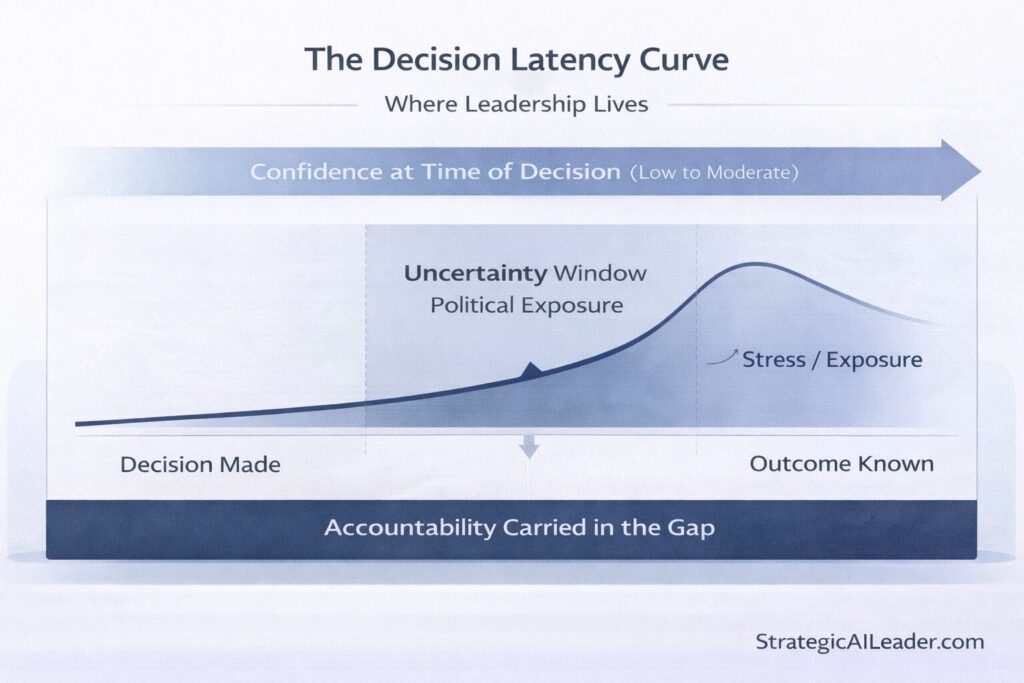
You own the decision in week one. The data arrives in week eight. In between, you defend a position you’re not yet sure is correct. You’re in meetings explaining your reasoning while secretly wondering if you missed something critical.
Most growth advice pretends this tension doesn’t exist. It absolutely does. How you handle this tension defines whether you’re leading growth or just managing performance reports.
Why Data and Dashboards Fail Growth Leaders (And Why More Visibility Makes Decisions Worse)
More dashboards don’t automatically improve decisions. Without proper context, they often make decisions worse.
I’ve lived through the failure mode three separate times. Company invests in analytics infrastructure. Dashboards multiply across teams. Everyone suddenly has visibility. Meetings now start with data reviews instead of opinion battles.
And somehow, decisions get worse. Slower. More expensive when they fail.
Here’s why: visibility isn’t understanding.
Intent data tells you what people say. Behavior data tells you what they do. Outcome data tells you what the business achieved. Each signal is a partial truth. In isolation, each one misleads.
Which signal do you trust? The answer depends on context that doesn’t live in any dashboard.
Context is the whole backstory. Why the data even exists, what was happening when someone captured it, what’s shifted since then, and which tradeoffs got made before you even showed up. Dashboards don’t carry context. Humans carry context. But humans forget, leave the company, or never knew the context in the first place.
The result? Decision fragility. You make a call based on what you can see right now. The context you’re missing invalidates the entire call. You discover the gap later, after the cost is locked in and the team already shipped.
At one company, we launched a new acquisition channel because CAC looked 40% better than our core channel. Looked amazing in the dashboard. What the dashboard didn’t show? That channel attracted users who never converted to paid, never referred others, and churned 3x faster. We burned $200K before someone connected those dots.
The best growth teams pair sophisticated dashboards with strong context systems. Companies like Amplitude, HubSpot, and Notion have excellent analytics infrastructure and documented decision context. They’re complementary, not opposed. The dashboard shows you what happened. The context system tells you why it matters and what it means for the next decision.
How I Approach Growth, Leadership, and Decision Making
I get paid for judgment, not answers.
Growth leadership is judgment under pressure, not analysis under ideal conditions.
That clarity changed everything about how I operate. I don’t start with data anymore. I start with questions that force me to be honest about what I actually know.
Which decision am I actually trying to make? Not which metric am I trying to move? What am I committing to that I can’t easily undo? Real decisions have consequences. Picking a metric to optimize is not a decision.
What signal has earned trust in this specific context before? Not what’s available in my dashboard. What has historically predicted the outcomes that actually matter to this business? Some signals look predictive but aren’t. Others look noisy but carry real information.
What am I intentionally ignoring right now? Every decision involves choosing which signals not to trust. I make that choice explicit and document it. If I’m ignoring churn because I believe we’re in a land-grab phase, I write that down. If I’m wrong, we learn faster because we know exactly what assumption broke.
What would I need to see to change my mind? I define the answer before acting. Defining success criteria upfront prevents motivated reasoning when early data comes back ambiguous. Forces intellectual honesty from the start.
How much decision latency can I actually afford? Some decisions need to be made fast because competition won’t wait. Others need time to mature because feedback loops are slow. Knowing the difference prevents false urgency from killing good strategy.
These questions don’t eliminate uncertainty. They make uncertainty explicit so I can decide how much risk to carry and when to move forward anyway.
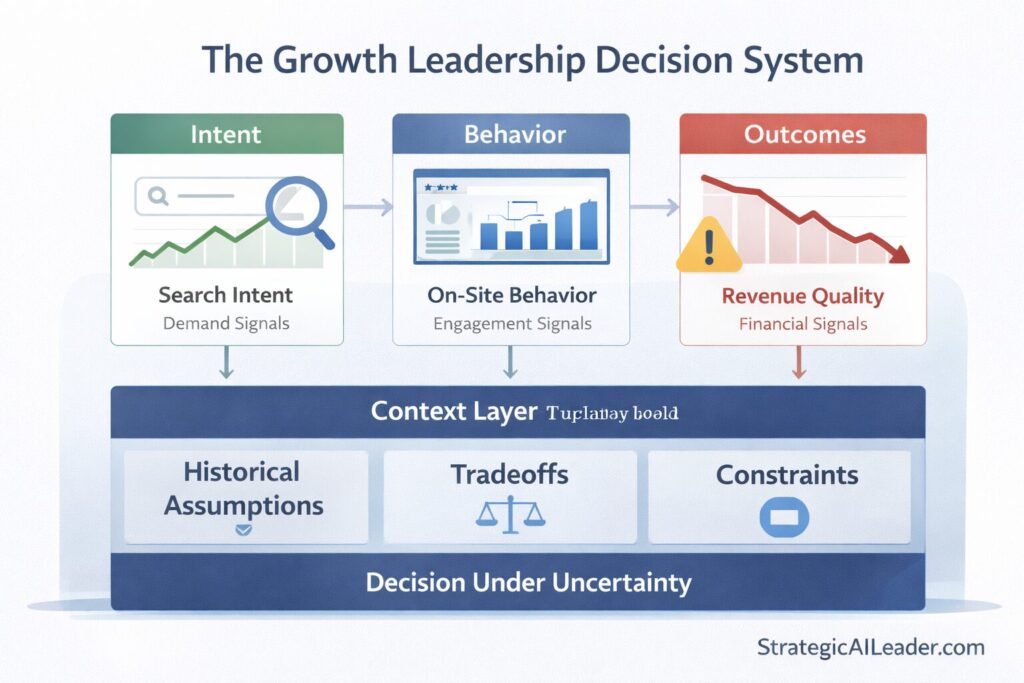
context before making high risk decisions under uncertainty
Making the call when the answer isn’t clear yet, then owning what happens next? That’s what leadership looks like.
The Growth Leader’s Weekly Decision Framework (5 Questions to Ask Before Any Major Growth Decision)
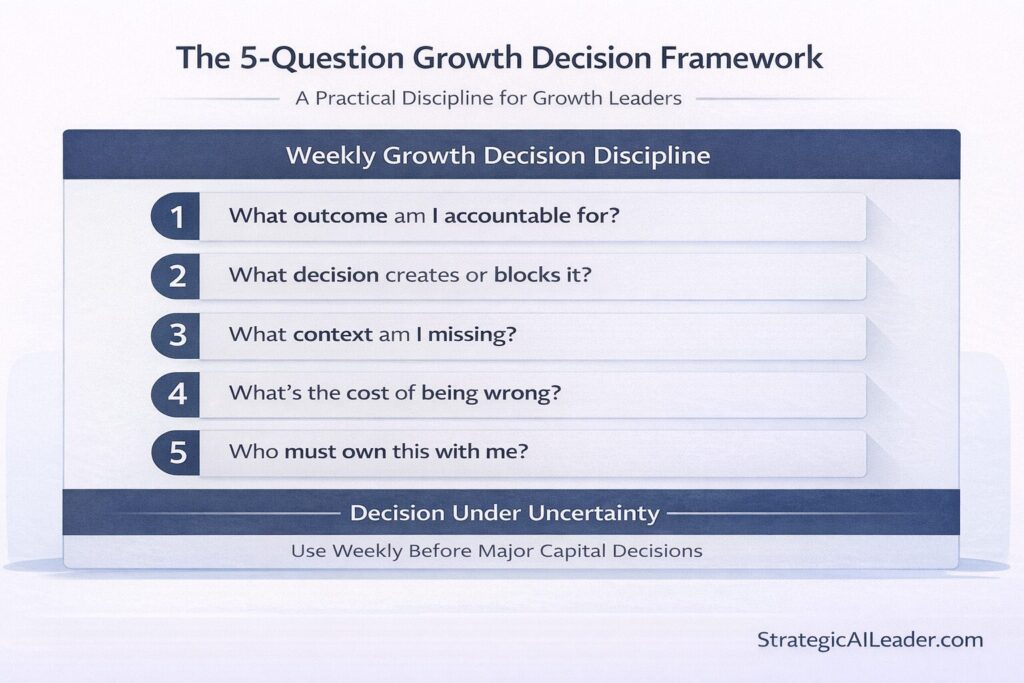
and ownership before making high stakes decisions
After enough expensive mistakes, I built a simple framework I use every single week. Nothing fancy. Just five questions that prevent me from making confident wrong calls.
1. What outcome am I accountable for explaining?
Write down the specific outcome. Not “improve conversion.” Write “increase trial-to-paid conversion from 12% to 15% while maintaining 90-day retention above 80%.” Forces you to define success with enough precision that you’ll know if you actually achieved it.
2. What decision creates or blocks that outcome?
Growth leaders make maybe 3-5 real decisions per quarter. Everything else is execution. Identify which decision you’re actually making. Most “decisions” people agonize over are just tactics that don’t materially change outcomes.
3. What context am I missing that could invalidate this decision?
List what you don’t know. Not what you wish you knew. What don’t you know that would completely change your call? Then decide if you can live with that gap or if you need to fill it first.
4. What’s the cost of being wrong, and can I afford it?
Some decisions cost $5K and two weeks to reverse. Others cost $500K and six months. Know the difference. Reversible decisions move fast. Irreversible decisions move carefully.
5. Who else needs to own part of this decision for it to work?
Growth decisions usually require execution across multiple teams. If product, marketing, and sales all need to execute, all three need to own the decision. Otherwise, you get compliance, not commitment.
How to use this Monday morning: Block 30 minutes. Pick the biggest decision you’re facing this week. Write out answers to all five questions. If you can’t answer question 3 (due to missing context), stop. Go find that context before you make the call. If you can answer all five, make the decision and document your reasoning.
The framework doesn’t make decisions for you. It forces you to be honest about what you know, what you don’t know, and what you’re betting on anyway.
Common Pitfalls When Skipping These Steps
Skipping step 1: You “improve conversion” by 20% but tank revenue quality. Congratulations, you optimized the wrong thing because you never defined the outcome precisely enough.
Skipping step 2: You spend three weeks deciding which color to make a button while your competitor launches the feature that actually matters. Mistaking tactics for decisions kills momentum.
Skipping step 3: You make a confident call, discover critical context six weeks later, and now you’re defending an indefensible position. Humility about what you don’t know saves careers.
Skipping step 4: You make an irreversible decision with reversible-decision speed. Now you’re stuck with expensive consequences you can’t undo. Risk calibration matters more than decision speed.
Skipping step 5: You make a “growth decision” that product ignores, marketing undermines, and sales works around. Decisions without distributed ownership don’t execute. They just create politics.
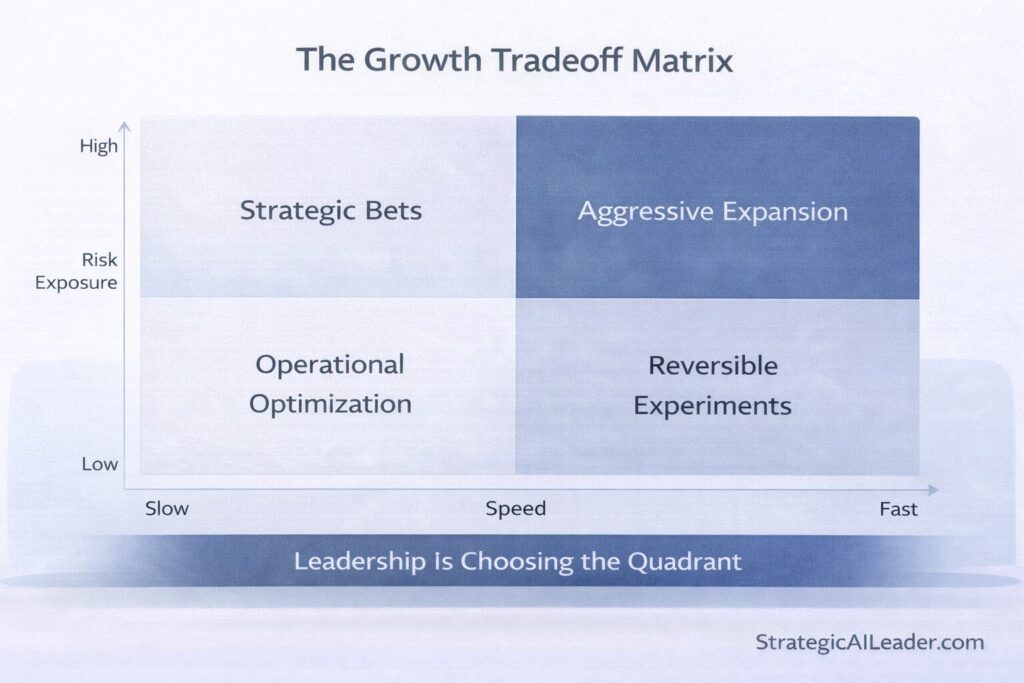
How I Built Systems to Capture and Leverage Context
Context engineering isn’t about one tool or framework. Building systems that make implicit knowledge explicit before decisions get made is what matters.
Here’s what works:
Decision logs with documented reasoning. Every major growth decision gets documented: what we decided, why, what context informed it, what would change our minds, and who owns execution. Not for compliance. For learning.
When a decision fails six months later, we know exactly which assumption broke. When it succeeds, we know what made it repeatable.
Structured post-mortems that capture context, not blame. When something goes wrong, we document: what context were we operating with? What context were we missing? What changed that we didn’t see? How do we build that visibility into the next decision?
Context interviews during onboarding. New leaders spend their first two weeks interviewing product, marketing, sales, ops, and finance. Questions: What have we tried in growth that failed? What worked that we stopped doing? What assumptions about our users turned out wrong?
That context gets documented and becomes queryable.
Pre-decision context checks. Before any decision above $50K or 3 months of team time, we ask: what context from previous decisions applies here? What do we know now that we didn’t know then? What’s changed in the market or business that invalidates old assumptions?
At Lia’s Flowers, we were deciding whether to expand into a new market segment. AI analysis of our data said we should go hard, fast. TAM looked huge. CAC projections looked great. Conversion models looked solid.
What the AI missed? Six months earlier, we’d tested that exact segment and discovered their buying cycle was 18 months versus our core segment’s 3 months. Revenue timing completely broke our cash flow model. That context lived in three people’s heads and a Slack thread nobody tagged properly.
We almost made a $400K bet on incomplete context because the AI had data but not the backstory. I learned similar lessons when an $8K ML experiment failed at Lia’s Flowers, teaching me the difference between classification and regression problems the expensive way.
Tradeoff documentation. Every growth decision involves choosing what not to optimize. We document those tradeoffs explicitly. “We’re choosing growth rate over efficiency this quarter because we’re in a land-grab phase and our cash runway supports it.”
When someone questions the decision three months later, the reasoning is there.
These aren’t revolutionary practices. They’re disciplined systems thinking applied to decision-making. The difference between good growth leaders and great ones isn’t better instincts. Better systems for capturing and leveraging context separate good from great.
Growth Executor vs. Growth Leader: Know the Difference
Most people in “growth leadership” roles are actually executing someone else’s strategy. Here’s how to tell the difference:
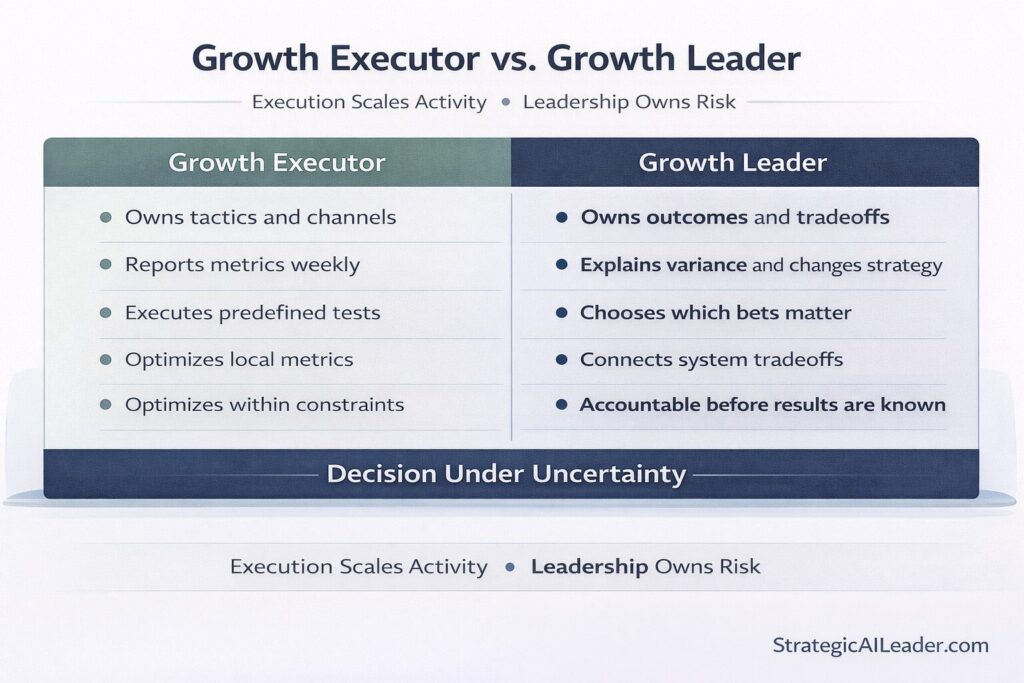
| Owns tactics and channels | Owns outcomes and tradeoffs |
| Reports metrics weekly | Explains variance and changes strategy |
| Runs experiments others designed | Decides which experiments matter |
| Optimizes conversion funnels | Connects funnels to business outcomes |
| Asks “what should we test next?” | Asks “what decision are we making?” |
| Accountable for activity | Accountable for results before they’re known |
| Executes the playbook | Writes the playbook and rewrites it when context changes |
| Gets promoted for doing more | Gets promoted for deciding better |
Neither role is bad. Companies need both. But they’re completely different jobs requiring completely different skills.
If you’re being evaluated on execution velocity, you’re not in a leadership role no matter what your title says. If you’re being evaluated on decision quality and outcome explanations, welcome to leadership. The weight feels different because the accountability is different.
How Growth Leadership Changes By Company Stage
Growth leadership isn’t one job. It’s 3 to 4 different jobs depending on company stage and growth model.
| Stage | Primary Job | Key Decisions | Typical Failure Mode |
|---|---|---|---|
| Series A (0 to 5M ARR) | Find repeatable channel | Which channel to build vs. test | Spreading too thin across channels |
| Series B (5 to 20M ARR) | Scale working channels | How fast to scale spend | Scaling before unit economics work |
| Series C (20 to 50M ARR) | Build growth system | New channels vs. product investment | Sacrificing quality for quantity |
| Growth-to-Profit | Optimize efficiency | What to cut without killing growth | Cutting too deep, killing momentum |
The article you’re reading focuses primarily on Series B through C growth leadership (rapid scaling with established product-market fit). The transition to profitable growth requires related but distinct skills around efficiency optimization and strategic pruning.
Early-stage growth leadership (Series A) involves more frequent structural decisions because you’re building the system itself, not optimizing an existing one.
How to Tell If Your Company Actually Has a Growth Leader (The Diagnostic Checklist)
If your company can’t answer these five questions clearly, growth leadership doesn’t exist. You have a growth function, which is fine, but you don’t have a growth leader.
Who owns revenue outcomes across all channels?
Not who reports on them in the Monday meeting. Who is accountable when they miss, and who is responsible for explaining what changes next quarter?
Who decides when experiments stop?
Not who runs them day-to-day. Who has the authority to kill something that’s working locally but hurting the system globally?
Who explains growth stalls to the executive team?
Not who presents data in slides. Who connects intent, behavior, and outcomes into a coherent explanation that the business can actually act on?
Who connects leading indicators to lagging indicators?
Not who tracks both in different dashboards. Who builds the model that predicts which leading indicators actually matter this quarter versus which ones are just noise?
Who owns the decision risk before outcomes are known?
Not who approves decisions after seeing three levels of analysis. Who is accountable when a decision made under uncertainty turns out wrong?
If the answer to any of these is “the team decides together” or “it depends on the situation,” you don’t have a growth leader. You have a growth committee, and committees don’t lead anything. They distribute accountability until nobody owns it.
Growth leadership typically requires singular accountability. One person’s name needs to be attached to the outcome. Occasionally, 2 to 3 people can share clear, equal accountability with matched authority. Never a committee of 6 or more.
When that person can’t answer these five questions about their role, they’re not leading growth. They’re coordinating it.
If You’re Stepping Into a Growth Leadership Role (What to Do in Your First 30 Days)
You just accepted a growth leadership role. Maybe it’s your first one. Maybe you’ve done it before, but this company feels different. Here’s what actually matters in your first month.
Redefine Your Mandate Around Decisions, Not Tactics
Your job isn’t running paid acquisition channels or optimizing email sequences. Your job is owning the decisions that determine whether growth compounds or stalls.
Make that explicit. In your first one-on-one with your boss, ask: “What decisions do you need me to own, and what outcomes am I accountable for explaining?” If they say “drive more leads” or “improve conversion,” push back. Those are activities, not decisions.
Get clear on: Which tradeoffs am I empowered to make? When do I need approval, versus when do I just decide and inform? What does good decision-making look like here versus good outcomes?
I once watched a new VP of Growth spend her first month optimizing email nurture sequences because that’s what the previous VP had done. Three months in, the CEO asked her why the pipeline was down 30%. She had no answer because she’d been optimizing tactics nobody empowered her to change. Don’t be that person.
Build Shared Context Before You Scale Anything with AI
Every AI tool you add to your growth stack will make decisions faster. If the context feeding those decisions is fragmented across people’s heads, Slack threads, and old decks, you’ll just make bad decisions faster.
Spend your first two weeks doing context interviews. Talk to product, marketing, sales, ops, and finance. Ask them: What have we tried in growth that failed? What worked that we stopped doing? Which assumptions about our users proved wrong?
Document everything. Build a simple context repository before you build another dashboard.
Make Tradeoffs Explicit and Documented
Every growth decision involves choosing what not to optimize. You can’t maximize growth rate, efficiency, and quality simultaneously. You’re always trading off.
Make those trades explicit and write them down. “We’re choosing growth rate over efficiency this quarter because we’re in a land-grab phase and our cash runway supports it” is a real strategic choice. Document it. When someone questions your decision three months later, you’ll have the reasoning that produced it.
Undocumented tradeoffs become political ammunition later. Documented tradeoffs become learning moments.
Treat Trust as an Operational Metric
Your team’s trust in your decisions directly impacts execution speed. If they believe you’re making calls with full context and clear tradeoffs, they move faster and push harder. If they think you’re guessing or playing politics, they slow down and hedge.
Build trust by showing your work. When you make a call, explain your reasoning in detail. When you’re uncertain, say so explicitly. When you’re wrong, own it fast and explain what you learned.
Trust compounds. Every decision that shows good judgment increases the team’s willingness to execute the next one hard and fast.
The Truth About Growth Leadership Nobody Puts in Job Descriptions
Growth leadership is applied judgment under pressure, not channel management. Not dashboard storytelling. Not experiment velocity optimization.
You’re being paid for judgment under pressure: making calls before you have proof, then owning what happens next. The wait between making the decision and knowing if you’re right? That gap ages you, tests you, and defines whether you’re actually leading.
I lean into MCP because I won’t accept growth decisions built on partial truth anymore. Speed without context isn’t leadership. Speed without context is a risk I won’t carry, and neither should you.
Your job is to own the outcome before you know if it’ll work. Everything else is just noise.
Frequently Asked Questions
What’s the difference between a growth leader and a head of growth?
The title doesn’t matter. The accountability does. A growth leader owns outcomes and decisions before results are known. A head of growth might just coordinate activities across teams without singular accountability. Ask the five diagnostic questions in this article. If the person can’t answer them clearly, the title is just organizational hierarchy, not actual leadership.
How do I know if I’m ready for a growth leadership role?
You’re ready when you’ve made enough expensive mistakes that you understand the difference between tactics and decisions. According to leadership research, effective leaders don’t just make good calls. They document reasoning, own outcomes before they’re known, and build systems that make the next decision better. If you’re still optimizing channels instead of owning tradeoffs, you’re not ready yet.
How do I build context systems in a small company without dedicated infrastructure?
Context systems aren’t about technology infrastructure. They’re about making implicit knowledge explicit.
Start simple: Document why you made each major growth decision, what context informed it, and what would change your mind. Store it somewhere accessible (Google Docs, Notion, Confluence).
In small companies, context often lives entirely in the founder’s head. Your job is forcing that knowledge into a format where decisions don’t depend on whether the founder is in the room.
What if my company has multiple people claiming to own growth?
You don’t have a growth leader. You have a growth committee. Companies where marketing, product, and sales all “own growth” actually have fragmented accountability. Real growth leadership requires clear ownership. Someone’s name needs to be attached to the outcome. Push for clarity on decision rights, not activity ownership.
How long does it take to see results from implementing the 5-Question Decision Framework?
In my experience working with growth leaders, most see clearer thinking within two weeks and fewer regrettable decisions within a quarter. The framework doesn’t guarantee good outcomes. It forces intellectual honesty about what you know, what you don’t know, and what you’re betting on anyway. That honesty prevents confident wrong calls, which is where most growth strategies actually break.
Should I hire a growth leader or promote from within?
Promote from within only if someone has already demonstrated judgment under uncertainty and is willing to own outcomes before they’re known. External hires bring fresh perspective but lack company context, which is exactly what growth leadership requires. If you hire externally, expect to invest heavily in context transfer for the first 90 days. Most companies skip that step and wonder why their expensive hire can’t make decisions.
Want to see how other growth leaders build decision systems that actually work under pressure? I write about operational decision-making, AI strategy, and growth leadership every week at Strategic AI Leader. No hype about AI transformation. No generic leadership platitudes. Just what’s working when real money hangs in the balance, and you’re the one accountable for the call.
Help Support My Writing
Subscribe for weekly articles on leadership, growth, SEO and AI-driven strategy. You’ll receive practical frameworks and clear takeaways that you can apply immediately. Connect with me on LinkedIn or Substack for conversations, resources, and real-world examples that help.
Growth Strategy and Experiments: Next Steps
Use growth strategy to connect growth choices to repeatable revenue.
Use operational leadership to turn strategy into owned work and clear standards.
Use growth operating system to organize ownership, experiments, and measurement.
Use growth experimentation framework to structure tests around evidence and decisions.
About the Author
I’m Richard Naimy, an operator and product leader with over 20 years of experience growing platforms like Realtor.com and MyEListing.com. I work with founders and operating teams to solve complex problems at the intersection of product, marketing, AI, systems, and scale. I write to share real-world lessons from inside fast-moving organizations, offering practical strategies that help ambitious leaders build smarter and lead with confidence.
I write about:
- AI + MarTech Automation
- AI Strategy
- COO Ops & Systems
- Growth Strategy (B2B & B2C)
- Infographic
- Leadership & Team Building
- My Case Studies
- Personal Journey
- Revenue Operations (RevOps)
- Sales Strategy
- SEO & Digital Marketing
- Strategic Thinking
Want 1:1 strategic support?
Connect with me on LinkedIn
Read my playbooks on Substack